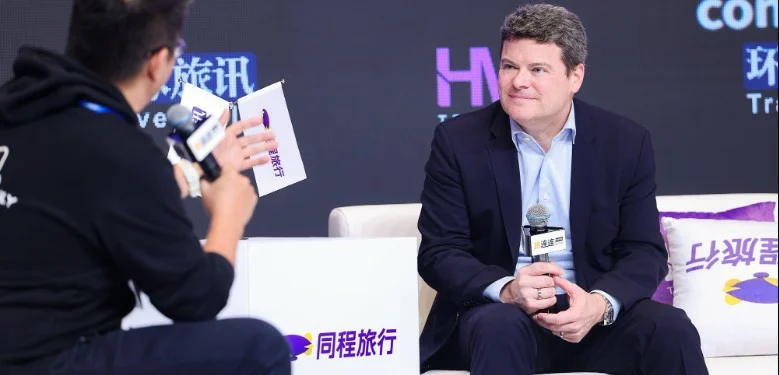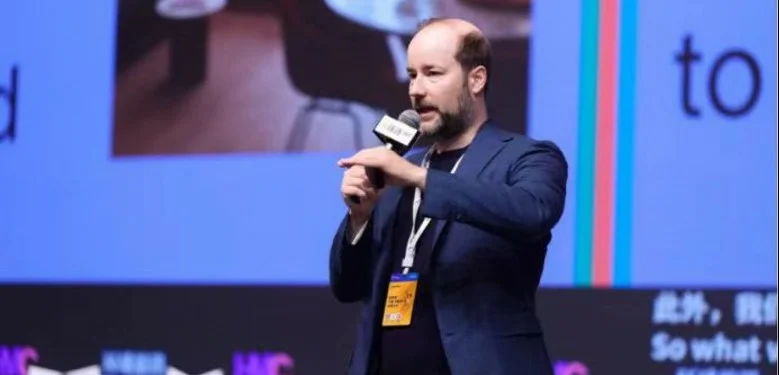
Speaking at TravelDaily's Hotel Marketing Conference, Christian Gaiser, founder and CEO of Berlin-based NUMA Group, laid out a clear thesis for Europe's accommodation sector: structural upheaval is creating a window for operators that combine regulatory savvy, digital tools, and scalable automation. His keynote, titled “Digital Opportunities in Europe's Hotel Industry: Finding Growth Amid Structural Change,” drew on NUMA's experience running tech-enabled hotels across multiple European markets.
Gaiser identified four converging trends that are redrawing the competitive map. The first is the tightening regulatory net around short-term rentals. Cities from Barcelona to Berlin have moved to curb holiday lets, and the impact has been dramatic. In some markets, short-term rental inventory has contracted by 30% to 50%, with a few cities seeing declines of 70% to 80%. For professionally managed operators, this is less a threat than an opening: compliance becomes a barrier to entry, and those who can navigate local rules gain access to a scarcer, higher-value supply pool.
The second trend is a generational shift in guest expectations. Younger travelers, raised on digital convenience, are moving away from the standardized hotel model. They want kitchenettes for longer stays, seamless access to food delivery, and the flexibility to book by the night or by the month. Gaiser cited market data showing that accommodation with kitchen facilities designed for both short and extended stays is growing at around 6% annually, versus roughly 1% for traditional hotels. With new construction constrained in many European cities, converting existing properties into these hybrid formats is emerging as a viable growth path.
Labor shortages push automation from cost-saving to mission-critical
The third trend is the intersection of labor shortages and automation. Europe's hospitality industry has long struggled to fill front-desk, housekeeping, and maintenance roles. Even NUMA, which runs a highly digitalized operation, continues to feel the pinch. For Gaiser, automation is no longer just a way to trim costs; it is essential for operational continuity and for scaling without a proportional increase in headcount. Self-service check-in, digital guest communication, and automated housekeeping scheduling are becoming table stakes.
The fourth trend is the fragmented ownership structure of Europe's hotels. While global brands like Marriott, Accor, and Hilton continue to expand, a large share of properties remain independently operated. Many of these owners are approaching retirement, and the next generation is often reluctant to take over the family business. This creates a wave of potential management transitions and business-model changes. For digital operators, this is a chance to step in with technology-led management agreements or lease structures that can revitalize underperforming assets.
Gaiser's message resonates beyond the conference hall. The challenges he outlined—regulatory pressure, changing demand, labor constraints, and ownership succession—are not unique to Europe. But the continent's dense urban markets and mature hotel stock make it a laboratory for new operating models. Operators that can combine compliance, digital infrastructure, and automation are well positioned to capture growth as the industry transforms.
For travel professionals, the implications are clear. Hoteliers and investors should watch how NUMA and similar players—like Limehome, Bob W, and Aparthotels—are reshaping the mid-scale and extended-stay segments. Tour operators and agents may need to rethink their product mix as more properties adopt flexible, tech-enabled formats. And for technology vendors, the demand for automation and property-management solutions is only set to grow.
As Europe's hotel landscape continues to shift, the winners will be those who treat disruption as an invitation to innovate. Gaiser's keynote offered a roadmap for doing exactly that.