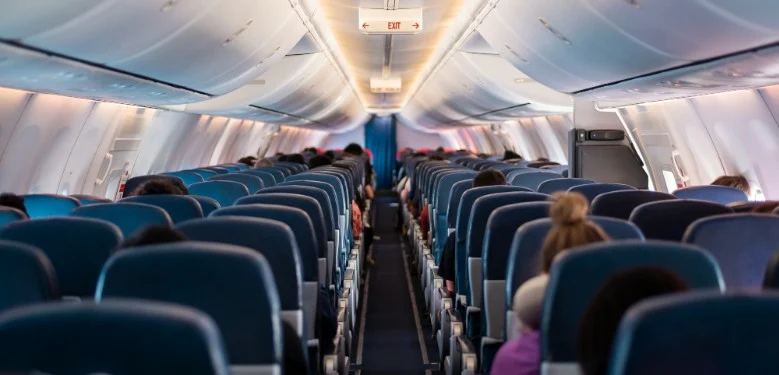
A Chinese Gen Z woman, reluctant to commit to a conventional office job, recently posted a job-seeking message online, offering her services as an international flight companion. Describing herself as mixed-race, she cites fluency in two languages and independent travel across more than a dozen countries as her credentials. Her proposed services range from accompanying elderly passengers through airport immigration to transporting pets and carrying items across borders.
She is flexible on destinations, though advance bookings are required: at least two weeks for Europe, Japan, and South Korea, and two months for North America to allow for visa processing. She also states she will not accept assignments in high-risk areas and will not even leave the airport in certain Southeast Asian countries.
The concept is not new. As early as 2007, Travel Weekly reported on Flying Companions, a U.S. company providing travel assistance to elderly passengers and those with special needs. Since then, the model has evolved across Europe and the U.S., with specialized services for pet transport, international logistics, and elderly care. Each niche carries substantial entry barriers.
Reality check for aspiring companions
Despite the appeal of free flights and flexible work, the market in China is largely one-sided. A scan of social media profiles shows plenty of aspiring companions but very few paying clients. Many young people overlook the stringent requirements involved in accompanying people across international borders.
The first major obstacle is visa eligibility. A Beijing-based user on Xiaohongshu pointed out the contradiction: people with ample free time often struggle to secure long-term visas for developed countries. International travel also brings flight cancellations and schedule changes, requiring companions to have high-limit credit cards that can handle foreign-currency transactions to cover unexpected expenses that can run into tens of thousands of yuan.
Spending roughly 300 days a year flying means constant jet lag and exposure to cosmic radiation at cruising altitude—deterrents for most. And for those carrying packages across borders, the risk of unknowingly transporting prohibited items can lead to serious legal consequences.
The business model has proven viable abroad, but it requires significant capital, experience, and a robust client network. For Gen Z in China, the dream of globe-trotting as a flight companion is hitting the hard walls of visa policies, upfront costs, and legal liability. As the industry matures, perhaps specialized agencies will emerge to bridge the gap, but for now, the path is far from easy.