Dubai's hospitality sector has long been defined by vertical ambition — Burj Khalifa-adjacent penthouses, sky-high infinity pools and record-breaking atriums. Yet on the eastern crescent of Palm Jumeirah, Anantara The Palm Dubai Resort is making a deliberate counter-offer: a low-rise, lagoon-centric retreat that leans into the emirate's maritime heritage and the slower rhythms of Arabian hospitality.
The property, part of Minor Hotels' Anantara brand, pairs Thai-inspired architecture and tropical landscaping with regional wellness rituals and Gulf-facing dining. It is a positioning that speaks directly to travel professionals booking clients who want Dubai's energy without its vertical intensity — a segment that is growing as the city's 2027 tourism strategy targets repeat visitors and new source markets.
Design that resists the skyline
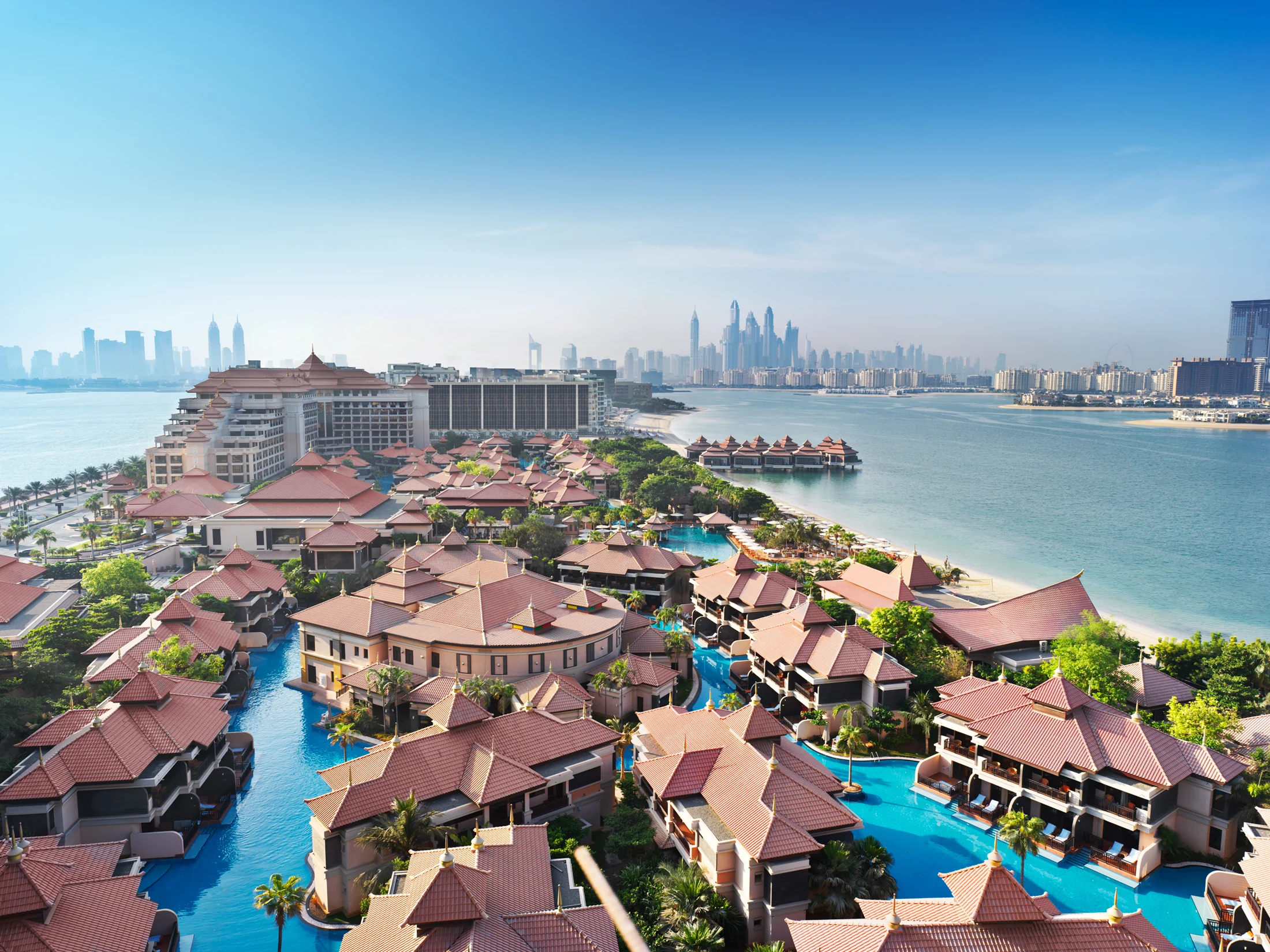
Rather than competing with the glass towers of Dubai Marina or Downtown, the resort spreads across 293 rooms and villas in low-rise clusters. Three temperature-controlled lagoons — roughly 10,000 square metres of water — form the heart of the property, with selected rooms offering direct terrace access to the water. The landscaping uses dense tropical planting and natural textures, while earthy tones in the beach pool villas echo the UAE's desert interior.
"The idea was to create an environment that feels intimate and grounded, not monumental," said a resort spokesperson. "Guests can step from their terrace into a lagoon, then look out to the Arabian Gulf — that connection to water and place is what sets us apart."
The 18 overwater villas remain the only ones of their kind in Dubai, each with glass floor panels, a private deck and a deep soaking tub positioned for sunset views. Fifteen beach pool villas add private infinity pools, and the two-bedroom variants offer 206 square metres of space for families or groups.
Lagoon-access rooms and an adults-only enclave
For agents and operators, the room mix is worth noting. The Premier and Deluxe Lagoon Access Rooms open onto private terraces beside the swimming lagoons, bypassing the main pool areas entirely — a detail that appeals to guests who value spontaneity over scheduling. The adults-only Lotus Lagoon View Room, launched as a dedicated category, includes daily breakfast at Crescendo or Revo Café, AED 150 in spa credit, and two complimentary drinks per person per day, plus exclusive access to a serene adults-only lagoon.
"The Lotus category is designed for couples and solo travellers who want a quieter Palm Jumeirah experience," the spokesperson added. "It's a distinct product within the resort, and it's resonating with the luxury trade."
The resort's positioning also aligns with broader trends in Gulf luxury. As competitors like Six Senses debut on Palm Jumeirah and St. Regis Residences rise on Dubai Islands, Anantara's low-rise, culturally inflected model offers a differentiated pitch — one that blends Thai hospitality warmth with Arabian hospitality traditions in a way that feels native to Dubai's cosmopolitan DNA.
Located roughly 45 minutes from Dubai International Airport, the property is close enough to the city's attractions for day trips, yet insulated enough to deliver what the brand calls "a slower pace of holiday living." For travel advisors, that dual identity — urban access plus resort seclusion — is a practical selling point.
As Dubai's luxury pipeline continues to expand, Anantara's bet on horizontality over height is a reminder that not every high-end traveller wants to sleep above the clouds. The resort's blend of lagoon-access rooms, overwater villas and Arabian-inflected wellness makes it a compelling option for clients seeking a coastal escape within one of the world's most vertical cities.