Just three months after opening its doors, Auko Eco-Wellness Lodges in Phong Nha, Vietnam, has already collected two international sustainability accolades. The property took home the HICAP 2026 Sustainable Hotel Award in the Sustainable Design category, and also secured Gold in the Sustainable Hospitality Space category at the VMARK F&B Excellence Awards 2026. Both honors recognize the lodge's commitment to environmentally responsible design and operations.
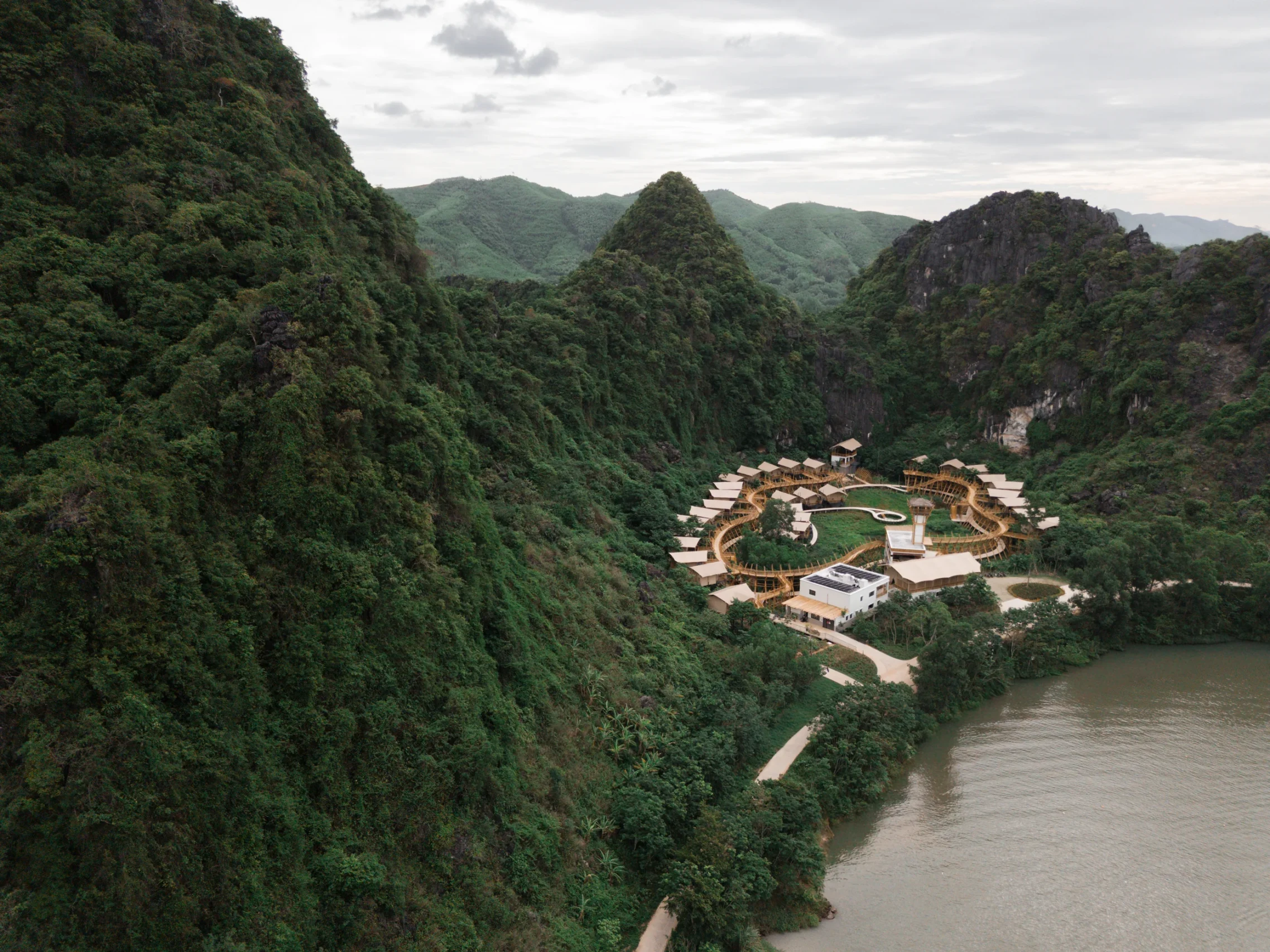
Located along the Son River within the Phong Nha–Ke Bang UNESCO World Heritage landscape, Auko was developed by Van Phu Real Estate Development JSC and is operated by Lumina Wellbeing. The resort features 30 eco-wellness tented lodges arranged in small clusters, with elevated bamboo walkways and reclaimed timber structures that allow the property to adapt to seasonal flooding while minimizing its environmental footprint.
Design and sustainability at the core
The lodges are designed to blend seamlessly with the natural surroundings, using materials and construction methods that respect the local ecosystem. The property holds EDGE Advanced certification, which verifies significant reductions in energy and water consumption compared to conventional buildings. Auko also relies on solar power and has eliminated single-use plastics across its operations.
Beyond its own footprint, Auko works closely with local communities to support resilience and biodiversity. The resort offers all-inclusive stays that include wellness programs, nature-based activities, and cultural experiences, connecting guests with the environment and the people who call this region home.
This recognition comes at a time when wellness and local experiences are increasingly driving travel decisions. Auko's model aligns with that trend, offering a stay that is both restorative and responsible.
The awards also highlight a broader movement in Vietnam's hospitality sector toward sustainable tourism. As more travelers seek eco-conscious options, properties like Auko are setting a benchmark for how luxury and sustainability can coexist. The property's success in its first three months suggests that there is strong demand for this type of experience in the region.
Industry observers note that Auko's approach could serve as a template for other developers looking to build in sensitive environments. By prioritizing design that adapts to natural conditions and engaging with local stakeholders, the lodge demonstrates that sustainability can be a core business strategy rather than an afterthought.
With its early award wins, Auko is gaining recognition as a new model for sustainable hospitality in Vietnam. The property's achievements are likely to attract attention from international travelers and industry professionals alike, further cementing Phong Nha's reputation as a destination for eco-conscious tourism.
For travel professionals, Auko's success underscores the growing importance of sustainability credentials in the hospitality sector. As more properties pursue certifications like EDGE and compete for awards such as HICAP, the industry is clearly moving toward a more environmentally responsible future.