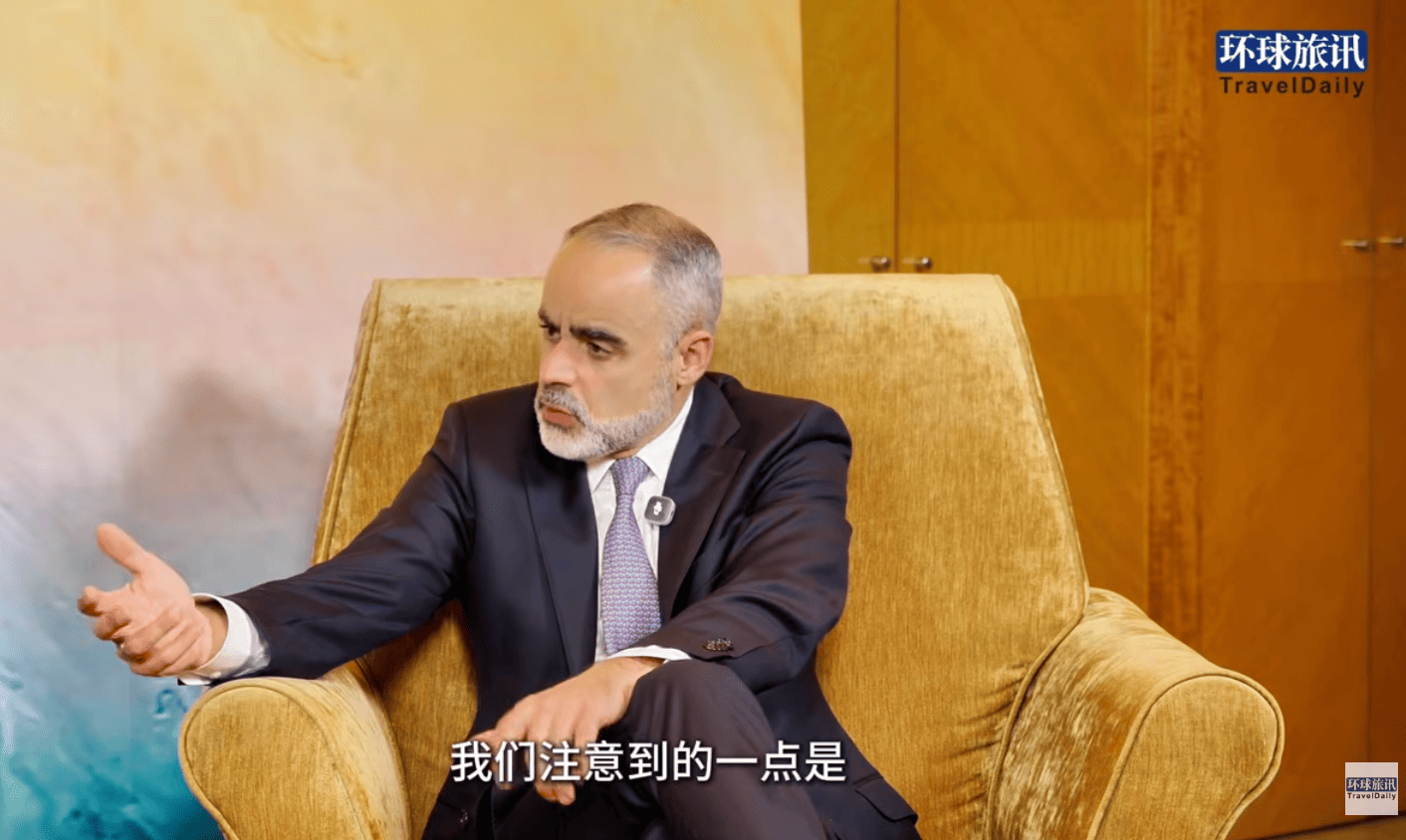
Europe is recalibrating its pitch to Chinese travelers, moving away from the era of large tour groups and iconic capitals toward a more personalized, experience-driven model. Eduardo Santander Fernández-Portillo, CEO of the European Travel Commission (ETC), outlined the strategy during an interview with TravelDaily’s Charlie Li in Shanghai, emphasizing that the new Chinese visitor is more likely to be a small group of family or friends exploring national parks, local markets, or cooking classes.
Santander noted that Chinese travel to Europe has surged nearly 52% year-on-year from 2024 to 2025, with Europe remaining an “aspirational” destination. However, he stressed that this growth brings both “leadership and responsibility” as Europe competes with other regions for Chinese outbound tourism.
From big groups to niche interests
The pre-pandemic model of Chinese tourism to Europe was characterized by large groups and crowded landmarks, which often created tension and a subpar experience for visitors. Santander observed that the shift toward smaller, more intimate travel has been driven by a desire for authentic cultural exchange. “Someone that is very much interested in being part of the culture and have a real exchange” is the ideal visitor, he said. Groups are still welcome, but only if they are “well-organized” and contribute to the local economy.
These new travelers want to “feel special,” Santander explained, seeking personal experiences they can share on WeChat and become travel ambassadors themselves. ETC is responding by working with influencers and travel journalists to promote a message that Europe is open to Chinese travelers “in a different way.”
Promoting hidden gems and responsible travel
ETC’s China strategy now prioritizes small and medium-sized destinations that are eager to introduce themselves to Chinese visitors, while reducing promotion for big landmarks that “don’t need promotion.” The campaign is built on four pillars: travel off-peak, travel off the beaten track, travel green, and love local. Santander encourages visitors to fly into Europe, then use trains for onward travel, and consume local products.
The commission is also segmenting its marketing by interest—food lovers, wine lovers, culture lovers—rather than relying solely on large OTAs and tour operators. All China marketing spend is digital, via platforms like Xiaohongshu and Douyin, with growing use of AI. There are no billboards, and Santander stressed that the digital promise must match the real experience on the ground.
Food, wine, and rail as key draws
Santander highlighted a booming trend of Chinese independent travelers heading to national parks, glamping, and camper vans. Food is a common thread, with Chinese visitors discovering European markets and cooking for themselves. Li recalled a family cooking class in Parma that included young Chinese participants, noting it beats a Michelin-star meal for understanding a place. Wine, distilleries, and microbreweries are also gaining popularity.
Rail travel is central to ETC’s pitch, with 81% of Chinese respondents planning to visit at least two countries per trip. Santander promotes Europe as one entity: “first come to Europe,” then discover the differences. Poland, Czechia, Hungary, and Slovakia are pooling resources to attract Chinese travelers, reflecting the belief that “unity makes strength.” Trains are safe, convenient, and increasingly accessible with Chinese-language apps, and they allow for flexible, on-the-go planning.
Price, safety, and service concerns
ETC’s Autumn/Winter 2026 Long-Haul Travel Barometer shows 54% of Chinese respondents intend to travel to Europe, down about 15 points year-on-year, while 37% have already booked flights, up 4 points. Santander attributes this to rising energy costs and higher service expectations. He acknowledged concerns about potential fare increases, citing Ryanair’s CEO warning of up to 20% hikes, but said ETC is “concerned to a certain degree” and cannot control pricing.
Despite these challenges, Santander remains optimistic, noting that personal experiences “talk more than every campaign.” For travel professionals, the takeaway is clear: Europe is repositioning itself as a destination for smaller, more engaged Chinese travelers, and those who adapt their offerings—from rail packages to niche culinary tours—will be best positioned to capture this evolving market.