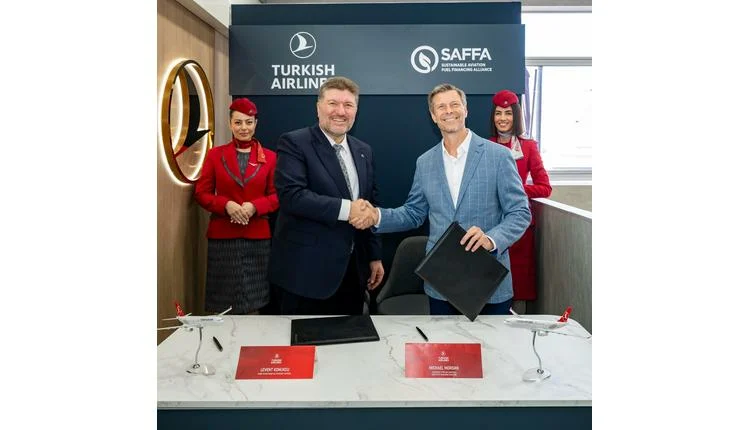
Turkish Airlines has committed to the SAFFA Fund I, LP, a dedicated investment vehicle managed by Burnham Sterling Asset Management LLC that targets accelerated production of sustainable aviation fuel (SAF). The move reinforces the carrier’s long-term growth strategy and its publicly stated sustainability targets.
Launched in December 2023, the SAFFA Fund focuses on SAF projects that have reached technological maturity, aiming to build a diversified portfolio across different production pathways and geographic regions. Airbus serves as the anchor investor, with participation from a range of leading airlines and global aviation and financial institutions.
Strategic alignment with Airbus and industry partners
By joining the fund, Turkish Airlines gains direct access to emerging SAF supply and positions itself closer to the investment and technology projects that are shaping the sector’s future. The partnership also strengthens the carrier’s shared sustainability objectives with Airbus, a key aircraft supplier.
Levent Konukcu, Chief Investment & Strategy Officer at Turkish Airlines, stated: “With this investment in the SAFFA Fund we aim not only to contribute to the development of the sustainable aviation fuel ecosystem but also to maintain our active role in supporting innovative projects that shape the future of the industry.”
Michael Dickey Morgan, Executive Managing Director of Burnham Sterling Asset Management LLC, added: “Turkish Airlines’ investment adds scale to that strategy and evidences the confidence the Fund’s participants have in this asset class.”
The fund’s structure allows participants to pool capital and share risk across multiple SAF projects, a model that is gaining traction as airlines seek to meet regulatory mandates and voluntary net-zero commitments. Turkish Airlines’ involvement comes as the industry faces mounting pressure to decarbonize, with SAF seen as the most viable near-term solution for long-haul flights.
Turkish Airlines continues to support the industry’s transformation through strategic partnerships and investments, contributing to the widespread adoption of sustainable aviation fuels. The carrier has also expanded its pilot training capabilities through a recent simulator deal with CAE, underscoring its broader operational investments.
For travel professionals, the fund’s progress will be worth monitoring as it could influence SAF availability and pricing for airlines globally, with downstream effects on corporate travel contracts and carbon offset programs. The move also signals that major network carriers are willing to invest directly in fuel production infrastructure, a shift from earlier reliance on voluntary carbon offsets.