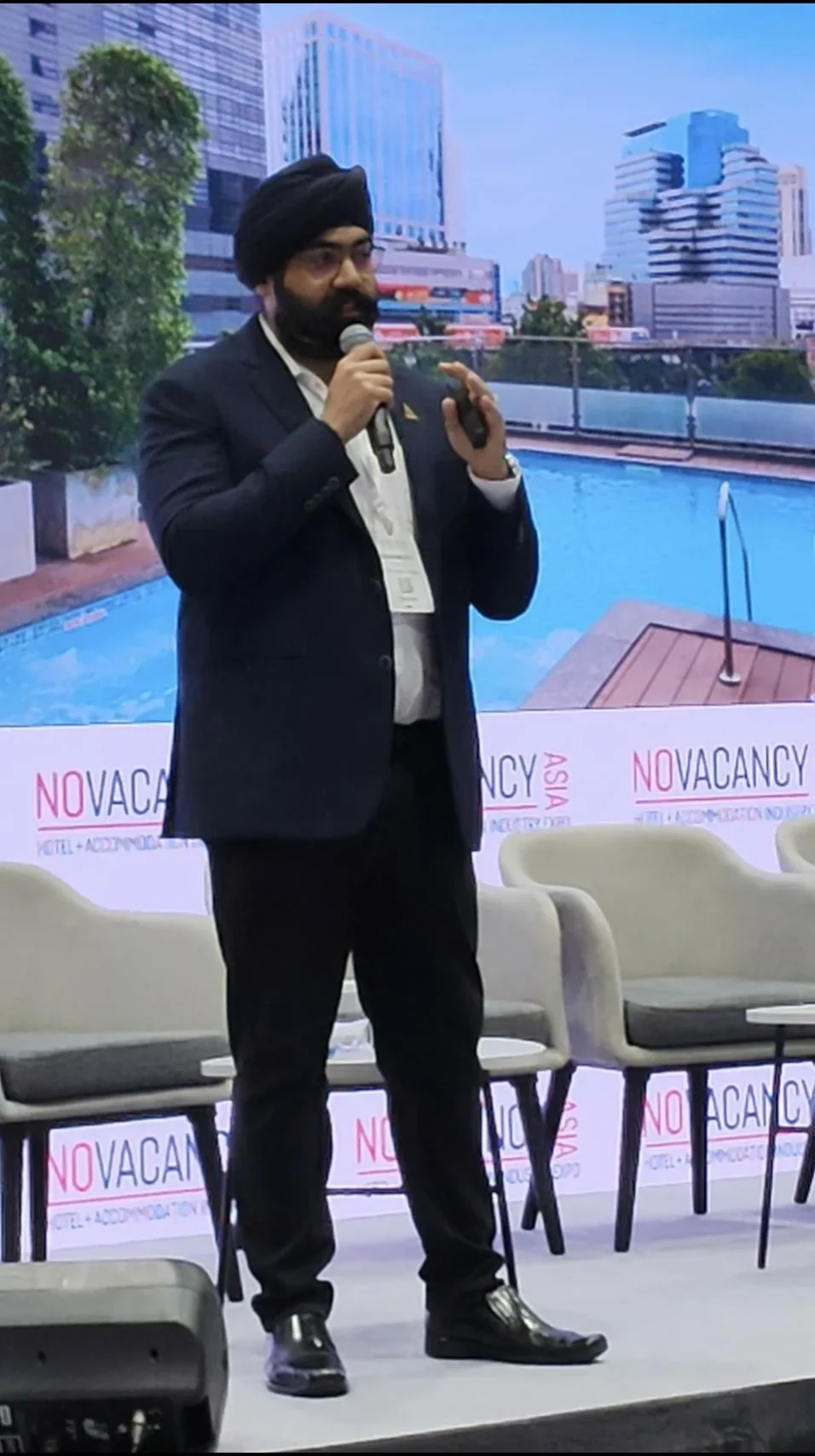
For Manit Thakralbutra, chief executive of Arawana Group, hospitality was not a career choice but a birthright. Growing up in a family with deep roots in the hotel business, he spent his childhood in and out of properties, absorbing revenue meetings and staff interviews long before he ever held a formal position. That unconventional education, he told attendees at NoVacancy Asia in Bangkok, instilled a conviction that "hospitality is in our DNA."
At 38, Manit represents a new generation of hoteliers who blend traditional industry knowledge with a willingness to challenge established operating models. His path, however, did not start in the boardroom. He began in hotel sales, learning the commercial imperative of filling rooms before moving into operations and gaining a holistic view of how hotels function. He also witnessed the transition of the family's property into an established chain, which gave him a firsthand look at both the advantages and constraints of working under an international brand umbrella.
Those experiences proved pivotal when the pandemic brought global travel to a standstill. Rather than seeing Covid-19 solely as a crisis, Manit viewed it as an opportunity to rethink the business from scratch. With revenue under pressure and travel demand collapsed, he used the disruption to experiment with ideas that would later define Arawana. The group tested long-stay accommodation, adopted cloud-based property management systems, and introduced smart-lock technology—practical decisions aimed at operating efficiently with limited resources.
"The pandemic became a testing ground," Manit said. "We learned to stay lean and agile, and that philosophy continues to guide our expansion." The brand's name itself reflects those beginnings: Arawana, inspired by the arowana or dragon fish, a symbol of strength, prosperity, and good fortune in many Asian cultures. That symbolism appears in small touches throughout the guest experience—good-luck sleep aids in rooms, money trees in lobbies, and prosperity-themed giveaways—giving the brand a distinctive identity beyond its accommodation offering.
Value over luxury: a pragmatic pricing philosophy
In a crowded hotel market where brands often compete on luxury, location, or technology, Arawana has chosen a different route: genuine value. "We want guests to feel their stay was worth what they paid," Manit explained. This philosophy requires a more considered approach to pricing and property management. The group works with properties in varying conditions and market positions, and Manit believes each hotel should be assessed individually rather than imposing a uniform pricing strategy.
A property in better condition can command a higher rate, while another may need to compete differently based on its facilities and location. The goal is not to be the cheapest option but to offer a fair price that reflects the actual experience. This approach is particularly relevant to Arawana's work with existing hotel owners. Rather than promising that every property can become a luxury hotel, Manit prefers an honest conversation about what can realistically be achieved. "We work with what a property has, not what it might ideally become," he said.
Technology is another pillar of the Arawana model. The "Stay Smart" philosophy has two meanings, Manit noted: for the business, it means using technology to improve efficiency; for guests, it encourages informed accommodation choices and reinforces the promise of good value. The group has grown from its first hotel to 13 properties without significantly expanding its core central team, a feat supported by these tech investments.
As Arawana continues to expand, Manit remains focused on building a brand that travelers trust to deliver on its promises. In an era where hotels are increasingly turning to brand tie-ups to stand out, Arawana's value-driven approach offers a counterpoint. The group's growth also mirrors broader trends in the region, such as APAC dining growth outpacing global, where value chains are leading. For Manit, the future lies in staying true to the lessons of his childhood and the pandemic: hospitality is about trust, and trust is built on delivering value.