Airports across Asia are no longer just transit points—they are becoming intelligence-led fortresses in the fight against human trafficking. Regional aviation authorities are deploying advanced tracking, cross-agency task forces, and frontline training to disrupt illicit networks that exploit international gateways.
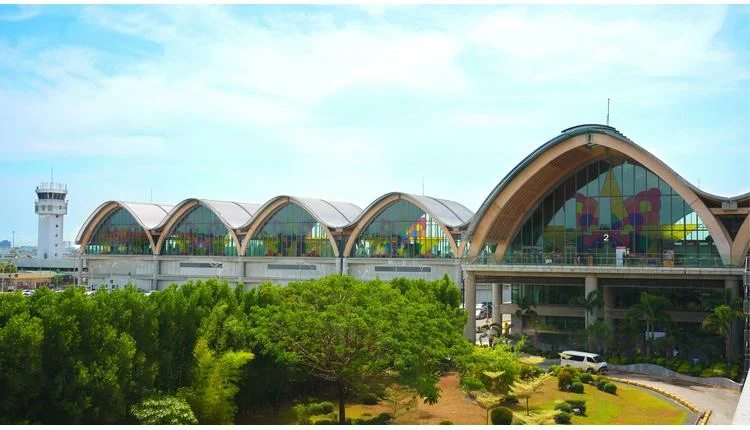
In the Philippines, the government has established a dedicated Airport Task Force Against Trafficking, operating out of Ninoy Aquino International Airport (NAIA). This unit brings together airport management, immigration, law enforcement, and the National Bureau of Investigation (NBI) to enable rapid intelligence sharing and real-time terminal monitoring. The initiative reflects a broader shift from fragmented security protocols to integrated surveillance frameworks.
Technology and collaboration at the core
Following high-profile investigations at NAIA, the Philippine Bureau of Immigration fast-tracked the deployment of body-worn audio and video cameras for all airport-based immigration officers. This move serves as a structural deterrent against corrupt “escort” schemes and internal collusion. Airport operators are also enforcing “no contact” routing protocols alongside automated digital tracking to eliminate unmonitored side-corridors or unauthorized bypasses.
Japan’s premier gateways—Narita International Airport (NRT), Tokyo Haneda Airport (HND), and Chubu Centrair International Airport (NGO)—have partnered with flag carriers Japan Airlines and All Nippon Airways to launch synchronized digital signage campaigns. Continuous video loops, produced with the International Organization for Migration (IOM), educate passengers on identifying and reporting suspicious activity in high-traffic terminal zones.
These efforts align with global standards under the guidance of Airports Council International (ACI) Asia-Pacific & Middle East, which establishes standardized, rapid-reporting channels between commercial airlines and airport security personnel. The goal is to create a seamless network where information flows instantly across borders.
Frontline training as a critical defense
Recognizing that ground crews and inflight staff are uniquely positioned to spot individuals in distress, regional airlines are instituting comprehensive profiling programs. AirAsia Philippines has trained upwards of 20,000 team members across the ASEAN region to identify behavioral and psychological red flags—such as passengers lacking control of their own passports, showing disorientation, or presenting incoherent travel itineraries.
Similarly, Malaysia Airports has launched targeted frontline training programs, empowering security officers, ground personnel, and baggage handlers to spot behavioral anomalies connected to broader illicit networks. These initiatives are part of a wider industry push to make every airport employee a vigilant sentinel.
The aviation sector’s response is not just about technology; it’s about creating a culture of awareness. As airports are advised to define their tech goals before spending, the focus here is on practical, measurable outcomes. The integration of body cameras, digital tracking, and cross-agency task forces demonstrates a commitment to accountability and transparency.
Beyond the immediate security measures, these efforts have broader implications for the travel industry. For airlines and airports, the ability to protect vulnerable passengers is becoming a competitive differentiator. Travel agents and tour operators, who often serve as the first point of contact for travelers, are also being encouraged to recognize signs of trafficking and report them.
The crackdown comes as airspace closures in West Asia squeeze low-cost carrier finances, adding pressure on airlines to maintain operational integrity. Yet, the anti-trafficking measures are seen as essential investments, not optional extras.
By uniting technology, cross-border intelligence, and frontline vigilance, Asia’s aviation sector is building an unyielding defense to keep the skies secure. The message is clear: human trafficking has no place in modern aviation, and the region’s airports are leading the charge.