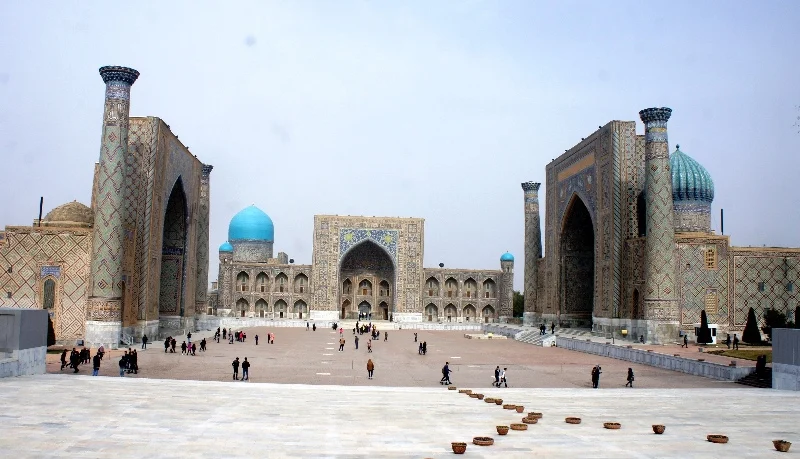
Central Asia is shedding its outdated image as a conflict zone or barren expanse, emerging as a serious contender in global tourism. According to a December 2025 report from Kyrgyz Tourism, the region recorded 28.6 million international arrivals in 2024—an all-time high. Gulmira Abdrahmanova, a correspondent for Kazakh publication Kazinform and author of the report, attributes this surge to “natural and cultural wealth, but also to the active efforts of countries to develop the industry.”
Yet Abdrahmanova warns that progress is uneven. “The main obstacles are insufficient infrastructure, visa and administrative barriers, high prices with low service quality, shortage of qualified personnel, and weak promotion of the tourist product abroad,” she notes. These issues are familiar to travel professionals eyeing the region’s potential.
What Sets Central Asia Apart
Central Asia’s appeal lies in its unique position: close enough to serve as a short-break destination for travelers from Eurasia, Russia, South Asia, and the Gulf, yet culturally distinct enough to attract long-haul visitors seeking undiscovered landscapes and heritage. A January 2026 report from The Caspian Post emphasizes that “the region is early in its tourism cycle,” offering a rare window for first-mover advantage.
Governments across Kazakhstan, Uzbekistan, Kyrgyzstan, Tajikistan, and Turkmenistan view tourism as a catalyst for foreign investment and job creation, reducing reliance on energy exports. However, experts caution against copying mass-tourism models like Dubai or Antalya. Instead, the region must convert its diverse assets—from the Silk Road cities of Samarkand and Bukhara to the Tien Shan mountains—into a coherent, cross-border product.
Infrastructure Gaps and Visa Hurdles
Maksat Ubaliev, director of tourism under the Kyrgyz Republic’s Ministry of Economy and Commerce, identifies three critical pain points: hospitality, transportation, and visa policy. The region lacks sufficient mid-range and budget hotels, with accommodation unevenly distributed. Road conditions remain poor compared to neighboring regions, and airfares are steep—round-trip tickets range from US$550 to US$1,200 depending on the destination. Land and sea transport also lag, complicating multi-country itineraries.
The absence of a single visa for all Central Asian states limits tourist mobility and reduces the attractiveness of regional tours. Ubaliev points to “differences in regulatory documents and remaining bureaucratic barriers” as key obstacles.
Pathways to Growth
Efforts to address these challenges are underway. The European Union-funded SWITCH-Asia program introduced its Model for Sustainable Tourism (MoST) in 2021, targeting Uzbekistan, Tajikistan, and Kazakhstan. The model promotes a lifecycle and supply chain approach, covering regional policy, standards, value chains, and stakeholder awareness.
Experts now advocate five priorities: a unified regional brand, streamlined visa regimes, investment in transport infrastructure—including airlift from hubs like Dubai, Istanbul, and Moscow—hospitality training programs, and digital promotion. Airlines such as Air Astana, Uzbekistan Airways, and flydubai are expanding routes, while hotel groups like Accor and Radisson are exploring opportunities. The region’s tourism boards are also eyeing partnerships with GDS systems like Amadeus and Sabre to improve booking visibility.
For travel professionals, Central Asia represents a frontier market with genuine growth potential—provided the region tackles its structural weaknesses. As The Caspian Post notes, the strategic challenge is to create an integrated experience that feels seamless, not fragmented by borders.