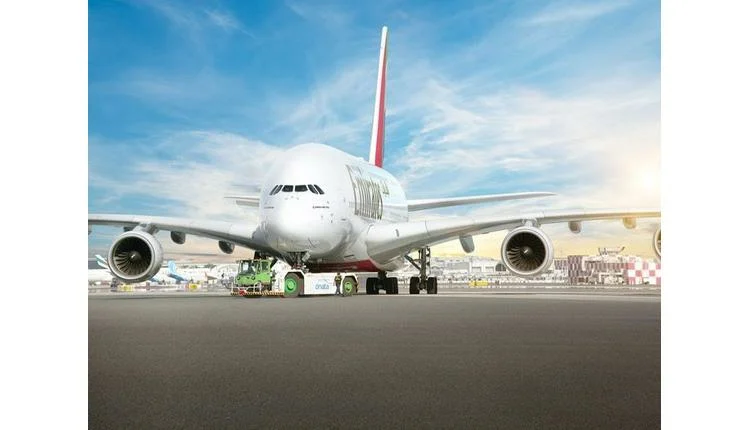
Emirates Group has reported a pre-tax profit of AED 4.1 billion (US$1.1 billion) for the first half of its 2026-27 financial year, a 66% decline from the same period last year, as regional conflicts and elevated fuel prices weighed on the Dubai-based conglomerate. Revenue dropped 12% to AED 66.2 billion (US$18 billion), reflecting airspace restrictions and softer travel demand in affected corridors.
Chairman and CEO Sheikh Ahmed bin Saeed Al Maktoum attributed the resilience to the UAE government's proactive support in restoring air transport activity and to the group's sustained investment in fleet and product enhancements. “Our business model and our people stood up to the test,” he said, pointing to the carrier's ability to maintain network integrity under challenging conditions.
Network recovery and operational resilience
Emirates airline faced significant operational hurdles, including airspace closures and government travel advisories that dampened passenger confidence. By the end of September, the carrier had restored 91% of its pre-disruption network, serving 150 airports across 78 countries. To rebuild demand, Emirates introduced comprehensive travel cover and flexible booking policies, measures that helped stabilise forward bookings.
The group's cargo arm, Emirates SkyCargo, proved a bright spot. Revenue climbed 5.2% even as transported tonnage slipped 1%, a divergence driven by the disruption of marine trade routes in the Red Sea and Gulf regions, which pushed shippers toward airfreight. SkyCargo expanded its network with new destinations and added freighter capacity to capture the surge in demand, including for high-value electronics and perishables.
Looking ahead, Sheikh Ahmed expressed “measured optimism” for the second half, emphasising that the group remains focused on safety, quality, and customer satisfaction amid ongoing geopolitical and economic volatility. He noted that the group's diversified business model—spanning aviation, travel services, and logistics—provides a buffer against regional shocks.
The results come as the broader industry grapples with fuel costs and fare pressure reshaping airline profitability. Emirates' ability to maintain profitability despite a 12% revenue decline underscores the strength of its hub model at Dubai International (DXB), which continues to attract connecting traffic from Asia, Europe, and Africa.
For travel professionals, the H1 figures signal that while premium demand remains robust, the group is not immune to external shocks. The 66% profit drop is a stark reminder of the fragility of air travel in conflict-prone regions. However, the cargo division's performance highlights the growing importance of airfreight as a revenue stabiliser, a trend that could influence capacity decisions across the industry.
Emirates' investment in fleet and product—including the ongoing retrofit programme and new cabin interiors—remains a key differentiator. The airline has also been active in leveraging AI for secure cargo transport, a move that aligns with its focus on technology-driven efficiency.
As the group enters the second half, its ability to navigate airspace restrictions and fuel price volatility will be closely watched. The UAE government's continued support, combined with Emirates' operational flexibility, provides a foundation for recovery, but the path forward remains uncertain.