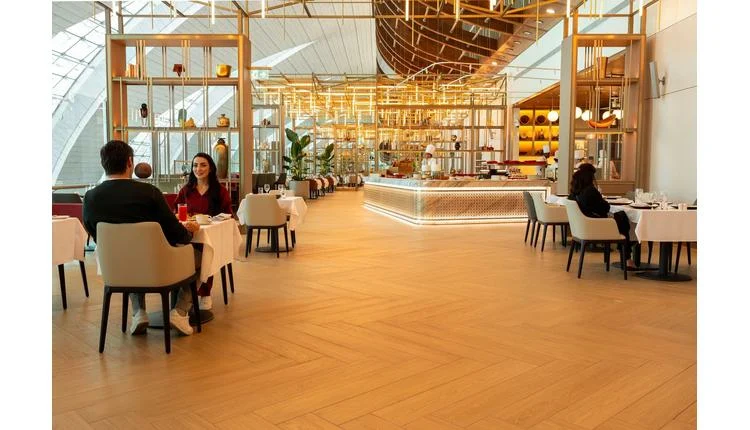
Emirates has unveiled a new First Class lounge at Concourse B, Terminal 3, Dubai International Airport, marking the first phase of a AED 400 million investment to overhaul its flagship ground facilities. The lounge, which opened on 18 November, will serve First Class passengers for approximately one year before being transformed into an upgraded Business Class lounge.
The investment is part of Emirates' broader strategy to align its airport experience with the premium service delivered onboard. Sir Tim Clark, President of Emirates Airline, said: “Our customers expect the very best from Emirates, whether whilst flying or spending time with us on the ground.” The new lounge provides a preview of next-generation features that will be rolled out across the airline's lounge network, including innovative dining, wellness, and entertainment concepts.
Design and amenities
The temporary First Class lounge showcases Emirates' signature aesthetic, with gold, bronze, and marble finishes. It offers multipurpose seating equipped with built-in chargers, dedicated workspaces, and a range of dining options. Highlights include a Brew Bar serving coffee and cocktails, à la carte dining, live cooking stations, and a dedicated sushi bar.
This interim facility is designed to give Emirates the flexibility to test new concepts before they are permanently installed in other lounges. The airline expects to expand its lounge footprint at Dubai International, increasing the number of dedicated lounges in Terminal 3 from seven to eight.
Long-term expansion plans
By 2027, Emirates plans to introduce new First Class lounges in Concourses B and C, featuring private VIP suites, wellness facilities, and exclusive dining experiences. Business Class lounges will also undergo significant upgrades, with new culinary concepts and enhanced hospitality services.
The move comes as Gulf carriers continue to invest heavily in ground experiences to differentiate themselves in a competitive long-haul market. Emirates' rival Qatar Airways has also expanded its Al Mourjan lounge at Hamad International, while Etihad Airways has revamped its premium lounges in Abu Dhabi.
For travel professionals, the development signals a growing emphasis on the airport lounge as a key touchpoint for customer loyalty and premium revenue. As Plaza Premium Group's recent expansion in Hokkaido demonstrates, independent lounge operators are also capitalising on this trend.
Emirates' investment in its Dubai hub is part of a wider effort to enhance the passenger journey from check-in to boarding. The airline has also been upgrading its premium cabins and inflight entertainment, ensuring consistency across the entire travel experience.
Industry observers note that the temporary lounge strategy allows Emirates to maintain service levels during construction while gathering valuable feedback from First Class passengers. The data collected will inform the design of the permanent lounges, which are expected to set new benchmarks for airport hospitality.
For agents and tour operators, the enhanced lounges add value to premium fare products, making them easier to sell to discerning clients. The move also aligns with the broader trend of sustainable tourism development, as Emirates aims to reduce waste and energy consumption in its new facilities.
With the first phase now operational, Emirates is poised to redefine the premium airport experience in the Middle East. The airline's commitment to innovation on the ground mirrors its reputation in the air, and the new lounge is a clear signal of its ambitions.