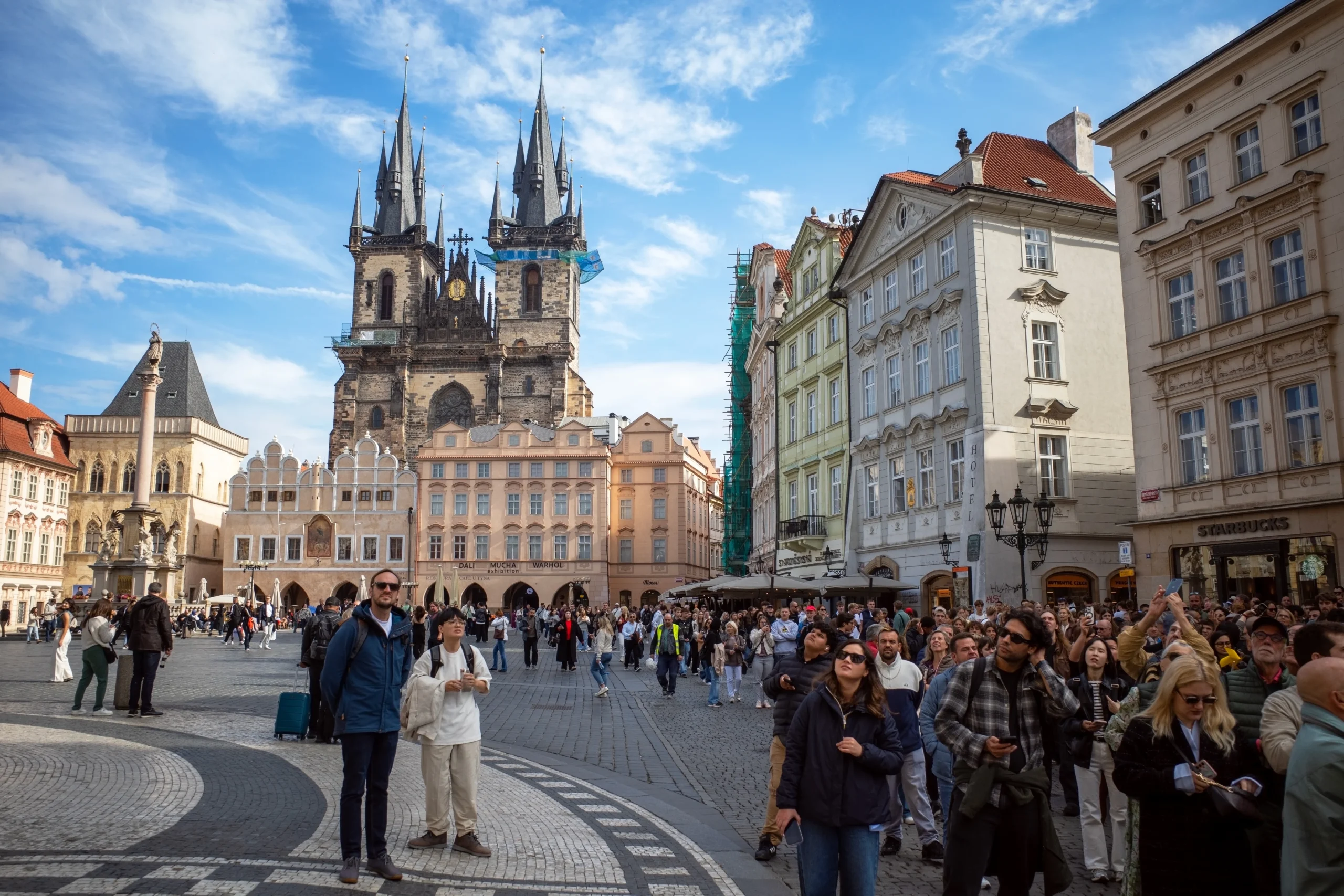
The European Union recorded close to 600 million international tourist arrivals in 2025, representing roughly 40% of global travel flows. But with visitor numbers still climbing, the European Commission is recalibrating its approach: rather than chasing ever-higher volumes, the bloc wants tourism to deliver stronger economic returns for destinations and local communities.
On 4 November, the Commission unveiled its EU Sustainable Tourism Strategy, a roadmap designed to tackle overtourism, curb the sector's environmental footprint, and sharpen the competitiveness of travel businesses across member states. The plan aims to redistribute visitor demand more evenly across regions and seasons, channel investment into sustainable projects, and help operators adapt to shifting traveller expectations.
Ten action areas to reshape European tourism
The strategy sets out ten priority areas spanning business competitiveness, destination management, sustainability, and international cooperation. For travel companies, the Commission proposes cutting red tape, modernising VAT rules that affect tourism services, and supporting small and medium-sized enterprises (SMEs) in adopting cleaner and digital technologies. A new EU Tourism Observatory is slated for 2027 to monitor market trends and inform decision-making, while an EU Tourism Academy will focus on workforce training and skills development.
To address overtourism, the Commission plans to introduce an EU Model for Tourism Management and a Toolbox for Balanced Tourism, both expected in the second half of 2027. These tools will help destinations manage visitor flows, encourage off-peak travel, and promote lesser-known locales. The strategy also targets improved connectivity through revised aviation regulations, cross-border car rental rules, and integrated local public transport ticketing.
Hotels face sharper sustainability focus
Accommodation providers will be encouraged to boost energy and water efficiency, cut waste, and measure their environmental impact. The Commission plans to update EU Ecolabel criteria for tourist accommodation by 2028, alongside guidance for hotels to assess their footprint. While these measures could add investment and operational pressure—especially for smaller independent properties—the Commission says it will provide SMEs with practical tools to ease the transition. The proposals stop short of mandatory new hotel standards, but they signal the direction of future European policy.
The World Travel & Tourism Council (WTTC) has welcomed the strategy, calling it a vital step toward strengthening tourism's contribution to Europe's economic competitiveness, employment, and investment. WTTC stressed the need for public-private collaboration to turn the proposals into tangible results. It also backed the planned observatory, a Common European Tourism Data Space, and the academy, saying these could improve destination management, accelerate digital transformation, and ease workforce shortages.
“This strategy provides an important foundation for the sector, but stronger cooperation between governments, destinations, and private businesses is essential,” said Gloria Guevara, WTTC president and chief executive.
WTTC also highlighted the importance of digital travel credentials, biometric technologies, and more efficient border procedures to bolster Europe's global competitiveness.
Smaller destinations gain ground
The strategy arrives as travel demand across Europe becomes more geographically diverse. According to the European Travel Commission's latest European Tourism: Trends & Prospects report, international arrivals to Europe rose 3% during summer 2026 compared with the same period a year earlier. Around 80% of European destinations recorded growth in foreign visits.
Malta led with an 18% increase in arrivals, followed by Slovakia (15%), Ireland (13%), and Poland (11%). These figures underscore opportunities beyond traditional hotspots and reinforce the Commission's ambition to spread tourism benefits more widely.
Implementation will determine the strategy's real-world impact. The Commission expects tourism to have received approximately €18 billion in EU support during the 2021–2027 budget period through existing programmes—not a new funding package. Key initiatives, including the observatory, academy, and balanced destination management framework, are scheduled for 2027. Revised accommodation ecolabel criteria are due in 2028, and the Common European Tourism Data Space is expected to be fully operational by 2029.
For hotels, tour operators, and destination managers, the strategy signals a shift in how success will be measured. Europe is not turning away from visitor growth, but it wants tourism to generate greater economic value for businesses and communities while safeguarding the destinations that attract travellers. As the industry adapts, similar dynamics are playing out globally—see how US festive season demand is softening and how cruise passenger numbers are projected to hit 40 million by 2027.