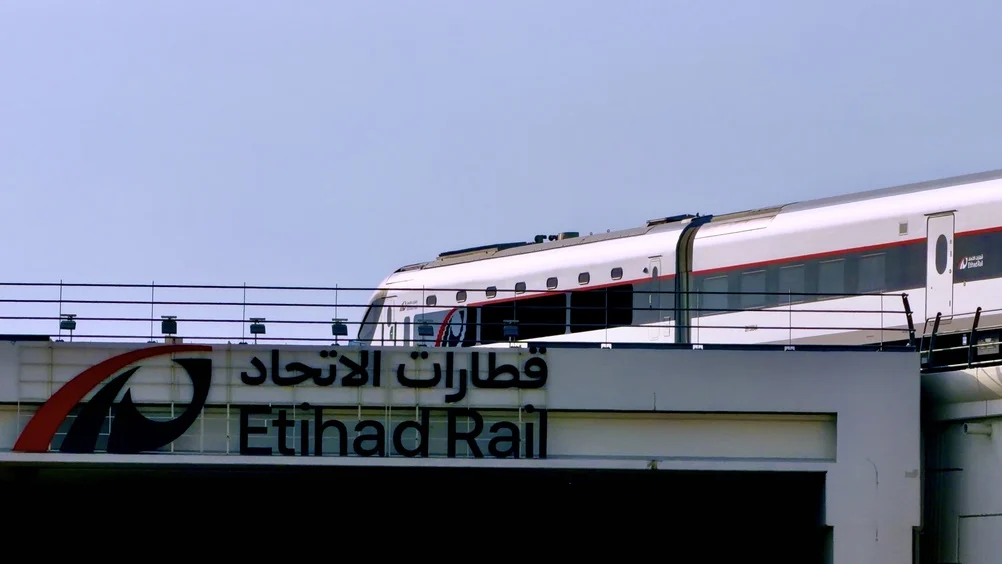
Etihad Rail has opened ticket sales for passenger services between Dubai and Abu Dhabi, with the first trains set to depart on September 30. The new link will cut the journey between the two emirates to 57 minutes, offering a scheduled alternative to road travel on one of the UAE’s busiest corridors.
The service will connect Al Yalayis Station, near Jumeirah Golf Estates, with Mohamed bin Zayed City Station in Abu Dhabi. This marks the first time Dubai joins the passenger network, which began operations between Abu Dhabi and Fujairah on June 30. Al Dhaid in Sharjah will also open on the same day, expanding the network’s reach across the northern emirates.
A new option for multi-emirate tourism
Dubai and Abu Dhabi have traditionally been marketed as distinct destinations, despite their proximity. Reliable rail now gives tour operators and destination management companies greater flexibility to build itineraries around both cities without relying solely on private coaches or car transfers. A visitor based in Dubai can take a day trip to Abu Dhabi’s cultural attractions, while a traveller staying in the capital can easily access Dubai’s shopping, events, and business districts.
As the network expands, the same principle could apply to destinations farther north and east. However, the success of this model will depend heavily on what happens at either end of the railway. Station-to-hotel transfers, public transport integration, and service frequency will determine whether the 57-minute journey translates into a competitive door-to-door trip. Dubai has an advantage here, as Al Yalayis is being integrated into the emirate’s wider transport network.
Corporate travel gains another choice
The business travel implications are equally significant. Dubai and Abu Dhabi generate substantial corporate movement between government offices, financial districts, aviation businesses, exhibitions, and regional headquarters. Rail introduces a level of predictability that road travel often lacks, as well as the ability for passengers to work during the journey.
Early demand suggests travellers are willing to plan around trains. Etihad Rail reported in August that it had sold more than 70,000 passenger tickets since services began, with customers booking an average of 12 days in advance. Several services had already sold out, reflecting strong interest from families, commuters, and tourists. These figures come from the introductory phase and should not be treated as a measure of long-term demand, but they indicate a positive reception.
Hotels and MICE could feel the impact
Hotels and the MICE sector have reason to watch closely. Dubai and Abu Dhabi host major international exhibitions, conferences, concerts, and sporting events, often producing sharp peaks in room demand. Scheduled rail could widen the practical accommodation catchment around major events, giving organisers more flexibility when planning delegate movements, satellite meetings, and pre- and post-conference programmes across the two emirates.
The railway could also encourage a broader shift towards multi-emirate leisure trips. Rather than selling Dubai, Abu Dhabi, and Fujairah as separate stays connected primarily by road transfers, operators will increasingly have the option of incorporating rail into the itinerary. This aligns with the growing trend of Abu Dhabi's cultural district development, which is set to attract more visitors to the capital.
Network expansion continues
The passenger network is still taking shape. According to Etihad Rail, Liwa and Madinat Zayed are scheduled to join on November 30, followed by the remaining Al Dhafra stations on December 30. Sharjah’s University City station is due to open on March 30, 2027.
As those stations come online, the commercial question will move beyond whether UAE residents and visitors will try the train. For tour operators, DMCs, hotels, and event organisers, the more important issue will be how quickly they adapt transfers, packages, and itineraries to a country where travelling between emirates no longer automatically means taking the road. The rail link also complements the region's growing attractions like Dubai Miracle Garden, which continue to draw visitors across emirates.