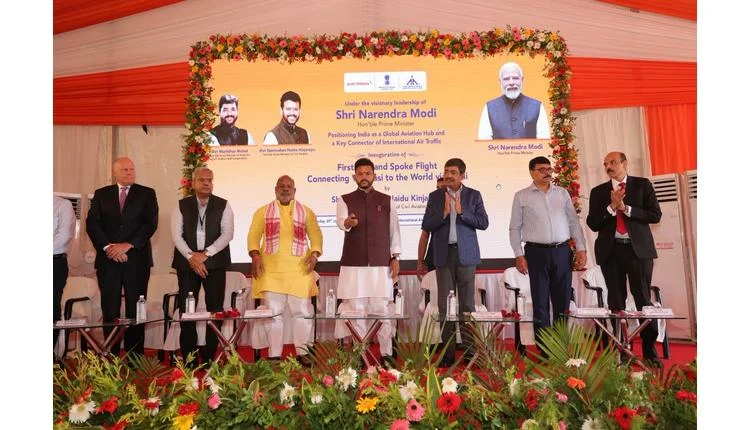
flydubai has inaugurated daily non-stop flights between Dubai International (DXB) and Pokhara International Airport (PHH), marking the first direct air link between Dubai and western Nepal. The service, which began on 23 September, makes Pokhara the carrier's second destination in Nepal after Kathmandu and improves access to the Annapurna mountain range, a key draw for trekking and adventure tourism.
The new route lifts flydubai's weekly flights to Nepal to 35, adding both passenger and cargo capacity. Since 2009, the airline has carried more than 4.5 million passengers to and from Kathmandu, with a significant share connecting through Dubai's hub. The expansion into Pokhara underscores flydubai's strategy of serving underserved markets in South Asia.
Strengthening the Emirates codeshare
The Pokhara service operates under flydubai's codeshare partnership with Emirates, giving passengers access to more than 140 destinations across Asia, Europe, and the Americas via Dubai. Popular connections include Bucharest, Dammam, and Riyadh, while London and New York remain top feeder markets. The partnership allows Emirates customers to book seamlessly onto the new route, enhancing connectivity for both leisure and business travellers.
Sudhir Sreedharan, Divisional Senior Vice President of Commercial Operations at flydubai, said: “Nepal has long been an integral part of flydubai's network. With the launch of our daily flights to Pokhara, we are further strengthening that commitment by offering travellers a seamless, non-stop connection to the country's tourism capital.”
Flights depart daily from Terminal 3 at DXB. Return Business Class fares start from $1,470 (AED 5,400), while Economy Class fares start from $530 (AED 1,950). The pricing positions the route competitively against one-stop options via Kathmandu or other regional hubs.
Pokhara is often described as Nepal's tourism capital, serving as the gateway to the Annapurna circuit and offering adventure activities such as paragliding, boating, and mountain flights. The new direct link is expected to stimulate inbound tourism from the Gulf and beyond, particularly among European and North American travellers who connect through Dubai.
The move also aligns with broader industry trends of expanding point-to-point services to secondary cities. For example, Sun PhuQuoc Airways adding daily Shanghai-Ho Chi Minh City service reflects similar efforts to tap into underserved markets. Meanwhile, Finnair expanding its Tokyo network shows how carriers are boosting frequencies on high-demand routes.
For travel agents and tour operators, the new service opens up packaging opportunities for Nepal's western region, which has traditionally been reached via overland transfers from Kathmandu. The daily schedule also supports MICE groups and corporate travel, given the growing interest in Nepal as an incentive destination.
flydubai's expansion in Nepal comes as the country's aviation sector recovers from the pandemic and looks to diversify its tourism base. The airline's commitment to the market is evident in its long-standing Kathmandu operations and its willingness to invest in new infrastructure such as Pokhara International Airport, which opened in 2023.
Industry observers will watch whether other Gulf carriers follow suit. Emirates, which already codeshares on the route, could eventually operate its own metal to Pokhara if demand justifies it. For now, flydubai's daily service provides a reliable link that is likely to boost both tourism and trade between the UAE and Nepal.