The Strait of Hormuz has re-emerged as a central risk factor for Gulf travel, with shipping traffic slowing, oil prices climbing, and fresh security incidents adding uncertainty for the UAE's aviation and tourism sectors. For airlines, hotels, and travel management companies, the immediate concern is not a shutdown of Dubai or Abu Dhabi—both remain fully operational international gateways. The challenge is more subtle but commercially significant: how long can the region sustain unpredictable shipping movements, changing flight schedules, and a security environment that can shift within hours?
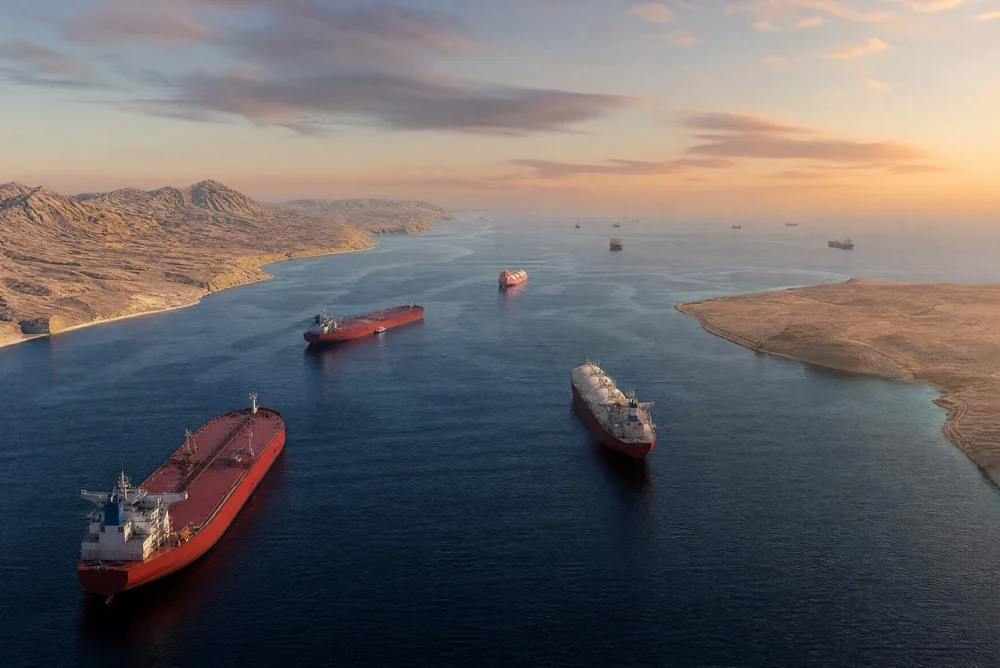
On August 18, former US President Donald Trump stated that no talks were underway with Iran and none were scheduled, while insisting the Strait remained open and safe. Tehran disputed that assessment, claiming the waterway was closed. The gap between these positions is increasingly visible in vessel movements: many shipowners remain cautious about transiting one of the world's most critical energy corridors, and traffic has slowed accordingly.
UAE moves closer to the centre of the crisis
The latest escalation carries particular weight for the UAE, where Dubai and Abu Dhabi have spent years building their status as global aviation, tourism, financial, and logistics hubs. Their ability to maintain connectivity during regional instability has been central to that proposition—and the events of the past week are testing it again. Security concerns sharpened on August 18 when the UAE reported detecting two ballistic missiles launched from Iran. The economic response has also hardened: the UAE has suspended trade with Iran as Gulf tensions intensify, widening the implications beyond security and maritime traffic.
These developments cannot be treated as separate from tourism. Dubai and Abu Dhabi sit at the intersection of aviation, shipping, hospitality, trade, and finance. Disruption in one part of that system quickly feeds into another—through higher fuel and freight costs, more cautious corporate travel policies, or changing traveller sentiment. For destination businesses, perception may prove almost as important as operational disruption. Airports do not have to close for bookings to weaken; repeated security alerts, maritime incidents, and uncertainty over regional airspace can persuade leisure travellers to postpone discretionary trips and companies to tighten travel approval procedures.
Flights continue, but schedules remain fluid
The distinction between disruption and shutdown is crucial. UAE airlines continue to operate extensive international networks, although regional schedules remain vulnerable to cancellations, delays, and short-notice changes. The latest impact has been felt on Emirates, Etihad, and Air Arabia flights, reflecting the fluid operating environment facing carriers. For Dubai and Abu Dhabi, selective disruption can create a more complicated commercial challenge than a short, clearly defined closure.
The two hubs depend heavily on connecting passengers travelling between Asia, Europe, Africa, and the Americas. A traveller's long-haul flight into the UAE may operate normally while an onward regional sector is delayed, rerouted, or cancelled. That puts pressure on airline rebooking systems, airport operations, hotel accommodation, and TMCs responsible for travellers moving through the region. It also complicates communication: the relevant advice can change between the time a passenger books, leaves home, and reaches the connecting airport. Airlines must simultaneously reassess routes around sensitive airspace, with longer diversions meaning more fuel, additional aircraft hours, and more complex crew scheduling.
Oil is becoming a travel cost story again
The Strait's most direct influence on travel comes through energy. Oil prices were rising amid continuing uncertainty over exports through Hormuz; two days earlier, crude had climbed as US-Iran diplomacy stalled and shipping slowed. For aviation, a sustained increase matters more than a single day's price movement. Fuel is one of the industry's largest operating expenses. When geopolitical risk pushes oil higher at the same time that carriers are flying longer routes around sensitive airspace, the effect is compounded: more expensive fuel, greater consumption, longer aircraft utilisation, and more complicated scheduling. Those costs do not automatically translate into an immediate fare increase—airlines can absorb some volatility through hedging, network adjustments, and capacity management—but a prolonged shock is harder to contain.
Shipping companies are already changing behaviour
The response of major energy and shipping companies offers another indication of how businesses are treating the risk. Chinese state-owned shipping companies were deploying oil tankers outside the Gulf to avoid vulnerable maritime chokepoints. This move illustrates the practical response to Hormuz uncertainty: companies are not necessarily waiting for a definitive political declaration on whether the Strait is open or closed before changing operations. Fujairah consequently becomes even more strategically important. Its position outside the Strait gives the UAE an alternative energy and logistics gateway when traffic through Hormuz is constrained. Saudi Arabia has also been adapting—Saudi Aramco was offering crude to some Asian refiners outside Hormuz, another sign of how companies are restructuring supply arrangements around the waterway.
For travel professionals, the takeaway is clear: the UAE's hubs remain open, but the operating environment is increasingly volatile. Airlines must manage flexible schedules and rising fuel costs; hotels and TMCs should prepare for shifts in booking patterns and traveller confidence. As the situation evolves, the industry's resilience will depend on its ability to adapt quickly—just as it has in previous regional crises. For a broader perspective on how global travel is navigating geopolitical pressures, see Europe's share of leisure travel spend and hotel groups' conversion strategies.