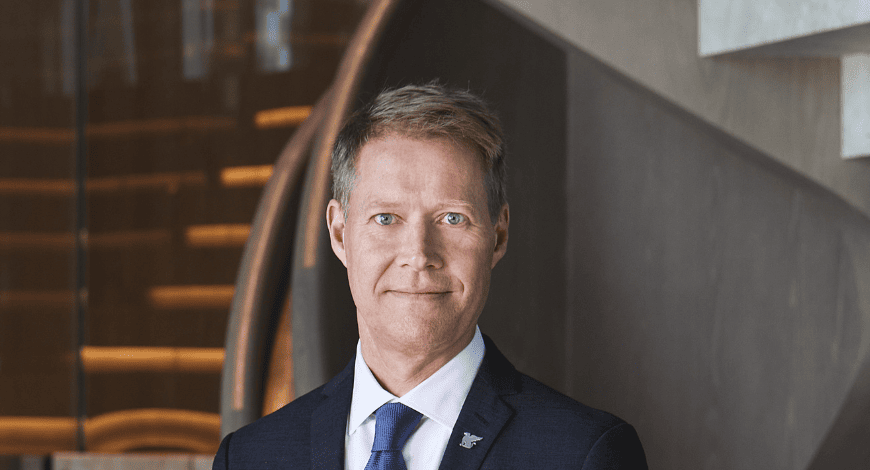
JW Marriott Hotel Tokyo has named Jakob Helgen as its new General Manager, effective 28 June 2026. The appointment signals the property's ambition to carve out a distinct identity in Japan's fiercely competitive luxury hospitality segment, where global brands jostle for share among discerning international travelers and high-net-worth locals.
Helgen, a Swedish national, brings more than two decades of Marriott International experience to the role. He most recently served as Area Vice President for Thailand, Vietnam, Cambodia, and Myanmar, where he oversaw a significant expansion of the group's footprint. Under his leadership, Marriott's portfolio in the region grew from 50 to 80 hotels, with Vietnam alone doubling its count of Marriott properties.
A Career Forged Across Asia Pacific
Helgen's journey with Marriott began in 2002 as Director of Food & Beverage at Renaissance Riverside Hotel Saigon. Over the years, he has held a series of senior roles across the region, including Market Vice President for South China and Area Vice President for Hong Kong, Macau, Hainan, and Taiwan. His work was instrumental in Marriott's entry into Macau and Taiwan, two markets that have since become key growth drivers for the group.
His appointment comes at a pivotal moment for JW Marriott Hotel Tokyo, which opened its doors in October 2025. The hotel is designed as an urban sanctuary, blending Japanese aesthetic traditions with Marriott's global service standards. Helgen's background in food and beverage operations — he holds an Executive MBA from the University of Gothenburg — is expected to sharpen the property's culinary offerings, a critical differentiator in Tokyo's dining scene.
“I very much look forward to supporting the JW Marriott Hotel Tokyo team on their continuous journey of curating refined luxury experiences,” Helgen said in a statement. His remarks underscore the hotel's focus on personalized, high-touch service that appeals to both leisure and business travelers.
The Tokyo luxury market has seen a flurry of activity in recent years, with new openings from brands like Bellustar Tokyo — which recently secured a top-10 spot in Travel + Leisure's luxury awards for the third consecutive year — and established players such as The Ritz-Carlton. JW Marriott's strategy hinges on positioning itself as a serene retreat within the city's bustling core, a pitch that resonates with the growing demand for wellness-oriented travel.
Helgen's regional experience also positions him to leverage Marriott's broader network in Asia. The group's recent accolades, such as JW Marriott Khao Lak clinching its third straight Thailand's Best Beach + Island Hotel honor, demonstrate the brand's ability to deliver consistent quality across diverse markets. In Tokyo, the challenge will be to replicate that success in an urban environment where guest expectations are exceptionally high.
Industry observers will watch how Helgen navigates the hotel's integration into Marriott's global distribution systems, including GDS platforms like Amadeus and Sabre, which are critical for attracting corporate and MICE bookings. The property's proximity to Tokyo's business districts and its access to Haneda and Narita airports — both served by Emirates SkyCargo's expanded freighter network — could also bolster its appeal to international corporate clients.
As Japan's tourism rebound continues, fueled by a weak yen and relaxed visa policies for key source markets like South Korea — where Agoda data shows Tokyo, Fukuoka, and Osaka are top short-haul getaways — JW Marriott Hotel Tokyo is well-positioned to capture a share of the inbound luxury traveler segment. Helgen's appointment is a clear signal that Marriott intends to compete aggressively in this space.