Jordan's tourism industry is navigating a sharp shift in source markets as Western long-haul demand contracts, prompting the government to accelerate diversification and digital distribution strategies. After a strong 2025, the kingdom saw tourism receipts decline 5.3% year-on-year in the first half of 2026 to approximately $3.5 billion, according to Central Bank of Jordan data reported by the official Jordan News Agency, Petra. However, June marked a turning point, with tourism income rising 7% to around $685 million, narrowing the cumulative deficit.
The recovery is uneven across markets. Receipts from Arab visitors grew 6.5% in H1, while American visitors' spending fell 25.6% and European receipts dropped 28.2%. Asian markets declined 3.5%. This divergence is reshaping the commercial mix for Jordanian hotels, destination management companies, and inbound operators, who now rely more heavily on regional short-haul travellers while still needing to rebuild higher-spending international business.
Petra remains the pressure point
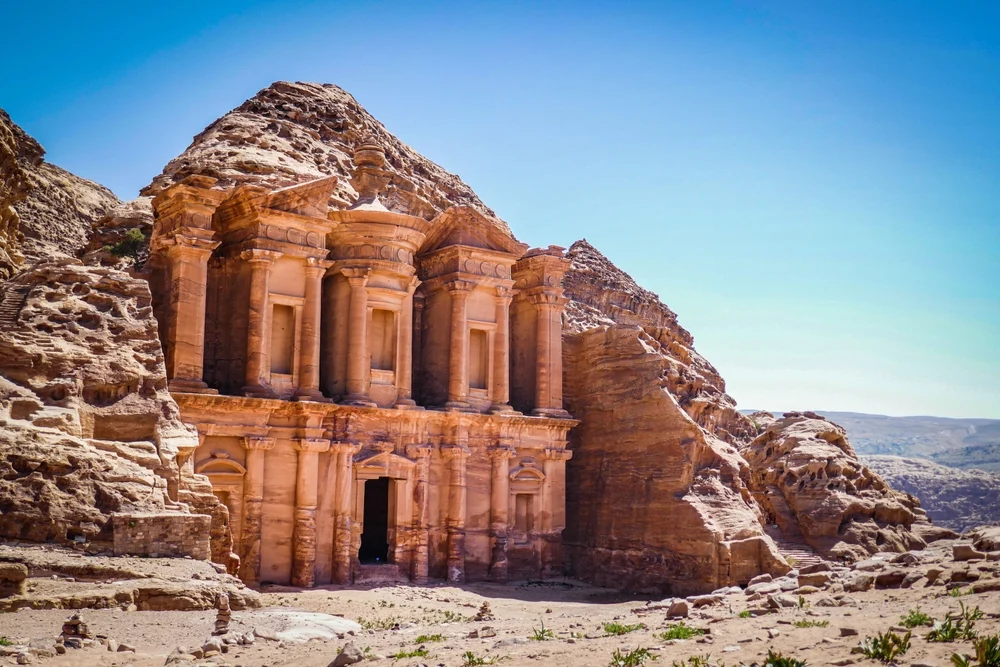
Petra, the UNESCO-listed archaeological site, is feeling the brunt of the downturn. After a strong 2025 when visitor numbers reached 582,550 (up 27%), the site saw an 11% decline in the first five months of 2026 to 204,217 visitors. Foreign visitors fell to 143,42 (likely a typo for 143,420), while domestic Jordanian visitors more than doubled to 60,790, providing some buffer but not enough to replace the economic contribution of international groups.
International leisure groups typically generate business across accommodation, guiding, transport, restaurants, and retail, so weaker foreign demand has ripple effects beyond the site. In July, the government responded with a JD5 million support package for Petra's tourism sector, including wage support and loan-payment relief, aimed at protecting around 1,600 jobs.
Petra has become a barometer for Jordan's tourism health. National receipts may be recovering, but the destination's reliance on long-haul cultural tourism leaves it exposed when overseas bookings soften.
Diversification moves from strategy to necessity
This vulnerability is shaping Jordan's tourism policy. The Ministry of Tourism and Antiquities is developing a National Tourism Strategy for 2026-2029, covering product development, workforce skills, marketing, heritage management, digital transformation, investment, and regulatory reform. The goal is to broaden both source markets and the types of tourism sold.
Distribution is a key part of the effort. In July, the ministry and Jordan Tourism Board launched Ahlan Jordan, a digital platform offering bookable inbound packages of three to eight days. Packages start at $180 per person and include accommodation, transport, guiding, and entry to archaeological attractions. Petra is built into every itinerary, with an overnight stay included—a deliberate move to increase overnight stays, a long-standing commercial issue for heritage destinations.
The shift toward Arab travellers is also reflected in marketing. Royal Jordanian, the national carrier, has been targeting Indian travellers with a monsoon fare push, but the broader strategy is to attract more visitors from neighbouring Gulf states and other Arab markets. This aligns with regional trends, as seen in Malaysia's regional food map targeting culinary travellers, though Jordan's focus is on cultural and heritage tourism.
Industry observers note that while Arab visitors provide stability, they tend to spend less per capita than Western tourists. The challenge for Jordan is to maintain volume while also attracting high-value segments. The Ahlan Jordan platform is designed to make it easier for regional travellers to book multi-day itineraries, potentially increasing their length of stay and spend.
The government's support for Petra is critical, but long-term recovery depends on restoring confidence among long-haul markets. As geopolitical tensions ease, Jordan hopes to regain its position as a key destination on multi-country Middle East itineraries. For now, the pivot to Arab travellers is a pragmatic response to a challenging environment.