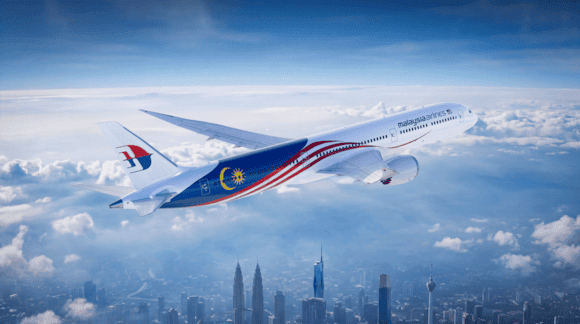
Malaysia Aviation Group (MAG) has placed a firm order for 10 Boeing 787 Dreamliners, with options for an additional six, as part of a long-term strategy to modernise its widebody fleet and boost long-haul competitiveness. The aircraft, powered by GE Aerospace's GEnx engines, are scheduled for delivery between 2032 and 2035.
The announcement was made at a signing ceremony in Kuala Lumpur attended by Malaysia's Prime Minister and senior government officials, underscoring the strategic importance of the deal for the national carrier group. The 787s will make Malaysia Airlines the first operator of the type in the country, gradually replacing its existing Airbus A350 fleet.
Captain Nasaruddin A. Bakar, President and Group CEO of MAG, said: “The acquisition of the 787 Dreamliner represents a strategic investment in the future of Malaysia Aviation Group. These aircraft will strengthen our ability to serve key international markets with greater capacity, efficiency, and flexibility.”
The Dreamliners will be configured in a three-class layout with 319 seats, a design aimed at enhancing passenger comfort while allowing MAG to deploy larger aircraft on high-demand routes. The airline plans to operate the 787s on services to London, Paris, and Tokyo, key markets for both business and leisure travel.
Fleet renewal and operational efficiency
This order is a cornerstone of MAG's fleet renewal programme, which seeks to improve fuel efficiency and reduce operational costs. The GEnx engines are among the most fuel-efficient in their class, and the 787's composite airframe contributes to lower emissions and longer range capability.
In parallel, MAG has renewed its agreement with GE Aerospace for the Fuel Insight and FlightPulse® software suite, which provides data-driven tools to optimise fuel management and enhance pilot decision-making. This digital integration is expected to deliver measurable savings across the fleet.
The move aligns with MAG's broader vision to maintain a competitive airline that supports Malaysia's global connectivity ambitions. The group has been focusing on network expansion and service quality, particularly on routes to Europe and Northeast Asia.
Industry analysts note that the 787's flexibility will allow MAG to adjust capacity on long-haul routes more dynamically, responding to seasonal demand and competitive pressures. The aircraft's range also opens potential for new non-stop services to North America, a market Malaysia Airlines has not served since the early 2010s.
The order comes as other Asian carriers modernise their fleets, with Boeing and Airbus competing for market share in the region. For MAG, the 787 represents a strategic bet on long-haul growth, even as the airline continues to develop its regional network.
With delivery dates set for the early 2030s, MAG will continue to operate its current widebody fleet in the interim, including the A350s and A330s. The airline has not disclosed the value of the order, but list prices for 10 787-9s would exceed $2.5 billion, though discounts are typical in such deals.
For travel professionals, the 787 acquisition signals MAG's commitment to maintaining a modern, efficient long-haul product, which will be crucial for attracting premium passengers and corporate contracts. The airline's focus on key business routes like London and Tokyo is expected to strengthen its position against competitors such as Singapore Airlines and Cathay Pacific.
As part of its broader strategy, MAG has also been investing in digital tools and customer experience enhancements, aiming to differentiate itself in a crowded market. The new aircraft will feature the latest in-flight entertainment and connectivity, aligning with passenger expectations for seamless travel.