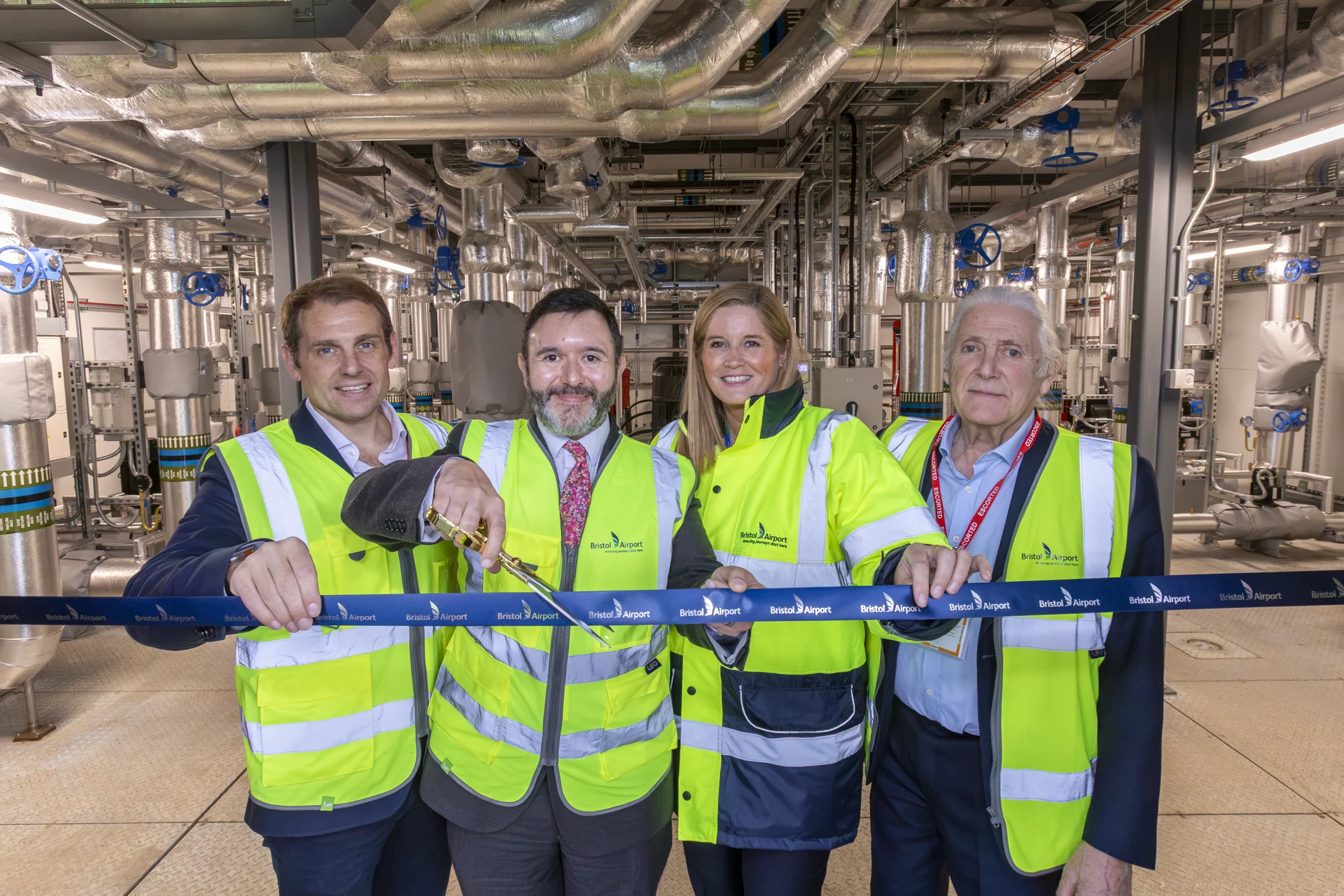
Bristol Airport has switched on a £10 million Energy Centre that replaces conventional gas boilers with 22 air source heat pumps and an electric boiler, a move that will cut the airport's carbon emissions by 73% by 2027 compared with 2019 levels. The facility, built off-site by NG Bailey and installed this spring, is one of the first large-scale heat pump installations at a UK airport.
The Energy Centre was officially opened by local MPs Sadik Al-Hassan and Luke Taylor, alongside Lord Strasburger. The airport says the transition will save around 625 tonnes of CO2e annually, equivalent to taking 135 passenger cars off the road each year.
Clare Hennessy, sustainability director at Bristol Airport, said: “The new Energy Centre is a major investment and means that we will meet our interim carbon reduction target ahead of schedule.” The airport has already deployed air source heat pumps in auxiliary buildings, including car rental facilities and the air traffic control tower.
Decarbonising airport operations
The Energy Centre is part of Bristol Airport's broader commitment to achieving net zero operations by 2030. The airport, which handles more than 10.7 million passengers annually, is also undergoing a £400 million upgrade to enhance terminal facilities and services.
Bristol is the third largest regional airport in England and serves as a key international gateway for the South West of England and South Wales. The new heating system is expected to significantly reduce the airport's reliance on fossil fuels, aligning with wider industry efforts to cut aviation-related emissions.
The project underscores a growing trend among airports to adopt renewable energy technologies. For travel professionals, this development highlights the increasing importance of sustainability in airport operations, a factor that can influence airline route planning and corporate travel policies.
Bristol Airport's initiative comes as the industry faces pressure to decarbonise. The EU's sustainable tourism roadmap is one example of policy efforts to reduce the sector's environmental footprint.
For airlines and tour operators, such infrastructure investments can enhance the appeal of a destination, particularly for eco-conscious travellers. Bristol Airport's move may also set a precedent for other regional airports in the UK and beyond.
As the travel industry continues to prioritise sustainability, projects like this Energy Centre demonstrate how airports can lead the way in reducing operational emissions. The airport's net zero goal by 2030 is ambitious, but with the new heating system in place, it is on track to meet its interim targets ahead of schedule.