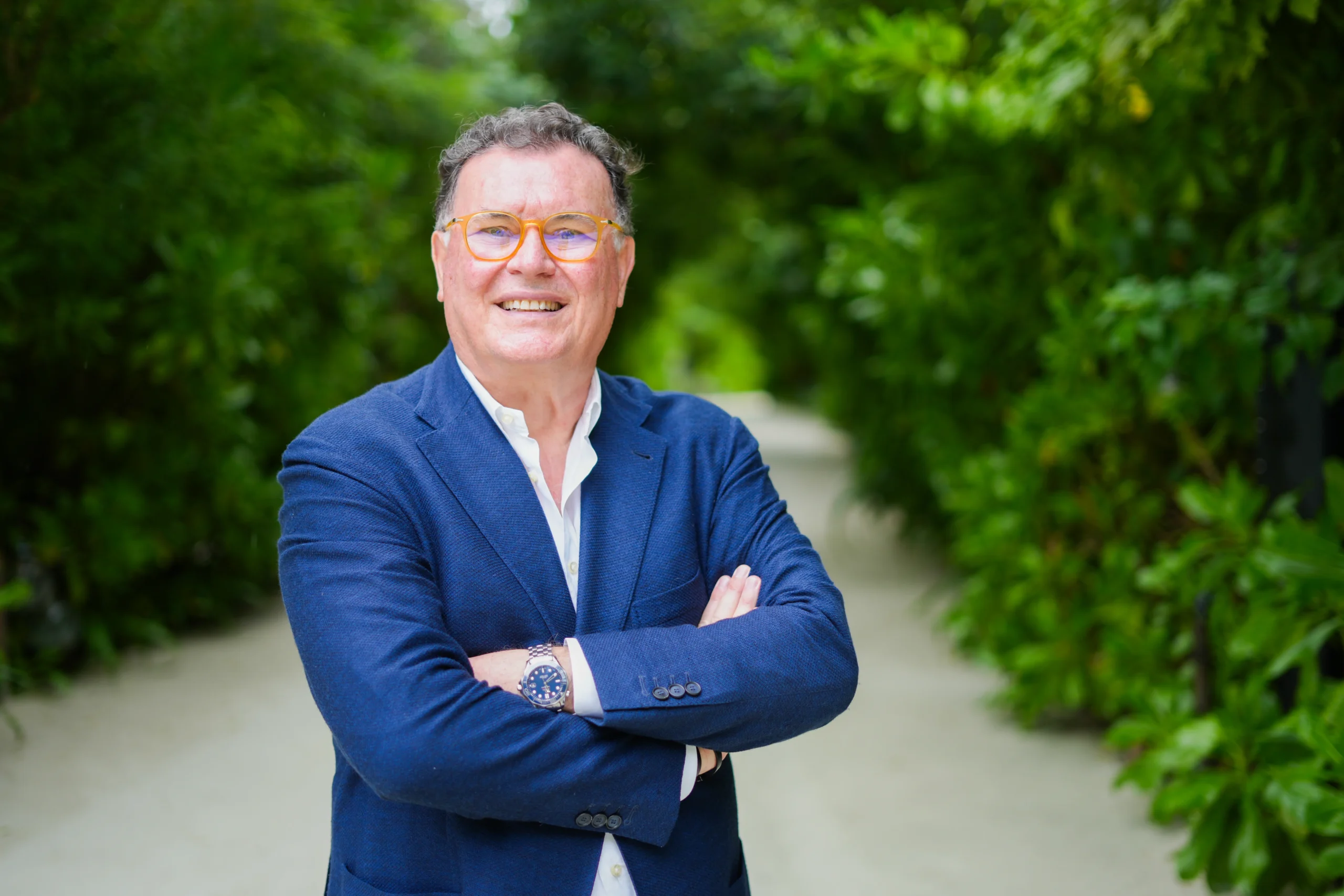
As geopolitical tensions and rising fuel costs disrupt GCC outbound travel, luxury resorts in the Maldives are recalibrating their guest-acquisition strategies. Raffaele Solferino, General Manager of Grand Park Kodhipparu Maldives, outlined how his property is shifting from a reliance on Middle Eastern travellers toward more resilient source markets in Asia and Europe, while doubling down on experience-led marketing and operational efficiency.
Market Mix Shift: From GCC to Asia-Europe Corridors
“The recent disruption in GCC travel has pushed us to become more agile and diversified,” Solferino said. He noted a pivot toward shorter-lead markets with stable airlift, particularly China, India, and Russia, alongside sustained European demand. This mirrors broader trends seen across the Maldives, where properties like SO/ Maldives and Milaidhoo have also adjusted their luxury positioning. Solferino emphasised that while GCC guests value privacy, space, and family experiences, the resort is broadening its appeal through culturally resonant storytelling.
“Our strategy is about achieving balance: reducing reliance on any one region while staying relevant to all,” he added.
Measuring Guest Confidence Through Behavioural Signals
Solferino tracks confidence via a suite of KPIs rather than a single metric. Conversion rates on direct channels, booking windows, and cancellation behaviour are key indicators. “Shorter lead times and increased flexibility reflect cautious optimism rather than hesitation,” he explained. Post-arrival, participation in curated experiences and in-resort spending signal engagement, while a recent 9/10 OTA rating serves as a trust barometer. “Third-party validation has become one of the most powerful drivers of reassurance in the market,” he said.
Technology Meets Human Curation in Pre-Arrival Upselling
The pre-arrival phase is where revenue capture begins. Grand Park Kodhipparu uses Triptease for conversion optimisation and GA4 for behavioural analytics to tailor messaging. But Solferino stressed that technology alone is insufficient. “We have shifted from providing a menu of options to offering curated journeys, supported by our Lifestyle Hosts,” he said. This blend of data-driven targeting and human storytelling boosts both engagement and pre-arrival spending.
Operationalising the ‘Honeycomb Model’ for Experience-Led Storytelling
Moving from product-centric to experience-centric operations required a structural overhaul. Solferino described a ‘honeycomb model’ that links departments—spa, watersports, dining—through shared guest motivations rather than individual offerings. “Instead of simply selling a kayak or a dinner, we focus on marketing moments of connection, transformation, or celebration,” he said. Shared experience calendars and cross-department packages replace siloed promotions, with Lifestyle Hosts curating journeys based on guest intent.
Emotional ROI: Measuring Transformation Beyond Transaction
While ‘emotional ROI’ is not a standard KPI, Solferino measures it through qualitative and behavioural data. Guest reviews using words like ‘reconnected’ or ‘memorable’, repeat visits, referral rates, and engagement with curated experiences all indicate lasting emotional impact. “Modern travellers prioritise wellness, togetherness, and purpose-driven travel—over 70% seek self-care and meaningful experiences,” he noted. “When guests reflect those sentiments in feedback, we know we’re facilitating a transformation.”
Cost Management in a Remote Destination
Rising fuel costs and logistical challenges are squeezing margins across the Maldives. Solferino’s approach combines supply-chain consolidation, regional sourcing, energy optimisation (including renewable initiatives), and waste reduction in F&B. Smart staffing during low occupancy periods also helps. “We are investing in experiences that provide higher perceived value without corresponding cost increases,” he said. The goal: protect the guest experience while improving operational resilience.
As the broader Middle East aviation sector faces headwinds—projected losses of $4.3 billion in 2026—Maldives resorts are adapting with agility. Solferino’s playbook offers a template for luxury properties navigating an uncertain demand landscape.