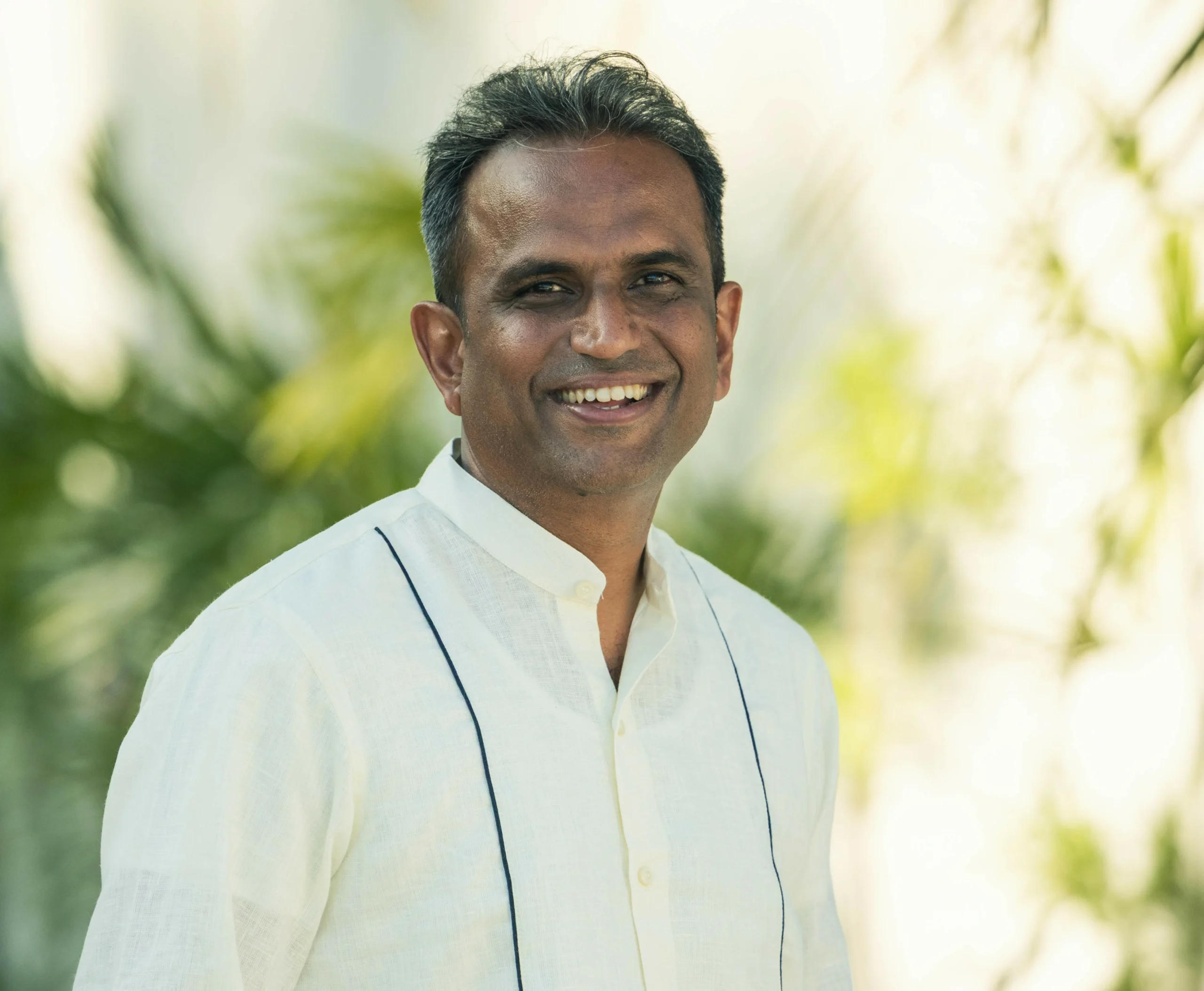
As the Maldives luxury hospitality market grows increasingly competitive, two properties under cluster management are holding firm on room rates by betting on experience-led hospitality rather than price discounts. Harish Nair, Cluster General Manager for Rah Gili Maldives and Don Maaga Maldives, outlined the strategy in a recent interview, emphasizing that rate confidence—not flexibility—drives revenue performance.
Nair described the two resorts as catering to distinct guest mindsets. Rah Gili Maldives, which opened with a flexible luxury model, is positioned as social and dynamic, encouraging guests to explore and connect. Don Maaga Maldives, by contrast, offers a more private, curated experience where space is carefully managed. “Each island understands its identity and what it does not strive to be,” Nair said, noting that this clarity simplifies operations and strengthens brand positioning.
Revenue Strategy: No Discounts, Only Curated Offers
In a market where many properties chase occupancy through rate cuts, Nair’s approach is unequivocal: “We do not use discounts to drive demand. Compromising on rate positioning makes it challenging to recover later.” Instead, the cluster prioritizes rate confidence, preferring slightly lower occupancy with the right guest mix. Offers are structured to feel curated rather than transactional, with factors like length of stay, villa type, and integrated experiences supporting average daily rate (ADR) without pressuring base rates.
This strategy aligns with a broader shift in traveler behavior. Nair observed that guests are now more decisive and better informed, arriving with clear expectations. “There is less tolerance for inconsistency,” he said. The properties have seen strong momentum from Russia, China, and India, while Europe recovers gradually. Independent travelers—those bypassing traditional channels—are also on the rise, prompting the cluster to sharpen partnerships and create content that reflects reality rather than aspiration.
Wellness and Sustainability as Operational Standards
Luxury, Nair argued, has shifted from ownership to awareness. Wellness at the resorts is not confined to a spa but permeates the entire island—from how mornings begin to how sound and space are managed. The butler model, called Edhurun (meaning “mentor” in Dhivehi), redefines service as interpretation rather than performance. “Some of the most memorable moments arise when the island is allowed to reveal its natural beauty,” Nair said.
Sustainability is embedded at the infrastructure level, with early decisions on energy generation, water systems, and waste management. The properties began the EarthCheck Bronze certification process before opening. Guest participation in marine programs and conservation touchpoints is optional and intuitive. “Profitability stems from reduction and optimization,” Nair noted, “while guest satisfaction comes from transparency and relevance.”
The cluster’s approach mirrors trends seen elsewhere in the region. At SAii Lagoon Maldives, for instance, executives have similarly emphasized that time is the ultimate luxury, vowing to eliminate island transit hassles. Meanwhile, the broader Indian Ocean market is seeing a rise in experiential dining and wellness-driven travel, as affluent travelers demand more intentional stays.
For travel professionals—whether hoteliers, tour operators, or agents—the takeaway is clear: rate integrity, combined with a clear brand identity and operational precision, can sustain profitability even as competition intensifies. As Nair put it, “Revenue reflects clarity. When the product and positioning are well understood, pricing becomes a natural outcome.”