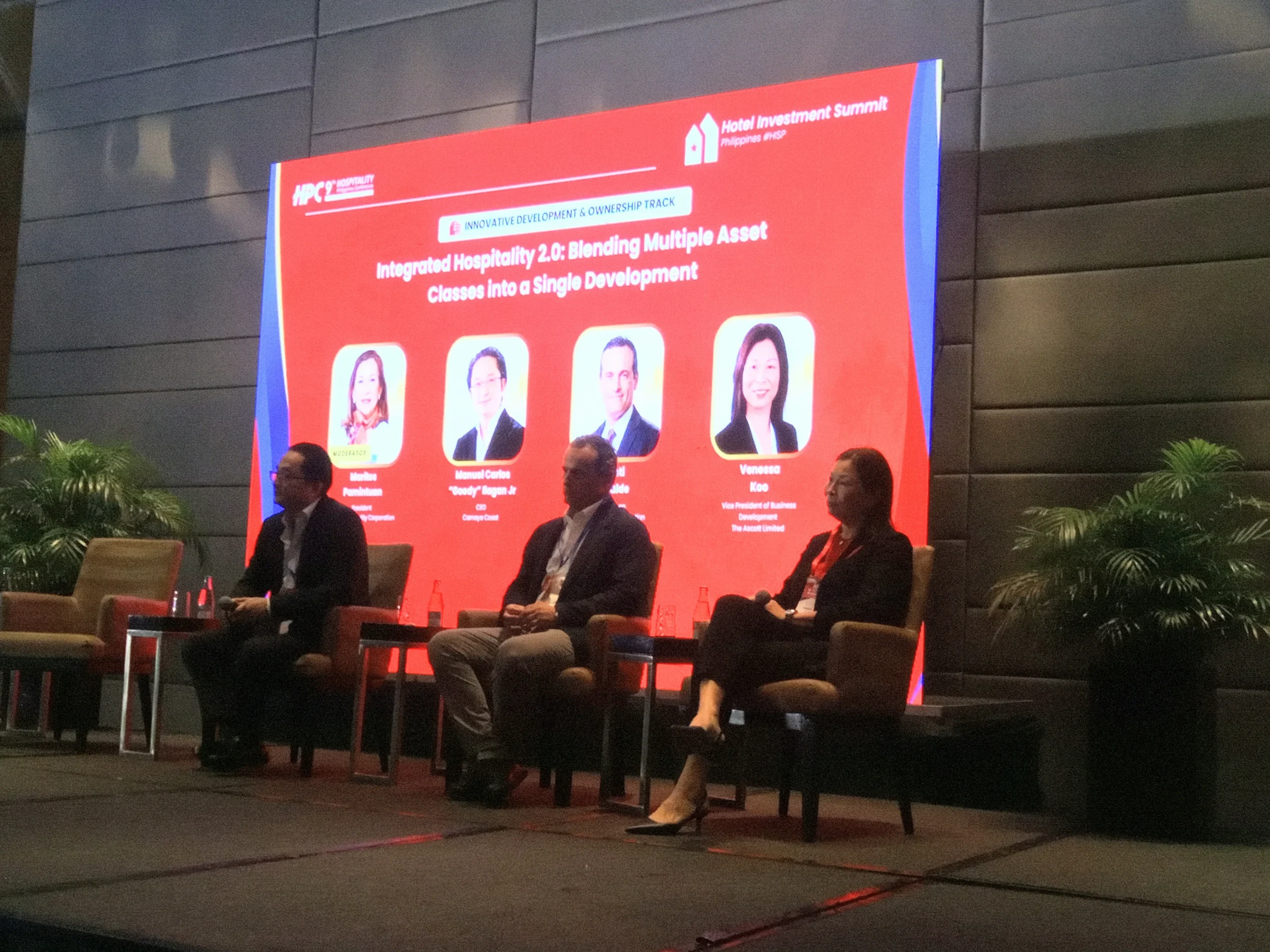
Hospitality developers in the Philippines are moving away from standalone hotel projects toward integrated mixed-use master plans, driven by the sector's notoriously long capital recovery timelines and heavy upfront expenditure. At the 9th Hospitality Philippines Conference, the Integrated Hospitality 2.0 panel made clear that cross-asset integration is no longer a design preference but a financial imperative to optimize land values, spread risk, and sustain long-term operational portfolios.
Moderated by Maritess Pamintuan, president of Kandor Hospitality, the session featured Manuel Carlos “Goody” Ilagan Jnr, chief executive of Camaya Coast; Santiago Elizalde, chair of Roxaco Land Corporation; and Venessa Koo, vice-president for business development at The Ascott Limited. Together they outlined how developers are restructuring their capital strategies to survive the sector's structural challenges.
Blending assets to balance the books
Standalone hospitality in the Philippines demands high capital expenditure per square metre, with payback cycles stretching 20 to 25 years for city hotels and luxury resorts. To counter these pressures, developers are increasingly embedding hotels within mixed-use townships that combine commercial offices, retail centres, and residential subdivisions. The hospitality component acts as an experiential anchor, lifting the perceived value of surrounding real estate, while retail and residential generate early cash flows and steady foot traffic that subsidize the hotel's operational holding costs.
Phasing is critical. For large-scale townships, infrastructure—access roads, utilities, flood mitigation, and connectivity—must precede vertical construction. Panelists highlighted two distinct capital allocation paths: a residential-first approach, where low-capex horizontal housing is sold early to fund high-capex anchors like resorts and golf courses; and an anchor-first strategy, where capital-rich sponsors build the hotel upfront to establish prestige and command premium pricing on adjacent parcels from day one.
In underserved regional destinations, transport infrastructure is equally vital. Developers are incorporating ferry terminals, private airfields, and logistics networks to turn remote landbanks into viable commercial hubs.
Branded residences as a de-risking tool
The intersection of hospitality management and residential real estate remains one of the most efficient ways to de-risk resort development. Drawing on regional models in Vietnam, Thailand, and Indonesia, the panel noted that selling branded villas and serviced apartments off-plan can generate early capital to offset construction costs. When those units are placed into a managed rental pool, buyers gain yield potential while operators maintain brand standards across the asset.
For international operators, alignment with the developer's long-term vision is essential. While global brands command a pricing premium, they impose strict location, design, and build specifications. Where those metrics don't support an international flag, domestic and regional operators often step in with more flexible, localized models.
Looking ahead three to five years, the panel identified the upper-middle market as a primary growth driver. As domestic travel expands and regional business travel matures, demand for well-connected, middle-market resort and residential-hospitality products is expected to rise. With the current softer phase in the real estate cycle, leaders see a strategic window for land acquisition, master planning, and construction—positioning integrated developments to capture the next upswing in travel and property demand.
Related coverage: Philippine developers pivot to regenerative design and Q1 occupancy gains in Philippine hotels.