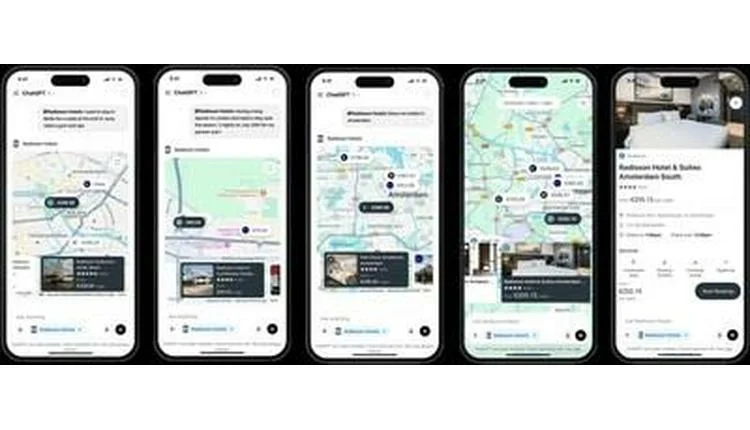
Radisson Hotel Group has launched a new AI-powered hotel discovery app built directly on ChatGPT, developed in partnership with Accenture. The app, called RadissonHotels, allows users to explore and book from over 1,000 Radisson properties across more than 100 countries using natural conversation, with live rates and direct booking paths integrated into the experience.
The move represents a significant step toward what the company calls "agentic commerce" — a shift away from traditional online travel agency and direct website booking flows toward AI-led conversational interfaces. As travelers increasingly turn to generative AI tools for trip planning, Radisson aims to be both visible and actionable at the moment of intent.
According to Accenture's Consumer Pulse Research, 87% of travelers are open to using AI-powered travel agents, and 71% expect AI to influence their hotel or airline spending within the next year. These figures underscore the growing appetite for AI-driven travel tools among consumers globally.
Gianni Di Fede, Radisson's chief commercial officer, said: "AI is radically transforming how people search for and book hotel stays, and we are committed to being at the forefront of this shift." The app connects directly to Radisson's property management and booking systems, providing real-time hotel information and enabling a seamless transition from idea to reservation.
Built on Accenture's AI Merchant Centre
The app was developed using Accenture's AI Merchant Centre, a platform designed to help brands deploy generative AI solutions for commerce. The integration allows Radisson to deliver personalized hotel recommendations and streamline the booking process without requiring users to leave the ChatGPT interface.
This launch is part of Radisson's broader digital transformation strategy, which also includes recent expansion in India with 10 new properties targeting pilgrimage and wildlife tourism. The company is focused on enhancing personalization and direct booking capabilities across its portfolio.
Future plans for the app include deeper personalization features, loyalty program recognition, and AI concierge services. As competition in travel planning intensifies, Radisson's emphasis is on providing accessible and accurate hotel content to meet evolving consumer expectations.
The collaboration with Accenture reflects a broader industry trend toward embedding travel services within AI platforms. Other hotel groups and travel technology vendors are also exploring similar integrations, but Radisson's early move positions it as a test case for how legacy hospitality brands can adapt to the agentic commerce model.
For travel professionals — including airline executives, hoteliers, and travel-tech vendors — the development signals a potential shift in distribution dynamics. If AI-powered discovery apps gain traction, they could reshape how travelers find and book accommodations, reducing reliance on traditional OTAs and metasearch engines.
Radisson's app is currently available to ChatGPT users, and the company plans to iterate based on user feedback. The initiative underscores the growing importance of generative AI in travel distribution and the need for brands to invest in conversational commerce capabilities.