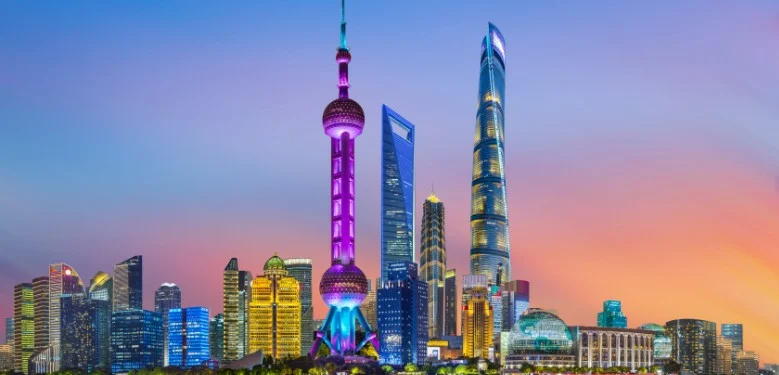
Shanghai's cultural and tourism market posted another strong half-year performance, with the city welcoming 5.3149 million overseas visitors in the first six months of 2026 — a 27.82% year-on-year increase. The figures, released by the Shanghai Municipal Administration of Culture and Tourism, underscore the city's position as China's primary inbound gateway and a key engine for the country's tourism recovery.
Overnight inbound visitors reached 5.0215 million, surging 31.19% year on year, while visitors from Hong Kong, Macao and Taiwan totaled 890,500, up 25.92%. The growth was broad-based, with long-haul markets in Europe and North America generally expanding at rates above 30%. Russia stood out with a 132.05% jump, reflecting improved air connectivity and visa facilitation. South Korea, Russia, the United States, Thailand and Malaysia rounded out the top five source markets.
Gateway hub momentum
The city's role as an international transit hub also strengthened. A total of 1.285 million foreign passport holders used transportation services in Shanghai during the period, an increase of 31.8% year on year. This includes passengers connecting through Shanghai Pudong International Airport (PVG) and Shanghai Hongqiao International Airport (SHA) to domestic and regional destinations, as well as those using high-speed rail links to nearby cities such as Hangzhou, Suzhou and Nanjing.
“Shanghai is not just a destination; it's a launchpad for exploring China,” said a spokesperson for the Shanghai Municipal Administration of Culture and Tourism. “The growth in transit traffic shows that international travelers are increasingly using Shanghai as their entry point to the wider Yangtze River Delta and beyond.”
The shift toward quality-driven tourism is evident in spending patterns. Consumption on tourism services nearly quadrupled year on year, while accommodation, transportation and tourism-related spending all accelerated. The share of service consumption rose significantly, signaling a move away from pure volume toward higher-value experiences — a trend that aligns with the broader shift from sightseeing to immersive travel seen across China.
Implications for travel professionals
For airlines, the sustained growth in long-haul arrivals supports continued capacity expansion on routes from Europe and North America. Carriers such as Air France, Lufthansa, United Airlines and Delta Air Lines have all added frequencies to Shanghai in recent months, and the latest data suggests demand remains robust. Hoteliers, particularly those in the luxury and upper-upscale segments, are seeing stronger average daily rates and occupancy, driven by a mix of business and leisure travelers.
Cruise lines are also benefiting. Shanghai's Wusongkou International Cruise Terminal has become a major homeport for international cruise operators, including Royal Caribbean International and MSC Cruises, which have deployed ships on itineraries to Japan and South Korea. The rise in overnight visitors is a positive signal for cruise-tour packages that combine a pre- or post-cruise stay in the city.
Travel agents and tour operators should note the changing source-market mix. While traditional markets like the US and Europe remain strong, the rapid growth from Russia and Southeast Asia suggests opportunities for tailored products — from visa assistance to Russian-language services and culturally specific experiences. The city's tourism board has been actively promoting Shanghai as a year-round destination, with events such as the Shanghai Tourism Festival and the Shanghai International Arts Festival drawing international visitors.
The trend also aligns with beauty tourism driving retail revival in Asian cities, as Shanghai's shopping districts — from Nanjing Road to the former French Concession — continue to attract high-spending visitors. Retail therapy remains a key driver, but the data suggests that cultural experiences, dining and wellness are gaining ground.
For destination marketers, Shanghai's performance offers a template for other Chinese cities. The city's investment in digital payment systems, multilingual signage and streamlined visa processes has paid off, and its success is likely to encourage similar initiatives elsewhere. As China's inbound tourism continues to rebound, Shanghai's gateway status looks set to strengthen further, with the city positioning itself as the natural first stop for international travelers exploring the country.