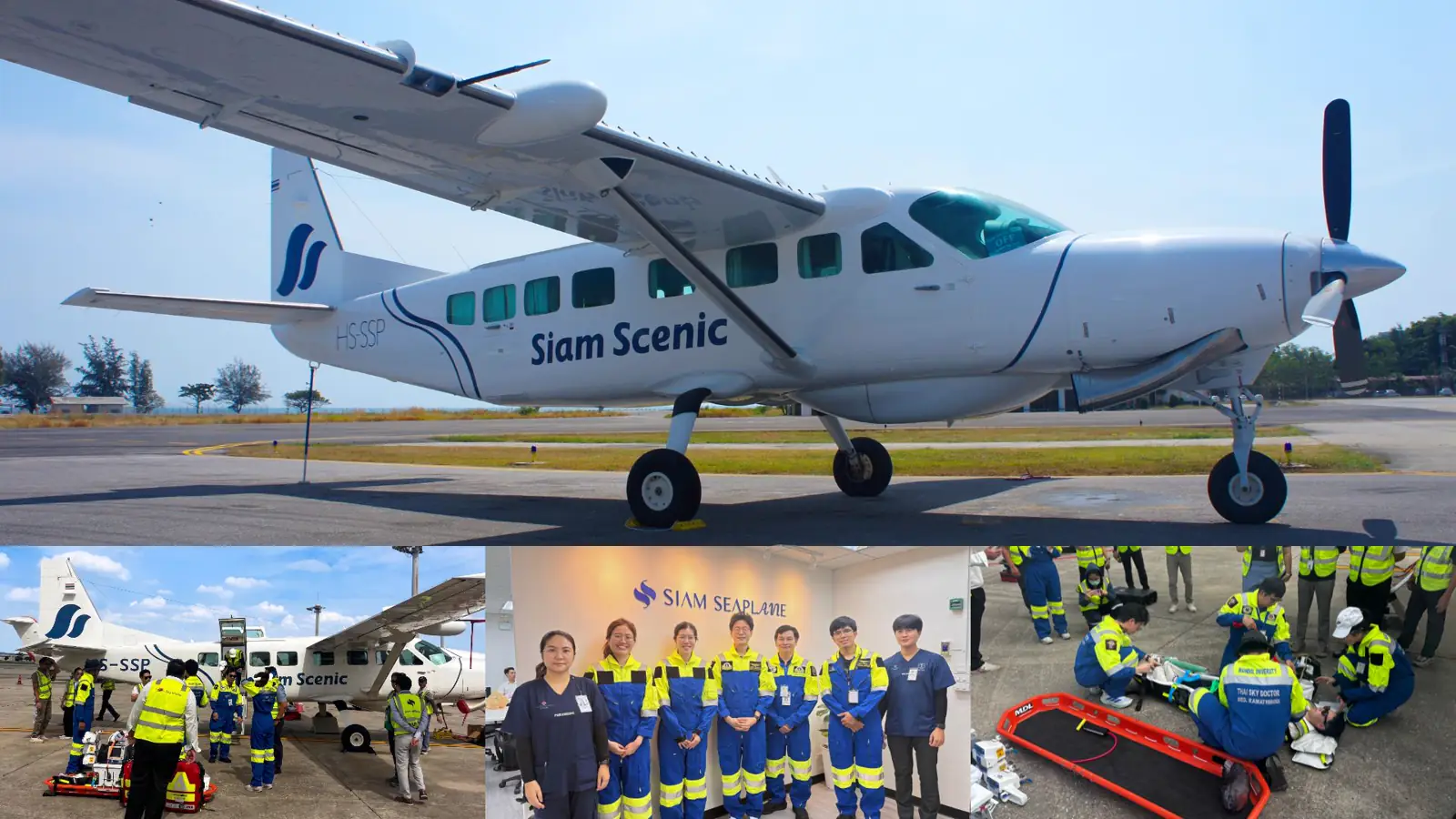
Bangkok-based Siam Seaplane has signed a partnership with Thailand's National Institute for Emergency Medicine (NIEM) to establish a nationwide aeromedical transport network. The agreement, announced this week, will see the carrier deploy its seaplane fleet for emergency patient evacuation and inter-facility transfers, a move that could significantly cut response times in disaster scenarios and for patients in hard-to-reach coastal and island communities.
The collaboration is a notable step for Thailand's medical travel ecosystem, which has been expanding rapidly. As Asian hospitals invest in tech as medical travel demand grows, the addition of air ambulance capability adds a critical logistics layer for international patients and domestic emergency cases alike.
Seaplanes as a rapid-response tool
Traditional ground ambulances often struggle with Thailand's geography, particularly in the southern provinces and the Andaman coast, where road networks are limited. Seaplanes can land on water near remote villages or tourist islands, drastically reducing the time to reach a trauma center. The service is expected to complement existing helicopter EMS operations, offering a longer-range option with lower operating costs per seat.
Dr. Worakanya Siripidej, CEO of Siam Seaplane, said the partnership is about more than just adding a new service line. "We are committed to redefining aviation leadership by advancing alternative aviation, strengthening connectivity, and creating greater opportunities for the next generation of women in the industry," she said. The company has made gender diversity a priority, with women holding key roles in flight operations and engineering.
The NIEM, which coordinates Thailand's emergency medical response, will provide clinical protocols, dispatch coordination, and training. Siam Seaplane will handle the aviation side, including aircraft maintenance and pilot certification. The first operational base is expected to be in Surat Thani, with expansion to Phuket and Koh Samui by late 2026.
Regional momentum for seaplane aviation
The Thai initiative mirrors a broader trend across Southeast Asia. In Indonesia, Santai Seaplane is working with the Ministry of Tourism to connect remote islands, supporting high-end resort access and improving medical evacuation options for tourists. These projects are part of a regional push to integrate aviation with healthcare and tourism, a development that travel professionals should monitor closely.
For tour operators and MICE planners, the new air ambulance network could be a selling point for adventure travel and island-hopping itineraries, offering a safety net that was previously unavailable. Hotels and resorts in remote locations may also see a boost in confidence from corporate clients and luxury travelers who prioritize medical security.
The move also aligns with Thailand's broader wellness tourism strategy. As the country positions itself as a hub for scientific wellness, having a reliable air ambulance network strengthens its appeal to medical travelers who might otherwise choose Singapore or Malaysia.
Industry analysts note that the partnership could set a precedent for other seaplane operators in the region. "This is a smart play," said a Bangkok-based aviation consultant. "It diversifies revenue beyond sightseeing and charter, and it builds goodwill with regulators."
The service is slated to begin operations in early 2026, with a fleet of two Cessna Caravan amphibious aircraft initially. Siam Seaplane plans to add more aircraft as demand grows, potentially including larger models for multi-patient transport.
For travel agents and medical tourism facilitators, the development means more options for clients who need urgent repatriation or specialized care. The partnership is expected to be showcased at upcoming industry events, including the Thailand Travel Mart Plus.