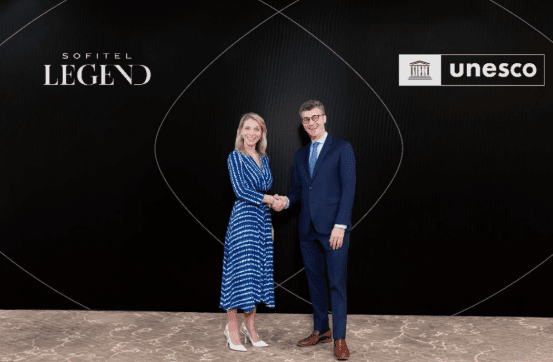
Sofitel Legend, the Accor-owned collection of five landmark luxury hotels, has entered a worldwide alliance with UNESCO aimed at embedding cultural preservation into the heart of high-end travel. The partnership, announced on October 21, 2026, at Sofitel Legend Metropole Hanoi, positions tourism as a vehicle for safeguarding living traditions, supporting artisans, and fostering biodiversity conservation.
The collaboration will initially roll out at the Hanoi property, where guests can now book immersive experiences such as pottery workshops in the historic Bát Tràng village and exclusive guided tours of the Imperial Citadel of Thăng Long, a UNESCO World Heritage site. These offerings are designed to give travelers direct access to Vietnam's craftsmanship and cultural narratives while generating income for local heritage specialists.
Luxury hospitality as a cultural bridge
Maud Bailly, CEO of Sofitel Legend, Sofitel, MGallery & Emblems, framed the initiative as a natural evolution of luxury hospitality. “Our alliance with UNESCO reflects a deeply held belief: luxury hospitality must extend beyond accommodation to become a true bridge between cultures,” she said. The sentiment was echoed by Julien Pellaux, UNESCO's Director of Partnerships, who noted that the goal is to “bring visitors closer to artisans and tradition bearers whilst supporting the transmission of knowledge.”
The partnership is not a one-off marketing exercise. It is structured to scale across Sofitel Legend's portfolio, with each property expected to develop experiences that reflect its destination's unique cultural fabric. From the historic grandeur of the Metropole to other storied addresses, the brand intends to make heritage a core pillar of its guest proposition.
For travel professionals, this signals a broader trend: luxury travelers increasingly seek meaningful, place-based encounters rather than passive sightseeing. The UNESCO tie-up gives Sofitel Legend a credible framework to deliver that, while also addressing sustainability goals through cultural and environmental preservation.
The initiative also carries economic weight. By channeling guest spending directly to artisans, guides, and heritage custodians, it creates employment and income opportunities in communities often overlooked by mass tourism. This aligns with UNESCO's broader mission to use culture as a driver of sustainable development.
As the program expands, expect to see similar activations at other Sofitel Legend properties, each tailored to local traditions. The brand's approach mirrors efforts elsewhere in the industry, such as Aman's use of UNESCO proximity for exclusive cultural access and cultural curators stepping out of museums to shape travel experiences.
For hoteliers and tour operators, the partnership underscores a competitive advantage: authentic, curator-led experiences can differentiate a property in a crowded luxury market. It also highlights the importance of collaborating with institutional bodies like UNESCO to lend credibility and depth to cultural programming.
With the Hanoi launch setting the template, Sofitel Legend is betting that cultural preservation is not just a responsibility but a compelling reason to book. As Bailly put it, the alliance is about making travel “a true bridge between cultures” — a message that resonates with today's discerning travelers and the trade that serves them.