Aman is doubling down on cultural access as a differentiator in the ultra-luxury hospitality segment. The group's 36 properties worldwide—14 of which sit within reach of UNESCO-protected sites—are now marketing exclusive, behind-the-scenes encounters that go far beyond standard guided tours.
For travel advisors and luxury tour operators, the appeal is clear: Aman's programming is designed to deliver what high-net-worth clients increasingly seek—authenticity, privacy, and a sense of place. The experiences are not add-ons but core to the brand's positioning, according to the group.
From Bali to Bhutan: curated encounters
In Bali, Amandari arranges early-morning access to Tirta Empul, the UNESCO-listed water temple, allowing guests to participate in purification rituals before the crowds arrive. The property also offers private sessions with I Made Bandem, a renowned Balinese scholar, to deepen understanding of local customs.
Further east on the island, Amankila has partnered with the Karangasem Royal Family to host exclusive dinners at Ujung Water Palace, a historic site not typically open to the public. Such collaborations are a hallmark of Aman's approach, leveraging local relationships to unlock access.
On Moyo Island, Amanwana offers a sound bath ritual at Mata Jitu Waterfall, led by a resident healer. In Cambodia, Amansara provides private sunrise tours of the Angkor temple complex, a UNESCO World Heritage site, with expert guides who can navigate the ruins before opening hours.
Java, the US, and Bhutan
At Amanjiwo in Java, guests are introduced to Javanese traditions through Jemparingan archery and the Ruwatan ceremony, a ritual of spiritual cleansing. Meditation sessions at ancient sites such as Candi Gunung Wukir are also on offer, blending wellness with heritage.
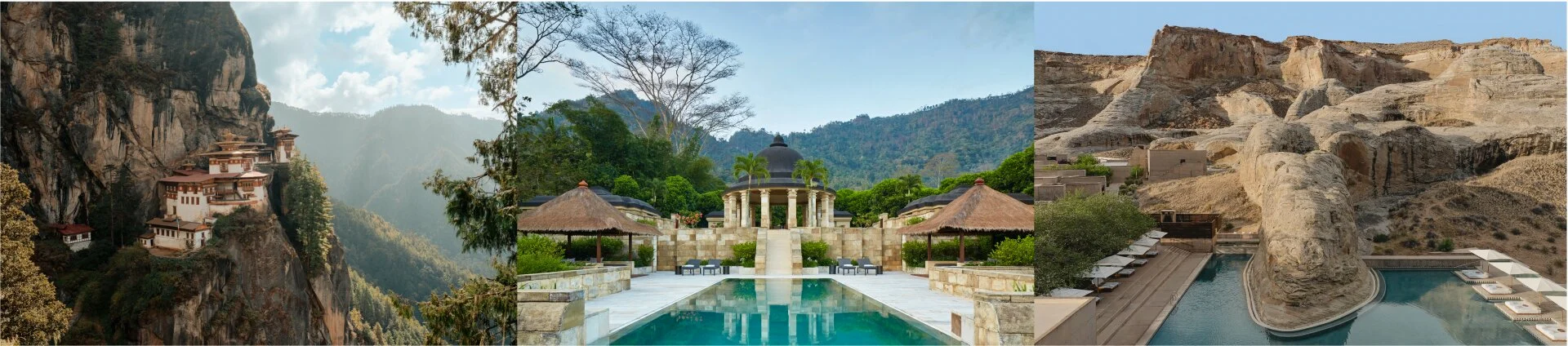
In the United States, Amangiri in Utah arranges private canyon explorations and yoga sessions atop Tower Butte, a dramatic sandstone formation. Meanwhile, Amankora in Bhutan provides privileged access to cultural landmarks, including Taktsang Monastery (Tiger's Nest) and Wangduechhoeling Palace, the former royal residence.
These experiences are part of a broader trend in luxury travel, where exclusivity is increasingly defined by access rather than amenities. As adventure travel demand grows, Aman's model of combining high-end comfort with cultural immersion could set a benchmark for competitors.
For travel agents, the takeaway is that Aman's properties are not just places to stay but gateways to unique experiences that can be packaged into bespoke itineraries. The group's emphasis on local partnerships—from royal families to resident healers—offers a template for creating memorable, hard-to-replicate moments.
As the luxury segment continues to evolve, Aman's strategy of leveraging its locations near UNESCO sites may prove prescient. With 14 properties in such proximity, the brand is well-positioned to cater to travelers who prioritize cultural depth alongside five-star comfort.