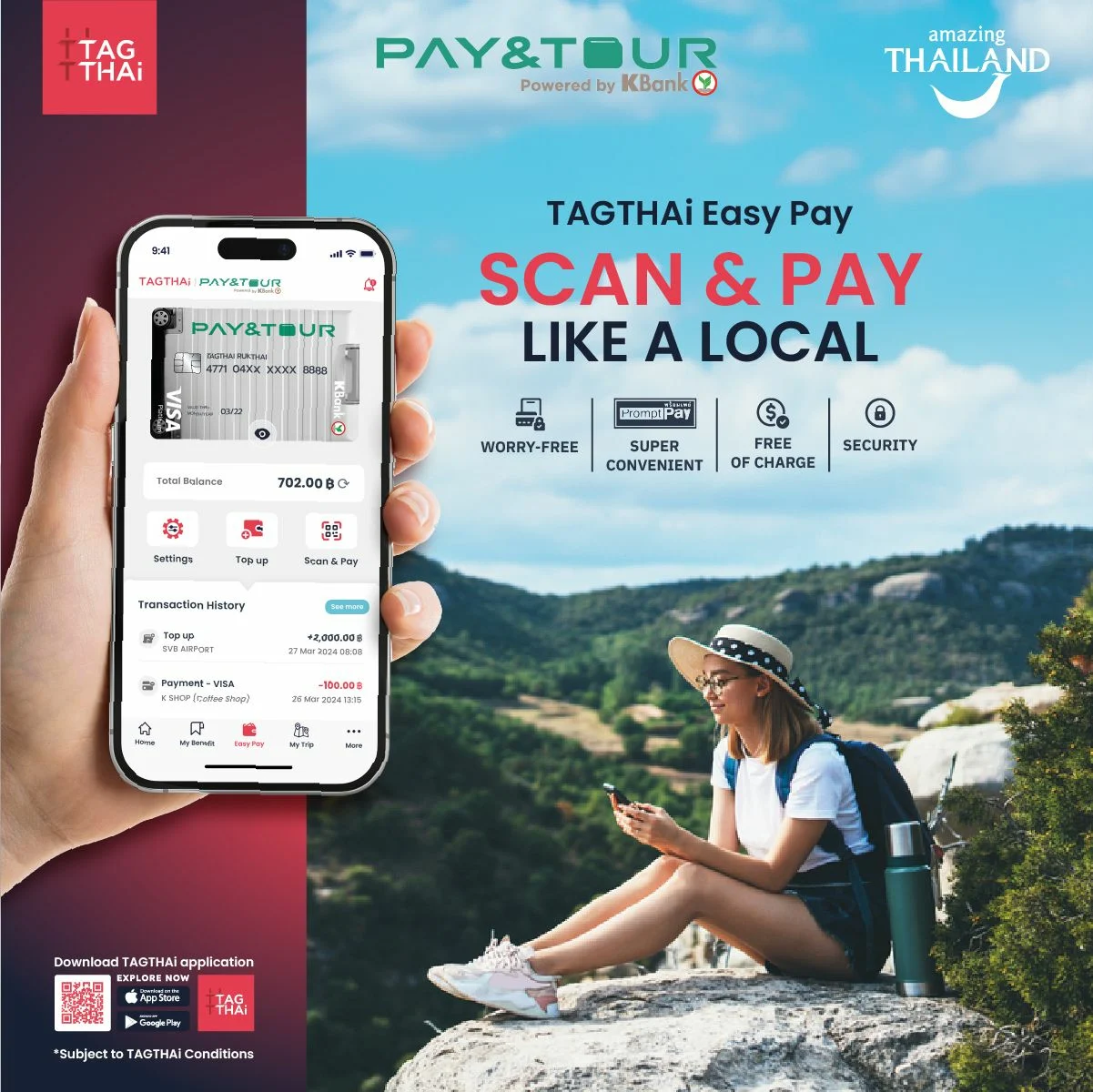
Thailand is repositioning its TAGTHAi travel app as a comprehensive national tourism platform, a move designed to shift the industry's focus from raw arrival numbers to deeper economic impact. Deputy Prime Minister and Commerce Minister Suphajee Suthumpun is spearheading the effort, which aims to increase per-visitor spending, extend average length of stay, and distribute tourism revenue more widely across local communities.
From booking tool to national integration layer
The upgraded TAGTHAi will function as a National Tourism Integration Platform, consolidating services from both government agencies and private-sector partners. By aggregating data on traveller behaviour, the platform is expected to give policymakers sharper tools for planning and allow visitors to design smarter itineraries. For travel trade professionals, this signals a more data-driven approach to destination management in one of Asia's most visited markets.
A key feature of the revamped app is its direct connection to local micro-businesses. Curated regional products—such as Thai textiles from artisan communities—will be showcased, giving small makers a new sales and marketing channel. This aligns with Thailand's broader strategy of promoting secondary destinations and community-based tourism, a priority for the Tourism Authority of Thailand (TAT) as it seeks to disperse visitor flows beyond Bangkok, Phuket, and Chiang Mai.
The government also plans to link TAGTHAi with the "Thais Help Thais Plus" programme, positioning the app as a secure, transaction-ready hub. Robust data protection measures are being built in, which should reassure both travellers and trade partners concerned about digital security. For agents and tour operators, this could eventually simplify booking and payment processes across multiple service providers.
Thailand's tourism sector has been recovering strongly, with arrivals rebounding and new route announcements from carriers like United Airlines adding to international connectivity. The TAGTHAi initiative is part of a wider push to modernise the country's tourism infrastructure, complementing other digital upgrades such as automated immigration gates at Bangkok Suvarnabhumi.
Industry observers note that the platform's success will depend on adoption by both travellers and local businesses. Similar national tourism apps in other destinations have struggled with user engagement, but Thailand's large domestic travel market and strong smartphone penetration could give TAGTHAi a solid user base.
The move also comes as regional competition intensifies. Vietnam, for instance, has seen a 20% surge in arrivals, and its tourism board is actively courting affluent young travellers from the region. Thailand's focus on value over volume is a deliberate response to this changing competitive landscape.
For the travel trade, the platform could become a valuable tool for itinerary planning and local experience discovery. Hoteliers and DMCs may find new distribution opportunities, while airlines and cruise lines could use the data to tailor packages. The integration with "Thais Help Thais Plus" also suggests a future where government subsidies or loyalty programmes could be channelled through the app.
Deputy PM Suphajee emphasised that the initiative is about making tourism a catalyst for grassroots economic growth. "Every traveller's journey should directly benefit local communities," she said, framing the platform as a way to make tourism more sustainable and inclusive.
As Thailand continues to refine its tourism strategy, TAGTHAi's evolution from a simple app to a national platform will be closely watched by industry stakeholders. The success of this initiative could set a precedent for other destinations looking to harness technology for more equitable tourism development.