West Asia's luxury hotel sector is undergoing a strategic recalibration. For decades, the region's hospitality narrative was defined by gilded skyscrapers and unabashed extravagance. But as 2027 approaches, industry experts point to a decisive pivot toward cultural immersion, holistic well-being, and large-scale entertainment — a response to both shifting guest preferences and a looming surge in room supply.
Supply surge reshapes competitive landscape
According to forecasts from Arabian Travel Market and Hilton, GCC room stock is projected to climb 25% by 2030. This rapid expansion threatens to soften average daily rates and occupancy, forcing hoteliers to differentiate beyond marble lobbies and gold-plated fixtures. The result is a new wave of developments that prioritize authentic place-making, wellness programming, and integrated entertainment.
Leading the charge is an ambitious pipeline of landmark openings across the Gulf Cooperation Council. In the UAE, Ras Al Khaimah is preparing for the September 2027 debut of Wynn Al Marjan Island, a $5.7 billion integrated resort that marks the region's first gaming destination. With a deepwater marina and 22 bespoke dining venues, it aims to attract a new segment of high-spending visitors.
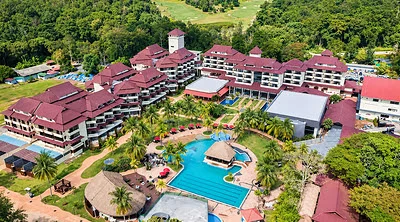
Further coastal refinement arrives via SHA Emirates at AlJurf in Abu Dhabi, which brings integrative medical wellness to the shoreline, alongside Dubai's J1 Hotel, a Gran Meliá Resort, and the Anantara Sharjah Resort. These properties signal a broader trend: luxury is no longer confined to city centers but is expanding into coastal and desert landscapes.
Saudi giga-projects embrace heritage and geography
Saudi Arabia's monumental giga-projects are pivoting firmly toward authentic heritage and dramatic geography. Riyadh's historic Diriyah development will unveil a dense cluster of ultra-luxury offerings, marking regional debuts for names such as Montage Resort Wadi Safar and Orient Express Diriyah, alongside Pendry, Raffles, and LXR. These properties are designed to immerse guests in Najdi architecture and local cultural exchanges, moving beyond generic luxury templates.
Higher still, within the craggy peaks of NEOM, Raffles Trojena promises an alpine-inspired, high-altitude sanctuary that subverts conventional perceptions of the desert kingdom. This project, along with others, is part of Saudi Arabia's broader push to attract international travelers, as highlighted at recent trade events like WTM London.
Guest expectations evolve
These physical debuts reflect a decisive evolution in guest expectations. According to forecasts from Arabian Travel Market and Hilton, 77% of prospective regional visitors prioritize high-end stays, while 55% of event-driven travelers actively demand curated cultural programming. Marble lobbies and gilded fixtures are no longer enough; visitors seek storied architecture, locally hosted exchanges, and authentic place-making.
Wellness is also taking center stage. Rigid resort timetables are giving way to longevity programs, biohacking therapies, and restorative desert sanctuaries designed for cognitive decompression. This aligns with a broader industry trend toward redefining luxury beyond traditional amenities.
Commercial realities and service standards
However, this surge of ambition brings commercial realities. With GCC room stock set to climb 25% by 2030, swelling capacity threatens to soften average room rates and occupancy. In response, Saudi Arabia will enforce mandatory staff-to-room ratios starting 1st January 2027, compelling top-tier properties to deploy up to three staff members per key. This move underscores the importance of service excellence as a key differentiator.
Developers are also weaving branded residences into resort master plans to anchor long-term commercial resilience, while regional patrons increasingly embrace multi-stay itineraries, dividing holidays between secluded retreats and vibrant lifestyle enclaves.
As 2027 approaches, West Asia is not merely expanding its luxury room footprint; it is crafting a sophisticated ecosystem where scale, spirit, and service coalesce. Operators that master this delicate equation will define the next chapter of regional travel.