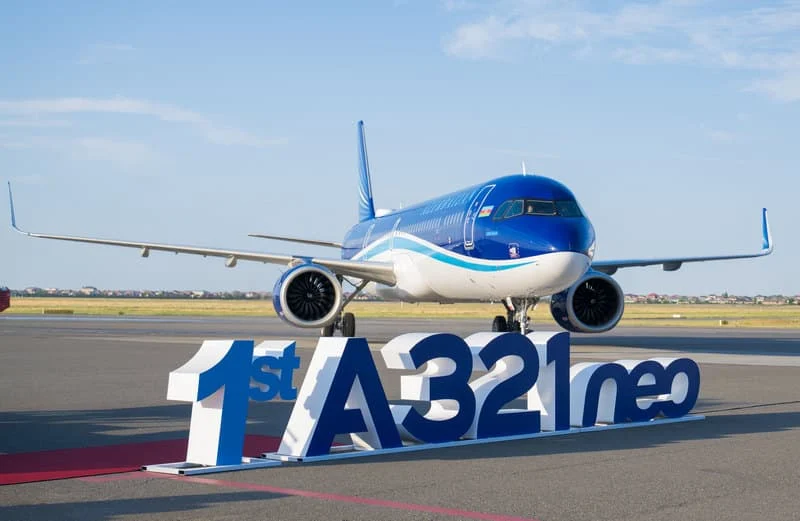
AerCap Holdings N.V. has completed the delivery of the first Airbus A321neo to Azerbaijan Airlines (AZAL), marking the carrier’s entry into the A321neo era. The handover took place at the Airbus Delivery Centre in Hamburg, with the aircraft joining AZAL’s fleet as part of a broader fleet-modernization program.
The delivery is the latest milestone in a 2024 agreement between AerCap and AZAL that covers three A321neo and three A320neo aircraft. The first two A320neos were delivered earlier this year, and the remaining units are scheduled to arrive by November 2026. The deal underscores the Baku-based carrier’s commitment to upgrading its narrowbody fleet with next-generation fuel-efficient technology.
Strategic Fleet Renewal for AZAL
Peter Anderson, Chief Commercial Officer of AerCap, highlighted the significance of the transaction. “We are proud to be the first lessor to introduce the A321neo to Azerbaijan Airlines,” Anderson said. “The addition of these new fuel-efficient aircraft will enhance AZAL’s operational capabilities, support its network expansion, and deliver an improved passenger experience.”
Jamil Manizade, Chief Commercial Officer of Azerbaijan Airlines, echoed that sentiment. “The arrival of our first Airbus A321neo represents another significant step in AZAL’s long-term fleet modernisation strategy,” Manizade stated. “We are strengthening our operational capabilities, improving fuel efficiency, and creating new opportunities for sustainable network growth.”
AZAL, a 4-Star Skytrax-rated airline, has been steadily expanding its route network from Baku Heydar Aliyev International Airport. The carrier serves destinations across Europe, the Middle East, and Asia, and the new A321neo is expected to support both frequency increases and potential new city pairs. The aircraft’s longer range and lower fuel burn align with the airline’s sustainability targets and its ambition to offer a more comfortable cabin experience.
AerCap, headquartered in Dublin, is one of the world’s largest aircraft lessors, serving approximately 300 customers globally. The company’s portfolio includes a wide mix of narrowbody and widebody aircraft from both Airbus and Boeing. This delivery reinforces AerCap’s role in facilitating fleet transitions for carriers in emerging markets.
The A321neo is the largest member of Airbus’s A320neo family, offering up to 244 seats in a typical two-class configuration. Powered by CFM International LEAP-1A or Pratt & Whitney PW1100G-JM engines, the type delivers a 20% reduction in fuel consumption and CO₂ emissions compared to previous-generation A320ceo models. It also features the Airbus Airspace cabin, which includes larger overhead bins, LED mood lighting, and wider seats.
For travel professionals, the AZAL fleet renewal is a signal of growing capacity and improved product quality on routes connecting the Caucasus region with key markets. The airline’s network expansion could create new opportunities for tour operators, corporate travel managers, and MICE planners looking for direct connections to Baku and beyond.
In related developments, Malaysia Airlines and Singapore Airlines recently launched a joint business partnership, reflecting the broader industry trend of carriers seeking scale through cooperation. Meanwhile, premium economy continues to outpace first class as airlines reconfigure cabins to meet evolving passenger demand.
AZAL’s decision to standardize on the A320neo family also positions it well for future growth, as the type’s commonality reduces maintenance and training costs. The carrier’s existing fleet includes a mix of Boeing 757s, 767s, and 787s, along with Embraer E190s. The gradual retirement of older types in favor of the neo family will streamline operations and lower the airline’s carbon footprint.
With the remaining four aircraft due by late 2026, AZAL is on track to operate one of the youngest fleets in the region. The airline’s management has indicated that the new aircraft will be deployed on both existing and new routes, with a focus on high-demand leisure and business destinations.
For lessors like AerCap, the AZAL deal demonstrates the continued appetite for fuel-efficient narrowbodies in markets where fleet renewal is a strategic priority. As airlines worldwide grapple with rising fuel costs and environmental regulations, the A321neo has become a cornerstone of many fleet plans.