Premium economy has evolved from an afterthought into a major profit driver for global airlines, as carriers phase out first-class cabins to make room for the increasingly popular mid-tier product. Industry data shows the segment now generates roughly 33% more revenue per seat than standard economy, and capacity is expanding by up to 50% across many fleets.
According to recent analysis, premium economy has grown 8% since 2022, outpacing standard economy's 5.9% growth. The trend is particularly pronounced among European network carriers such as Lufthansa, where the cabin class contributes significantly to overall profitability. The shift reflects changing passenger preferences: travelers are willing to pay a premium for more space and comfort, but often balk at the cost of business class.
Product Upgrades Drive Demand
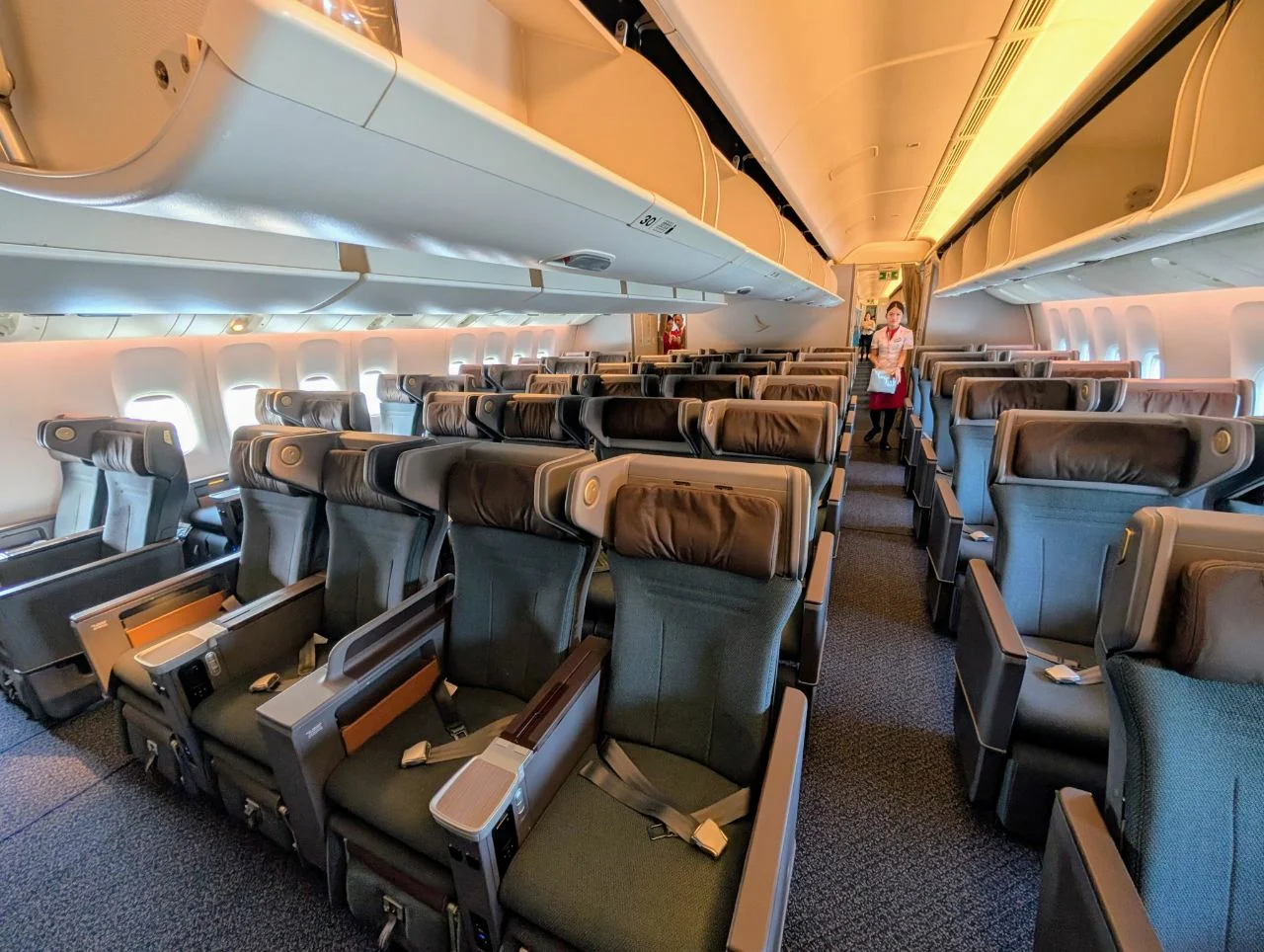
Today's premium economy cabins bear little resemblance to the basic extra-legroom seats of a decade ago. Airlines are installing privacy dividers, wireless charging pads, large 4K OLED screens with Bluetooth pairing, and seats with pitch ranging from 36 to 38 inches and width between 19 and 21 inches. The experience is increasingly described as "business class lite."
Emirates has rolled out dedicated premium economy cabins across multiple long-haul routes, while flydubai introduced the product for the first time. The cabin is no longer limited to widebody aircraft; the Airbus A321XLR now offers premium economy on long-haul narrowbody operations, improving the passenger experience on routes that previously lacked such options.
Looking ahead, Thai Airways plans to introduce premium economy on its Boeing 777-300ERs and incoming 787-9s by 2027. LATAM Airlines is retrofitting its 787-8 and 787-9 aircraft with premium economy cabins, also targeting next year. German leisure carrier Discover Airlines will launch its Ocean Blue class on A330 widebodies.
The expansion comes at the expense of first class. Adding premium economy typically requires cutting about 40% of first-class seating, a trade-off many carriers are willing to make as demand for the top cabin softens. The shift aligns with broader industry trends: American Airlines recently reported record Q1 revenue but persistent net losses, highlighting the pressure on carriers to optimize cabin mix.
For travel professionals, the rise of premium economy presents new opportunities in ancillary revenue and upsell strategies. Tour operators and agents can position the cabin as a value-add for clients seeking comfort without the business-class price tag. The segment's growth also influences aircraft configuration decisions, fleet planning, and route profitability analysis.
As 2027 approaches, industry observers expect premium economy to become a standard offering on most long-haul flights. The cabin's resilience through economic cycles suggests it is not a passing trend but a structural shift in how airlines segment their customer base. For now, the message is clear: premium economy is here for the long haul, and passengers are ready to book.