US network carriers are recalibrating their 2027 schedules as jet fuel prices spike and inbound international travel continues to soften. The combination is forcing airlines to reassess route profitability, frequency levels, and fare structures ahead of the peak planning season.
Fuel costs hit $1 billion for American
American Airlines has quantified the impact of rising fuel prices at approximately $1 billion in additional fourth-quarter expenses. According to Reuters, fuel prices are running about $1 per gallon above the assumptions used in the carrier's July guidance. Each one-cent movement in fuel costs adds or subtracts roughly $10 million from American's quarterly fuel bill, a sensitivity that makes planning particularly volatile.
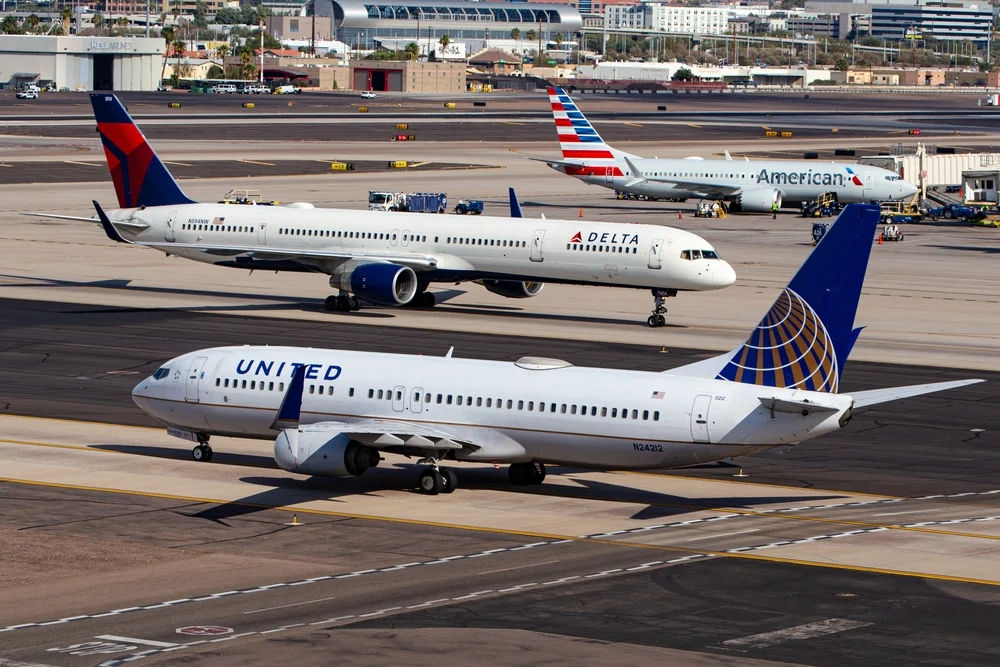
That arithmetic is already influencing schedules. American has warned that capacity adjustments could follow if fuel remains expensive. United Airlines has removed some flights planned for December and indicated further changes could extend into early 2027. Southwest Airlines has cut its planned 2026 capacity growth roughly in half, a significant pullback for the low-cost carrier.
Inbound tourism slump compounds the problem
The fuel shock arrives at a time when the United States is attracting fewer international visitors. Foreign visitor numbers fell to 68 million in 2025, down 5.5% from the previous year, while overseas arrivals declined a further 4.7% through July 2026, according to Commerce Department figures reported by Reuters. Canadian visitor numbers dropped 20% in 2025, adding pressure to the large transborder market that feeds traffic through US hubs.
This matters because international passengers do not disappear when they land at New York, Miami, Los Angeles, Dallas, or Chicago. Many connect onto domestic services, supporting routes and frequencies that depend on a mix of local and connecting traffic. A decline in inbound visitors directly weakens the economics of those domestic legs.
The weakness has reached Washington. President Donald Trump met airline, hotel, cruise, and resort executives in September to discuss the downturn. Industry representatives raised issues including visa interview delays, airfares, and US entry policies, according to Reuters.
Network planners shift toward high-yield routes
Passenger demand, however, has remained resilient. American CEO Robert Isom said revenue strength was evident across domestic and international markets and in both premium and economy cabins. The immediate challenge is not a broad collapse in demand, but the substantially higher cost of putting capacity into the market.
That changes the calculation route by route. Network planners can trim off-peak frequencies, slow expansion, or move aircraft toward markets producing stronger returns. Services supported by premium demand, corporate traffic, and healthy connecting flows have greater protection. Marginal frequencies face harder scrutiny.
For travel management companies and corporate buyers, the effects can surface quickly. Fewer frequencies reduce flexibility and may strengthen airline pricing power where competing capacity is limited. Tour operators face a related problem: higher fares and thinner schedules make US packages more difficult to price competitively in overseas markets.
There is a wider tourism dilemma. Capacity discipline may protect airline margins, but fewer seats and firmer fares make the US more expensive to reach just as destinations, hotels, attractions, and receptive operators are trying to rebuild international business. The recent moves by Chinese carriers to curb overcapacity show that capacity discipline is a global theme, but the US situation is complicated by the demand side.
Airlines are therefore reading two different market signals. Strong premium and domestic demand gives them some scope to recover higher costs through pricing. Softer inbound traffic makes aggressive fare increases or deep international capacity cuts more difficult to sustain without potentially weakening demand further.
The next schedule revisions will show where carriers draw that line. If fuel remains elevated into 2027, aircraft are likely to follow yield and network contribution more closely, putting weaker routes at risk. The industry will be watching closely, especially as other regions like Hong Kong push for growth and outbound markets like Australia surge.