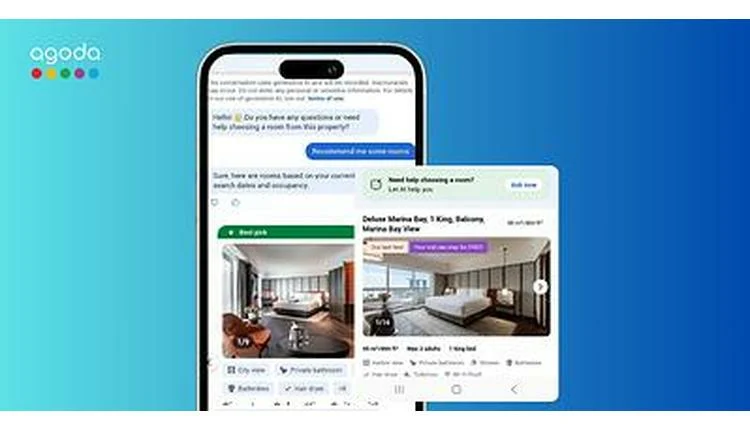
Agoda has officially launched its AI Assistant, a conversational tool designed to streamline travel planning and booking, now available across 21 markets via the company's mobile app. The rollout follows a beta phase that began in September, and the feature is positioned as a one-stop solution for travelers seeking to discover destinations, compare options, and complete bookings without switching between apps or websites.
The AI Assistant leverages OpenAI models to power its core intelligence, while Google Maps Grounding supplies up-to-date information on restaurants and points of interest. It also taps into live web search to deliver real-time data alongside Agoda's inventory of more than six million accommodation options, flights, tours, and attractions. This integration allows users to explore ideas, check prices and availability, and make reservations within a single conversational interface.
According to Agoda CEO Omri Morgenshtern, the tool addresses the fragmented nature of travel planning. "With Agoda's AI Assistant, we're giving travellers a smart companion that understands their preferences and trip context and adapts to their needs," he said. The assistant also remembers user preferences and trip details, creating a more seamless experience for repeat users.
Connected trips gain traction
Early feedback from the beta phase indicates growing interest in "connected trips," which bundle multiple travel products—such as flights, hotels, and tours—into a single itinerary. This trend aligns with broader industry moves toward integrated digital travel experiences, as seen in recent Booking.com predictions for 2027 that highlight AI-driven and emotionally resonant travel planning.
The launch is part of Agoda's broader strategy to embed artificial intelligence across its platform, enhancing discovery, planning, and booking. It also reflects a wider shift among online travel agencies to adopt AI-powered assistants, with competitors like Booking.com and Expedia investing heavily in similar technologies.
For travel professionals, the AI Assistant could influence how consumers research and book trips, potentially increasing the share of direct bookings through Agoda. The tool's ability to handle complex, multi-product itineraries may also encourage travelers to bundle services, a trend that tour operators and destination management companies should monitor.
Agoda's move comes amid a wave of AI adoption across the travel sector. For instance, Agoda data shows Indian festive travel shifting to experience-led trips, suggesting that AI-driven recommendations could further steer travelers toward experiential offerings. Similarly, Kuala Lumpur leads Deepavali search surge across Malaysia, indicating regional demand that AI tools can help capture.
As the AI Assistant expands, Agoda aims to refine its capabilities based on user interactions. The company has not disclosed specific performance metrics but emphasized that the tool is designed to adapt to individual traveler needs, making trip planning more intuitive and efficient.
Industry analysts view this as a significant step in the evolution of online travel agencies, where AI is becoming a key differentiator. By integrating conversational planning with a vast inventory, Agoda is positioning itself at the forefront of a trend that could redefine how travelers engage with digital platforms.