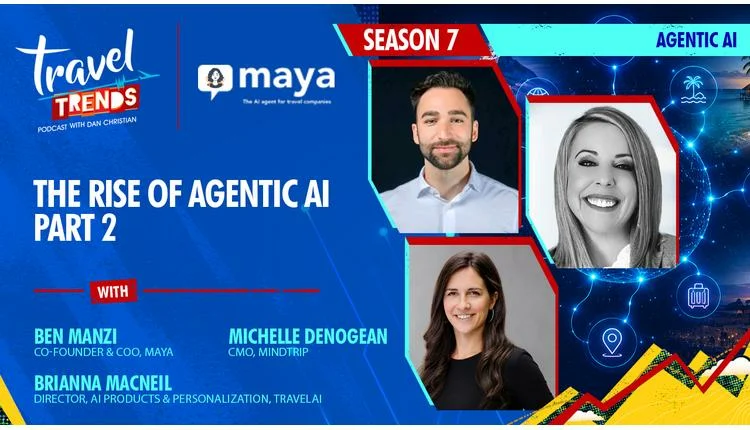
The travel industry is undergoing a structural shift as AI agents begin to replace the traditional travel funnel, according to insights from the Agentic AI Series hosted by Dan Christian of the Travel Trends Podcast. This transformation sees AI handling discovery, planning, booking, and personalisation within a single decision layer, fundamentally altering how travel decisions are made.
Industry leaders, including Gilad Berenstein of Brook Bay Capital and Michelle Denogean of Mindtrip, highlight that AI agents are moving from merely responding to executing complex tasks autonomously. This evolution is reshaping the industry's structure, with AI systems now capable of managing tasks that previously required extensive human intervention. "AI agents are being deployed globally to assist in complex tasks," Berenstein noted.
Implications for Travel Brands
The implications for travel brands are profound. Traditional methods of customer acquisition, such as SEO and paid strategies, may no longer suffice. Instead, brands must optimise for AI interpretation and machine-readable content. Tahnee Perry, an AI expert consultant, warned, "You need to have a plan for that because if you don’t, you won’t show up."
This shift is particularly relevant for airlines, hotel groups, and cruise lines that rely on direct bookings and intermediary channels. For example, carriers like Singapore Airlines and Emirates, hotel chains such as Marriott and Accor, and cruise operators like Royal Caribbean and MSC Cruises will need to ensure their content is structured for AI consumption. Similarly, GDS systems like Amadeus and Sabre may see their roles evolve as AI agents bypass traditional booking flows.
Despite the rise of AI, human roles in travel are evolving rather than disappearing. AI is seen as a tool to remove operational friction, allowing human expertise to focus on creating valuable experiences. Jesse Fischer, CEO of GuestOS, stated, "AI is excellent at doing those repetitive mundane tasks that allow staff to focus on experiences." This aligns with broader trends in wellness tourism reshaping Asia Pacific hospitality and travel strategies, where personalised service remains key.
As AI systems continue to develop, the competitive landscape is shifting. Smaller businesses may find new opportunities as AI tools become more accessible. However, distribution remains a challenge, as Christian Watts of Magpie cautioned, "Just because you can build something amazing doesn’t mean you’re going to be able to get distribution with it." This echoes challenges seen in social commerce and AI reshaping travel distribution as younger travellers book on influence.
The travel industry's future will likely be defined by those who can best align with AI's understanding and interpretation of travel intent, marking a new era in travel dynamics. For travel professionals—from airline executives to hoteliers, cruise lines, tour operators, agents, and travel-tech vendors—adapting to this AI-driven landscape is no longer optional but essential.