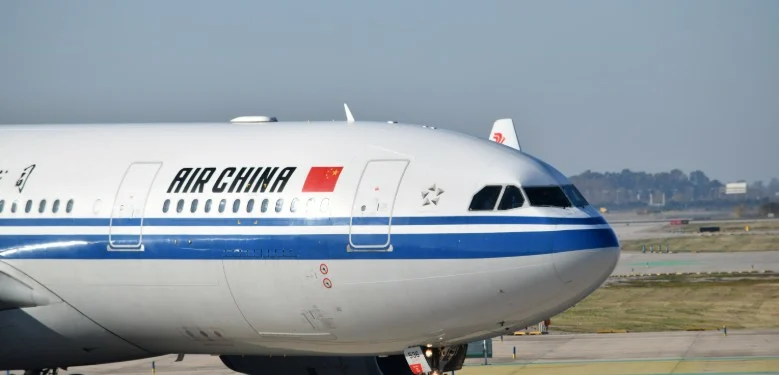
Air China is set to open its first scheduled passenger link between Chengdu and Vietnam, with daily flights from Chengdu Tianfu International Airport (TFU) to Hanoi's Noi Bai International Airport (HAN) commencing January 13, 2027. The service will operate under flight numbers CA415/CA416, using Airbus A320 aircraft, according to the carrier's booking system.
The outbound flight CA415 departs Chengdu Tianfu at 18:00 and arrives in Hanoi at 19:10 local time. The return leg, CA416, leaves Noi Bai at 20:20 local time and lands back in Chengdu at 23:30 Beijing time. The schedule is designed to offer convenient same-day connections for both business and leisure travelers.
This route marks Air China's first foray into the Vietnam market from its Chengdu hub. Hanoi becomes the ninth destination served by Air China's Southwest China branch across Southeast Asia, joining Singapore, Bangkok, Kuala Lumpur, Jakarta, Manila, Phuket, Colombo, and Kathmandu. The expansion underscores the airline's strategy to deepen its network in the region.
Strengthening Chengdu's international connectivity
Over the past two years, Air China has been actively expanding Chengdu's international footprint from both of the city's airports. The carrier has launched or resumed services to London Gatwick, Brussels, and Almaty, while building connections that link Southeast Asia with Europe via Chengdu. The new Hanoi service will further enhance Chengdu Tianfu's role as a gateway for intra-Asia and intercontinental traffic.
The addition of daily flights to Hanoi provides another option for passengers traveling between Europe and Southeast Asia, particularly those using Chengdu as a transfer point. With the route already served by Sichuan Airlines and Chengdu Airlines, Air China's entry increases the number of carriers on the city pair from two to three, intensifying competition on a route where capacity is already established.
Air China's move comes midway through the 2026/27 winter season. Industry observers will be watching how the carrier differentiates its product on this short-haul international route, where schedule convenience and pricing will likely be key battlegrounds. The airline's decision to operate daily suggests confidence in sustained demand, despite the existing competition.
The launch date follows Air China's earlier announcement for the 2026 summer-autumn season, which listed Chengdu–Hanoi as a route to be introduced mid-season. The January 13, 2027, start now provides a concrete timeline, indicating that the plan has moved from proposal to implementation with a clear flight schedule.
Vietnam has been a bright spot in Asia-Pacific travel recovery, with arrivals surging in recent months. The new service aligns with broader trends of growing air connectivity between China and Vietnam, as highlighted in recent industry data on Asia-Pacific arrivals nearing pre-pandemic peaks. Air China's entry could also stimulate further demand, particularly from the large Vietnamese diaspora and business travelers in the tech and manufacturing sectors.
For travel agents and corporate buyers, the new daily service offers more flexibility for itineraries between Southwest China and northern Vietnam. The evening departure from Chengdu and late-night return from Hanoi may appeal to travelers seeking to maximize daytime hours on the ground.
Air China's expansion at Chengdu Tianfu is part of a broader push to develop the airport as a major international hub. The carrier's growing Southeast Asian network, now including Hanoi, positions Chengdu as a viable alternative to larger gateways like Beijing and Shanghai for regional connections.
The inaugural flight date, operating schedule, and aircraft type remain subject to official confirmation by Air China and the latest information in its booking system. However, the detailed timetable suggests that the airline is committed to launching the route as planned.
As the competitive landscape on Chengdu–Hanoi evolves, the market will see whether Air China's daily frequency and brand strength can carve out a sustainable share. The route's success will depend on load factors, yield management, and the ability to attract both point-to-point and connecting traffic.