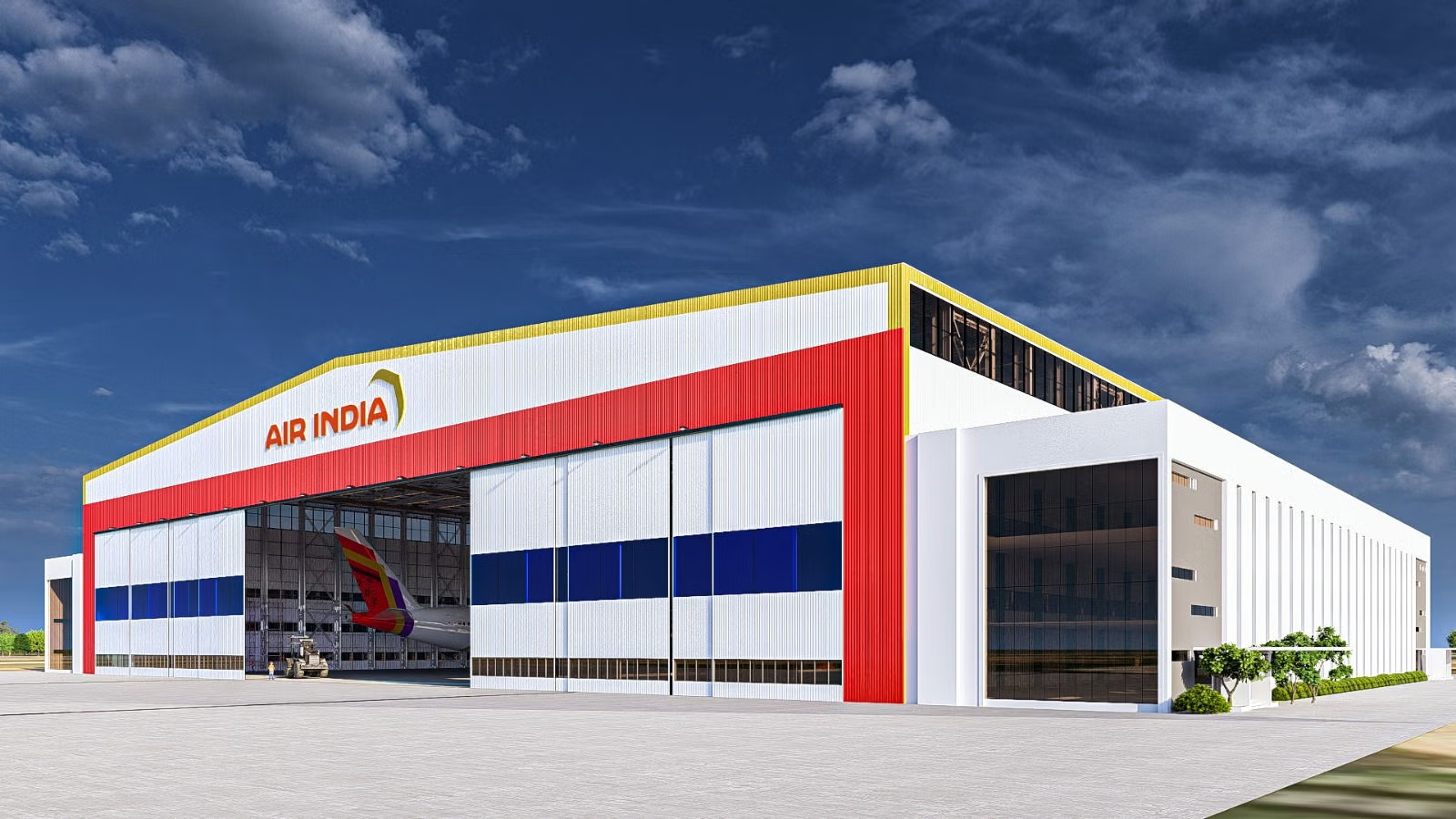
Air India has officially commenced construction of a state-of-the-art Maintenance, Repair and Overhaul (MRO) hangar at Indira Gandhi International Airport (DEL) in Delhi. The move is a cornerstone of the carrier's broader transformation strategy, which has been gathering pace since its return to the Tata Group in 2022.
The new hangar is designed to accommodate multiple widebody and narrowbody aircraft simultaneously, enabling Air India to perform heavy checks, line maintenance, and component repairs in-house. This will significantly reduce the airline's dependence on third-party MRO providers, many of which are based overseas, and is expected to cut turnaround times and costs.
Strategic shift toward self-reliance
Air India's investment in the Delhi MRO facility reflects a deliberate push toward operational self-sufficiency. The airline has historically outsourced a large portion of its maintenance work to external vendors, but the new hangar will allow it to retain more control over its fleet's airworthiness and scheduling.
According to industry sources, the hangar will be equipped with advanced tooling and diagnostic systems, aligning with global MRO standards. It will also create skilled engineering jobs, contributing to India's growing aviation ecosystem.
The project is part of a wider infrastructure upgrade at Delhi Airport, which is also seeing expansions in terminal capacity and apron space. Air India's hub at DEL is central to its international growth plans, particularly on routes to North America, Europe, and Southeast Asia.
Supporting fleet expansion and network growth
Air India has placed record orders for new aircraft, including 470 jets from Airbus and Boeing, with deliveries expected over the next decade. The MRO hangar will be critical to maintaining this expanding fleet without excessive downtime.
The airline's CEO, Campbell Wilson, has repeatedly emphasised the importance of operational reliability as the carrier competes with Gulf and Asian rivals. The new MRO facility is a tangible step toward that goal, allowing Air India to manage its own maintenance schedules and reduce delays.
Industry analysts note that the move could also position Air India as a regional MRO hub, potentially serving other carriers in South Asia. This would align with India's broader ambitions to become a global aviation maintenance destination.
The development comes as Air India deepens its codeshare partnership with Singapore Airlines, with standalone bookings on each other's flights set to begin in October. The enhanced cooperation is expected to boost connectivity between India and Southeast Asia, and the MRO facility will support the increased aircraft utilisation that such partnerships demand.
For travel professionals, the new hangar signals a more resilient Air India, which could translate into fewer cancellations and better schedule integrity—key factors for corporate clients and tour operators.
While the construction timeline has not been officially disclosed, industry insiders expect the hangar to be operational within two to three years. Once complete, it will be one of the largest MRO facilities in the region, reinforcing Delhi's status as a major aviation hub.
Air India's investment also dovetails with government initiatives to promote self-reliance in aviation, including incentives for domestic MRO services. The airline's move could encourage other Indian carriers to follow suit, reducing the country's reliance on foreign maintenance providers.
As Air India continues its modernisation drive, the MRO hangar is a clear signal of its long-term commitment to operational excellence and its ambition to be a leading global carrier.