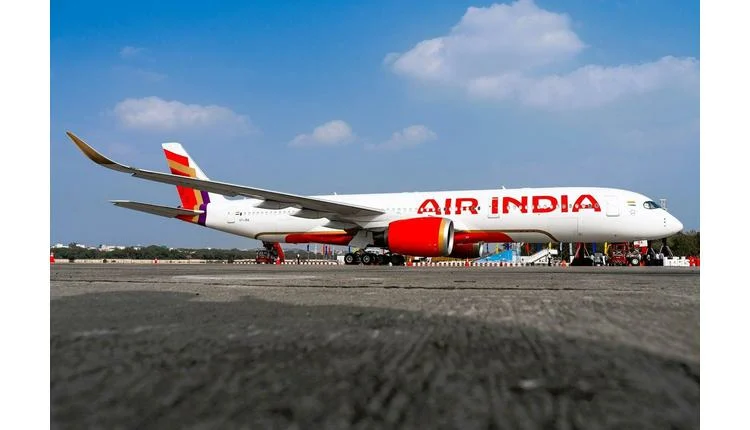
Air India has secured the fourth position globally for on-time performance in June 2026, according to Cirium's latest On-Time Performance report. The carrier recorded an on-time arrival rate of 86.85% across 15,135 flights, with departures hitting 86.23% and a completion factor of 99.7%. These metrics underscore a significant operational turnaround for the Tata Group-owned airline, which has long struggled with punctuality.
Operational Resilience at Key Hubs
As a major hub-and-spoke carrier, Air India operates through some of the world's most congested airports, including Delhi's Indira Gandhi International Airport and Mumbai's Chhatrapati Shivaji Maharaj International Airport. Managing complex operations amid air traffic control restrictions and seasonal weather challenges, the airline has implemented targeted measures to boost schedule reliability. These include streamlining aircraft turnaround processes, enhancing real-time network monitoring, and improving departure punctuality through better ground coordination.
The airline's focus on operational resilience involves robust contingency planning and cross-functional coordination. This approach helps mitigate disruptions from events such as monsoon weather, airspace restrictions, and technical issues, ensuring greater network stability. The result is a more consistent experience for passengers and improved performance metrics that now place Air India among the top tier of global carriers.
Fleet Renewal and Customer Experience
Air India is in the midst of a major transformation, highlighted by a fleet renewal programme that includes orders for 600 new Airbus and Boeing aircraft. In recent months, the airline inducted three new Boeing 787-9 Dreamliners, with additional 787-9s and Airbus A350-1000s expected later in 2026. By year-end, over 50% of Air India's widebody fleet will feature upgraded interiors, enhancing the passenger experience on long-haul routes to destinations such as London Heathrow, New York JFK, and San Francisco.
These investments are part of a broader strategy to modernize the airline's product and compete more effectively with Gulf carriers like Emirates and Qatar Airways, as well as Asian rivals such as Singapore Airlines. The fleet renewal also supports Air India's expansion into new markets, including non-stop flights to Vancouver and Sydney.
In related news, Air India's loyalty program, Air India Maharaja Club, has been named the official travel partner for the DP World PGTI Golf Tour, further strengthening the airline's brand presence in the sports and lifestyle sectors.
Industry Context and Implications
Air India's on-time performance ranking is a notable achievement for a carrier that has historically faced reliability challenges. The improvement reflects the airline's commitment to operational excellence under CEO Campbell Wilson, who has driven a cultural shift toward punctuality and efficiency. For travel professionals, this development signals that Air India is becoming a more reliable partner for corporate travel, group bookings, and connecting itineraries through its Indian hubs.
The airline's performance also has implications for the broader Indian aviation market, which is experiencing rapid growth. With domestic carriers like IndiGo and Vistara also investing in operational improvements, India is emerging as a more competitive market for both business and leisure travel. The shift in Indian traveler preferences toward immersive experiences further underscores the need for reliable air connectivity to support tourism growth.
For global travel buyers, Air India's improved reliability may open up new options for routings through Delhi and Mumbai, particularly for connections to Southeast Asia, the Middle East, and Europe. The airline's fleet modernization and enhanced onboard product are likely to make it a more attractive choice for premium travelers, especially on long-haul routes where cabin comfort is a key differentiator.