Global airlines are moving beyond the long-standing ban on spare lithium batteries in checked luggage, introducing stricter controls on power banks and other rechargeable devices as inflight fire incidents climb. The shift is reshaping how passengers store and use everyday electronics, and it is adding a new layer of pre-departure guidance for tour operators, travel management companies, and corporate travel departments.
Carriers from Singapore to Frankfurt are reviewing where power banks may be kept, whether they can be used during a flight, and how quickly cabin crew can reach them if they overheat. The concern is operational: a battery fire in the cabin can be tackled, but one in the hold is far more dangerous. That is why regulators have long required spare batteries to travel in hand luggage, and why airlines are now tightening the rules further.
Why power banks are under scrutiny
Lithium-ion batteries pack a great deal of energy into a small space, but they can enter thermal runaway if damaged, poorly manufactured, or overheated. The reaction produces intense heat, smoke, and fire that can spread quickly and persist even after flames are suppressed. The US Federal Aviation Administration (FAA) lists physical damage, manufacturing defects, water exposure, improper packing, and short circuits as common causes of battery incidents on aircraft.
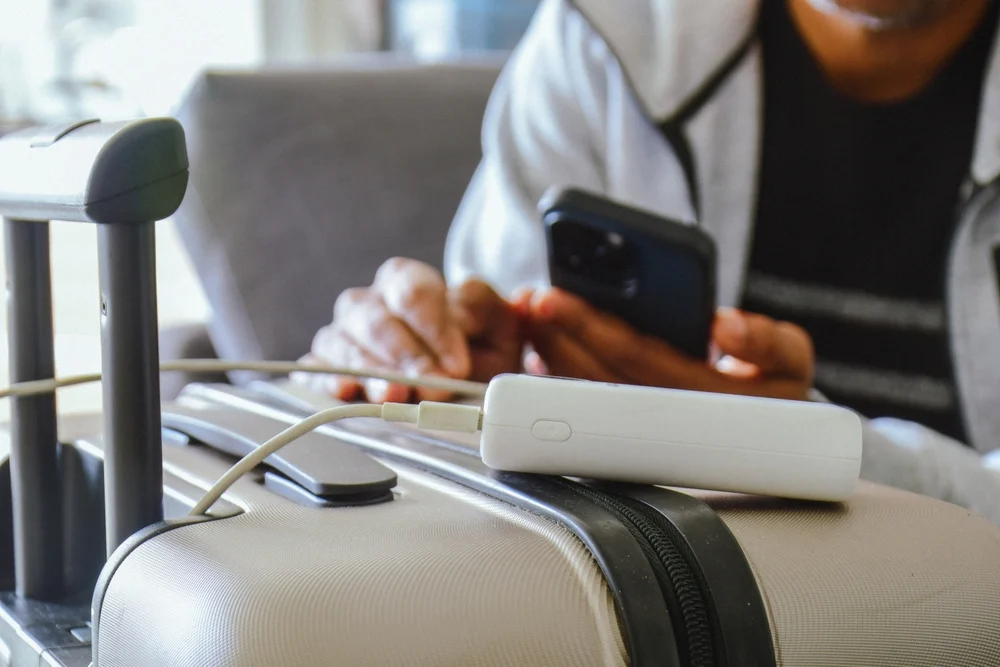
Power banks are particularly risky because they are batteries, not devices containing batteries. They are often carried loose in bags, where contact with keys or coins can cause a short circuit. Counterfeit or low-quality products, which may lack clear capacity markings, make it harder for security staff to assess safety.
The problem is compounded by traveller behaviour. Passengers now carry phones, laptops, wireless headphones, cameras, Bluetooth speakers, tablets, and portable chargers. Corporate travellers may board with several devices, while leisure passengers increasingly bring drones and gaming equipment. Each device adds a small risk, but multiplied across hundreds of passengers, the cumulative threat is significant.
Air Busan fire sharpens industry focus
The debate intensified after an Air Busan Airbus A321 caught fire at Gimhae International Airport in South Korea in January 2025. The aircraft was preparing to depart when flames spread through the rear cabin. All passengers and crew escaped, but the aircraft was heavily damaged. South Korean investigators later identified a portable power bank stored in an overhead compartment as the probable source. The finding prompted a wider review of battery procedures across Asia.
The incident was not isolated. The FAA has recorded a long-term rise in reports of lithium batteries producing smoke, fire, or extreme heat aboard aircraft. The UK Civil Aviation Authority has launched its "Pack Right. Safe Flight" campaign to educate passengers, warning that incorrectly packed batteries are becoming a more frequent hazard.
Carriers impose stricter rules
Several airlines have moved beyond the baseline ban on spare batteries in checked baggage. Singapore Airlines and Scoot now prohibit passengers from using power banks to charge devices during flights and from charging the power banks themselves through onboard outlets. Cathay Pacific, EVA Air, Thai Airways, China Airlines, and Air Busan have tightened procedures, while Lufthansa Group airlines have issued more detailed guidance on transport and storage.
Airlines increasingly want power banks stored where passengers and crew can see and reach them. Some discourage placing portable chargers in overhead lockers, where an overheating device may go unnoticed until smoke spreads. Others are restricting inflight use altogether.
The regulatory baseline remains unchanged: power banks up to 100 watt-hours are generally allowed in cabin baggage; those between 100Wh and 160Wh require airline approval; larger units are usually prohibited. But carrier rules can be stricter than the international standard, and a battery accepted by one airline may face additional conditions on another.
Vapes add a separate challenge
E-cigarettes present a distinct problem. They contain rechargeable batteries and heating elements that can activate accidentally in a bag, generating heat and smoke. Airlines are paying close attention to how vapes are carried and used, with some banning them entirely in checked luggage and restricting use in the cabin.
For travel professionals, the changing rules mean clients need clear, up-to-date guidance. A passenger who boards with a power bank in an overhead bin on one carrier may be asked to move it on another. Tour operators and corporate travel managers should brief travellers on the specific policies of each airline they fly, and remind them to keep power banks and spare batteries in hand luggage, away from metal objects, and within approved watt-hour limits.
The trend is unlikely to reverse. As travellers carry more rechargeable devices, airlines will continue to tighten controls. The industry is learning to manage the cumulative risk, and the new rules are a necessary step in protecting passengers and crew.