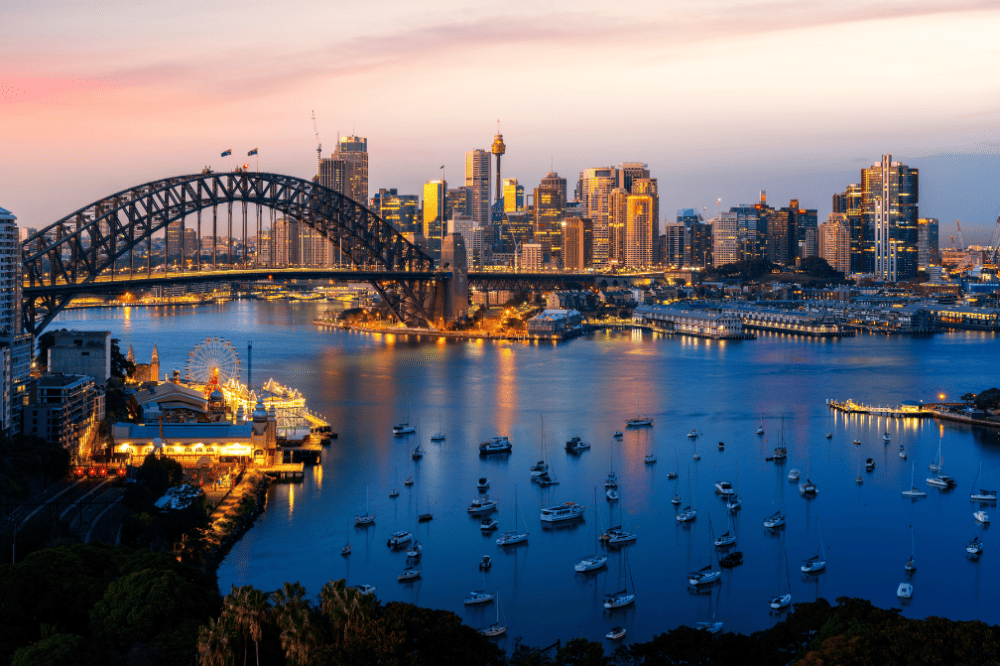
Australia has emerged as a top destination for hospitality investment, with foreign capital pouring into its hotel sector at an unprecedented rate. According to a CBRE Asia-Pacific report from April 2025, transaction volumes across the Australian hospitality industry reached a record US$2.7 billion by the end of 2025. Offshore investors accounted for 78% of total transaction activity, a 27% increase from 2024.
The report identifies investors from China, Singapore, Taiwan, Thailand, and the United States as the primary sources of this capital. This influx has propelled Australia past traditional markets like Hong Kong in regional hotel transaction volumes, placing it second only to Japan in the Asia-Pacific region.
Why Australia?
The country's reputation as an economic safe haven is a key driver. A July 2025 report from the Property Council of Australia highlights political and economic stability, market transparency, a strong tourism sector, and the availability of freehold title as factors boosting its appeal. Peter Harper, managing director and head of investment sales for hotels in Australasia at Jones Lang Lasalle (JLL), noted: "After a period of reduced international activity, we’re seeing foreign investors now pivoting back to Australia for its economic resilience, transparency, perceived attractive value and positive outlook."
This trend aligns with broader shifts in global travel demand, as discussed in our coverage of Global Travel Demand Holds Firm in 2026 Despite Geopolitical and Economic Fault Lines, where investors seek stable markets amid uncertainty.
Market Dynamics to Watch
Industry experts point to several evolving dynamics shaping hospitality investment in Australia:
- Concentration in urban centres: The bulk of investment activity is focused on Brisbane, Melbourne, and Sydney, where RevPAR and ADR are seeing significant year-over-year gains. These cities remain the primary targets for hotel developers and investors.
- Beyond traditional hospitality: Investors are increasingly looking at flex living—a hybrid housing model offering fully-furnished short- or medium-term rentals—and mixed-use accommodations that provide more affordable, community-immersive stays. This shift reflects changing traveler preferences and the rise of alternative accommodation models.
- More flexible terms for luxury hospitality: Unlike Japan and other tourist-heavy markets, where luxury hotel management agreements often run for decades, Australia offers more flexible terms, with agreements as short as 15 years. This flexibility facilitates easier asset sales and attracts investors seeking liquidity.
These developments come as the industry navigates geopolitical volatility, a topic explored at events like SEAHIS 2025 Opens in Bangkok as Hotel Investors Navigate Geopolitical Volatility, where Australian market stability was a recurring theme.
For travel professionals—from airline executives to hoteliers and tour operators—the surge in foreign investment signals growing confidence in Australia's tourism infrastructure. As new properties and mixed-use developments come online, they will create opportunities for partnerships, distribution, and marketing. The influx of capital also underscores the importance of Australia as a key market for global travel brands, particularly as the country continues to attract high-yield travelers from Asia and the United States.
With transaction volumes expected to remain robust, Australia's hotel sector is poised for further growth. Investors and operators alike should monitor the evolving dynamics in urban centres and the rise of flex living, as these trends will shape the competitive landscape in the years ahead.