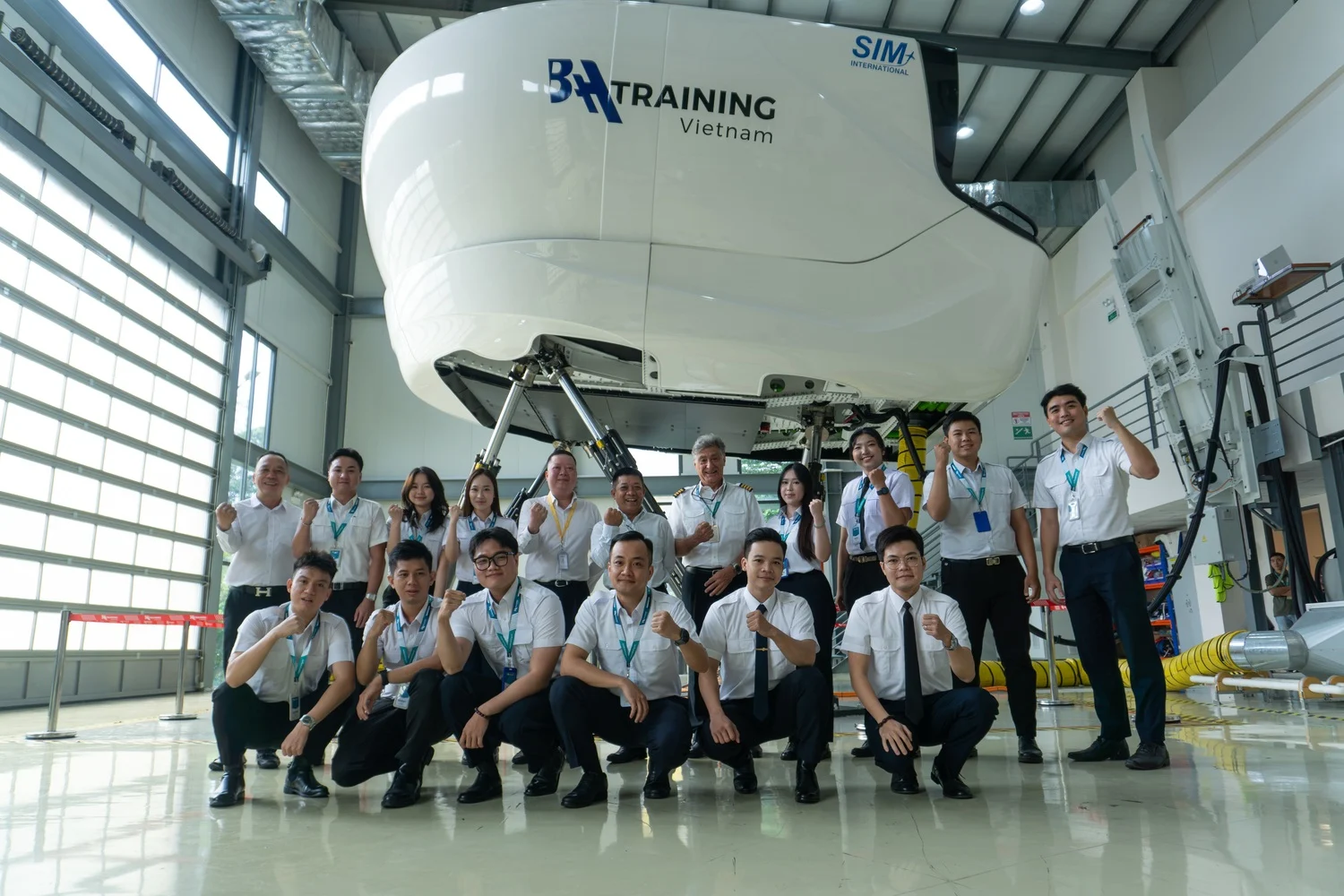
BAA Training Vietnam has kicked off a strategic partnership with Sun Phu Quoc Airways, welcoming the first cohort of pilot cadets for Airbus A320 Type Rating training. The program, which started on 10 August 2026 at BAA Training's simulator centre in Ho Chi Minh City, is designed to support the airline's long-term pilot development as Vietnam's aviation sector continues its rapid expansion.
Sun Phu Quoc Airways, which launched operations in November 2025, has already grown its fleet to 17 aircraft and has further expansion plans to meet rising passenger demand across domestic and regional routes. The airline has selected 13 cadets for this initial training cycle, which spans two months and includes competency-based instruction, advanced simulator sessions, and operational preparation aligned with both Civil Aviation Authority of Vietnam (CAAV) and European Union Aviation Safety Agency (EASA) standards.
Building a sustainable pilot pipeline
Tran Trong Nhan, Managing Director at BAA Training Vietnam, underscored the importance of reliable training solutions for the region's booming aviation industry. "Our focus is on delivering training that meets the highest international standards whilst preparing pilots for the operational demands of modern commercial aviation," he said. The partnership reflects a broader trend across Southeast Asia, where airlines are investing heavily in ab initio and type rating programs to secure a steady flow of qualified flight crew.
Captain Nguyen Duc Manh, Crew Training Postholder at Sun Phu Quoc Airways, emphasized the strategic priority of developing a robust pilot pipeline. "Partnering with BAA Training Vietnam allows us to provide our cadets with world-class training and operational readiness," he noted. The airline's rapid fleet growth—from startup to 17 aircraft in under a year—has made crew development a critical operational focus.
Vietnam's aviation market is one of the fastest-growing in the world, with carriers like Vietjet Air, Bamboo Airways, and Vietnam Airlines all expanding their networks. The country's tourism rebound, coupled with rising middle-class travel, has fueled demand for both domestic and international flights. Sun Phu Quoc Airways, based on the resort island of Phu Quoc, is positioning itself to capture a share of this growth, particularly in the leisure and MICE segments. The airline's partnership with BAA Training Vietnam is a clear signal of its commitment to operational excellence and safety.
BAA Training Vietnam, part of the BAA Training network with facilities in Lithuania, Spain, and China, has been expanding its presence in the region. The Ho Chi Minh City simulator centre offers full-flight simulators for Airbus and Boeing aircraft, along with a range of training programs from cadet to captain. The company has also been active in sustainable tourism training initiatives, though its core focus remains aviation.
As Southeast Asia's aviation sector matures, the need for qualified pilots is becoming more acute. According to Boeing's Pilot and Technician Outlook, the region will require over 200,000 new pilots by 2040. Programs like this one are essential to meeting that demand. BAA Training Vietnam's tailored approach—combining classroom instruction, simulator time, and operational preparation—aims to produce pilots who are ready to fly from day one.
The partnership also highlights the growing importance of Vietnam as a training hub. With its strategic location, competitive costs, and improving infrastructure, the country is attracting both airlines and training providers. Sun Phu Quoc Airways' decision to partner with a local training centre rather than sending cadets abroad reflects a broader shift toward regional self-sufficiency in aviation training.
For travel professionals, this development is a positive sign for Vietnam's aviation ecosystem. A reliable supply of well-trained pilots is crucial for maintaining safety standards and supporting route expansion. As Sun Phu Quoc Airways continues to grow, its investment in human capital will be a key factor in its success. The airline's focus on training aligns with broader industry trends, as seen in Vietnam's tourism market and the hospitality sector's expansion.
BAA Training Vietnam and Sun Phu Quoc Airways are not alone in this endeavor. Across the region, airlines and training providers are forming similar alliances to address the pilot shortage. The success of these programs will be critical to the long-term health of the industry. With the first cohort now underway, both companies are looking ahead to future training cycles and the continued development of Vietnam's next generation of aviation professionals.