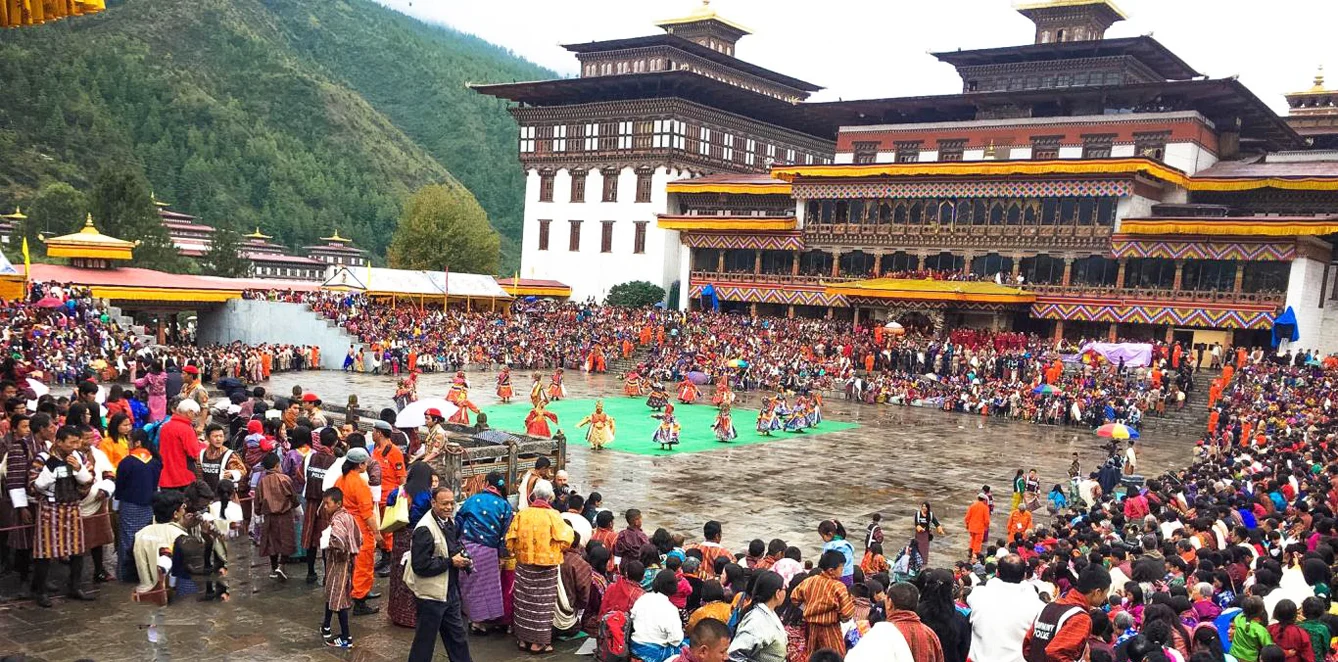
For years, the global travel industry has measured its sustainability efforts by how little damage it does. But as climate impacts intensify, a growing number of destinations are concluding that simply treading lightly is no longer sufficient. Bhutan, the Himalayan kingdom that has long prided itself on being the world's only carbon-negative nation, is now taking the next step: regenerative tourism.
Rather than merely offsetting emissions, Bhutan is actively working to restore and enhance its ecological, cultural, and social systems. The strategy is ambitious, and it is being implemented quietly but methodically, with the goal of making Bhutan the definitive model for regenerative travel worldwide.
Putting money back into local hands
For tourism to be truly regenerative, the financial benefits must reach the communities that host visitors. In Bhutan, this means building hyper-local supply chains that connect luxury boutique hotels directly with agricultural cooperatives. When a property sources all its produce from surrounding village farmers, tourism becomes a direct driver of regenerative agriculture and rural preservation.
At the same time, Bhutan is scaling up community-led experiences, including rural homestays, which allow international visitors to immerse themselves in traditional heritage while ensuring that capital lands directly with indigenous families. This approach is a deliberate departure from the model where revenue is siphoned off to capital-city agencies or foreign-owned operators.
Modernisation with stewardship at its core
Transitioning from a pioneer to an operational blueprint requires hard metrics, and Bhutan is embracing that challenge. Under the newly instituted Bhutan Green Hotel Standard, properties are evaluated far beyond their luxury ratings. Hospitality brands must now prove active landscape stewardship, from restoring degraded acreage surrounding their grounds to implementing zero-plastic protocols and establishing circular waste-to-resource systems.
The ethos of the high-value, low-volume traveller is also evolving. While spending remains essential, intentional contribution now defines value. Itineraries increasingly combine low-carbon transport and wellness with hands-on initiatives, such as community watershed maintenance and heritage site restoration. This shift is part of a broader trend in luxury travel, where travellers are seeking transformation rather than mere indulgence, as highlighted in coverage of the Wellness Summit 2026.
Resilience as the top priority
Bhutan's famous Sustainable Development Fee (SDF) remains the central financial engine of its tourism strategy. Daily levies directly bankroll long-term national resilience, funding free healthcare, higher education, and the protection of pristine natural capital like glacier-fed rivers and forests. Crucially, transparent impact tracking demonstrates precisely how visitor contributions heal local ecosystems, strengthening the Bhutan Believe ethos.
Perhaps most ambitiously, Bhutan has become the first nation to measure its economy using Gross Ecosystem Product (GEP) alongside traditional metrics. By embedding GEP metrics into its Integrated Tourism Master Plan, the Department of Tourism is scientifically tracking soil health, carbon sequestration, and biodiversity metrics. This data-driven approach is a model for other destinations, and it aligns with a broader industry shift toward measuring visitor value rather than sheer numbers, as seen in Thailand's recent pivot.
For travel professionals, Bhutan's strategy offers a clear signal: the future of luxury travel lies not in minimising harm but in actively contributing to the regeneration of destinations. As climate pressures mount, destinations that can demonstrate tangible ecological and social benefits will likely attract the discerning traveller willing to pay a premium for meaningful impact.
Bhutan's approach is not without challenges, but its willingness to innovate—from the Green Hotel Standard to GEP accounting—positions it as a laboratory for the industry. Whether other nations follow suit remains to be seen, but Bhutan is proving that regenerative tourism is not just a buzzword; it is a viable, measurable strategy.