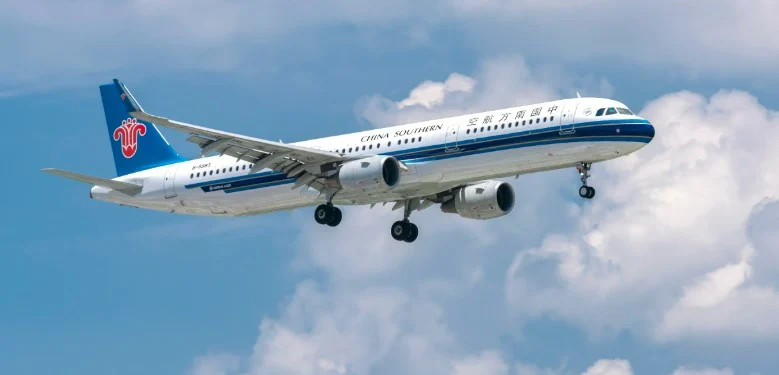
The Civil Aviation Administration of China (CAAC) has published its Draft Measures for Optimizing the Review of Domestic Routes and Flights for public consultation, signaling a significant shift in how the world's second-largest aviation market manages its domestic network. The proposal, aligned with Beijing's broader push for high-quality civil aviation development, targets excessive competition on crowded routes while reinforcing the country's hub-and-spoke system.
Stricter Entry Controls on High-Density Routes
Under the draft, the CAAC will suspend additional carrier entry on any regular route segment already served by four or more airlines. New entrants will only be permitted on newly launched segments or those with three or fewer carriers. This directly impacts carriers like China Southern, Air China, China Eastern, and Hainan Airlines, which frequently compete on trunk routes such as Beijing Capital–Shanghai Hongqiao or Guangzhou–Chengdu.
The measures introduce a dual-indicator, tiered entry assessment mechanism that classifies domestic route segments into five categories: between international aviation hubs; between international and regional hubs; between regional hubs; between hubs and non-hubs; and between non-hub airports. Each category will have its own load factor assessment standards. For routes operated by two or three airlines, passenger traffic will also be evaluated. A new airline may enter only if at least one of the two indicators—load factor or passenger volume—meets the required threshold. If neither is met, additional market entry is suspended.
Protection for Smaller Airports
Recognizing the challenges faced by smaller airports, the draft offers a two-year market cultivation period for single-carrier route segments involving airports with annual passenger throughput of 2 million or below. This protection, effective from the 2026/27 winter-spring scheduling season, aims to encourage airlines to serve underserved communities without immediate competitive pressure. For example, routes from a regional airport like Yantai Penglai to a hub such as Shanghai Pudong could benefit from this window.
Refined Capacity and Schedule Management
The proposal also refines flight capacity management by introducing differentiated support policies for backbone routes, express routes, and the basic domestic air network. This is designed to allocate capacity more efficiently according to each route's strategic role. Additionally, the CAAC seeks to standardize end-to-end flight schedule management, ensuring operational continuity and streamlining filing and approval procedures.
The draft enhances the mechanism governing route operating permits, encouraging airlines to proactively optimize capacity deployment while placing greater constraints on inefficient route operations. This could push carriers like Juneyao Airlines or Spring Airlines to reassess their domestic network strategies.
The new rules are scheduled to take effect with the 2026/27 winter-spring scheduling season. Industry stakeholders have until the end of the consultation period to submit feedback. The move comes as China's aviation sector continues to recover post-pandemic, with domestic traffic already exceeding 2019 levels in many markets.
For travel professionals, the implications are clear: airlines will need to be more strategic about route planning, while agents and tour operators may see reduced competition on key domestic corridors. The focus on hub development also aligns with broader trends, such as the expansion of Guangzhou Baiyun Airport's international network, as reported in Guangzhou Baiyun Airport Hits 10M Cross-Border Passengers, Expands Belt and Road Routes.
As China's aviation regulator tightens the reins, the industry will watch closely how these measures reshape the competitive landscape, particularly for low-cost carriers and new entrants eyeing the world's most populous domestic market.