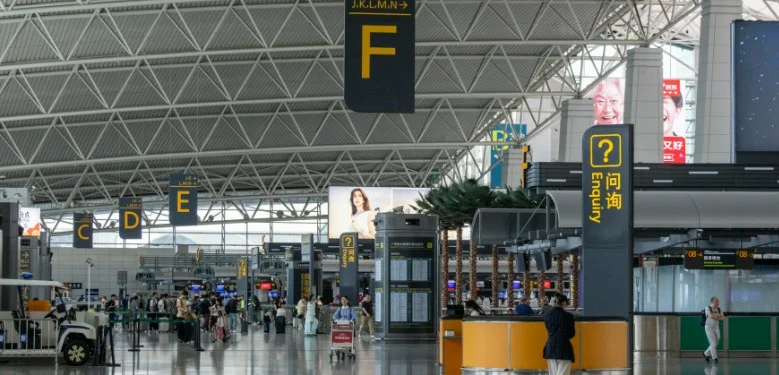
Guangzhou Baiyun International Airport has reached a new milestone in its global gateway ambitions: 10 million cross-border passenger trips in the first half of 2026, one month earlier than the previous year. The 21% year-on-year growth reflects an average of 58,000 daily inbound and outbound travelers, with peak days hitting 68,000. This surge underscores the airport's expanding role as a hub for business and leisure travel in the Greater Bay Area.
Route Expansion and Network Growth
Since January, Baiyun Airport has added or increased frequencies on 14 international passenger and cargo routes, 13 of which connect to Belt and Road partner countries. The airport's international and regional network now spans over 100 destinations, strengthening Guangzhou's position as a key aviation node. Airlines such as China Southern Airlines and Air China have been instrumental in launching services to cities like Kuala Lumpur, Bangkok, and Dubai, while cargo carriers like SF Airlines have boosted freighter capacity to support trade flows.
This expansion aligns with broader trends in the Asia-Pacific aviation market, where airports like Singapore Changi and Hong Kong International are also vying for connectivity. For travel professionals, the increased frequency on routes to Southeast Asia and the Middle East opens new opportunities for corporate travel and MICE events, particularly for industries like electronics and automotive manufacturing that have strong ties to the Pearl River Delta.
Customs Technology and Passenger Experience
Guangzhou Customs has deployed advanced machine inspection and AI-assisted image screening to streamline border clearance. Passengers now experience a largely frictionless entry process, with luggage collection and customs checks completed in minutes. For outbound travelers, a single inspection process reduces repeated checks, making spontaneous international travel more feasible. This efficiency is critical for business travelers who value time, and it positions Baiyun Airport competitively against other regional hubs.
The technology upgrade also supports the airport's growing cargo operations. Import and export cargo volume exceeded 700,000 tons during the same period, up 5.2% year-on-year, reinforcing the stability of the Greater Bay Area's foreign trade supply chain. This is particularly relevant for logistics providers and freight forwarders who rely on efficient air cargo links.
Retail and Duty-Free Growth
Rising passenger traffic has boosted airport retail, with duty-free sales surpassing RMB 700 million (USD 98.6 million), a 13.5% increase. Baiyun Airport's duty-free stores have diversified beyond traditional cosmetics, tobacco, and liquor to include time-honored Chinese brands, cultural and creative products, intangible cultural heritage items, and domestically made electronics like smartphones and tablets. International travelers are increasingly leaving Guangzhou with both Guangdong-made technology and Chinese cultural products, reflecting a shift in consumer demand.
This retail evolution mirrors trends seen at other major airports, such as Sydney Airport's recent partnership with Travelex to enhance currency services, highlighting how airports are leveraging passenger flows to drive non-aeronautical revenue.
Implications for Travel Industry
For airline executives, the route expansion signals opportunities for code-sharing and interline agreements, particularly on routes to Belt and Road markets. Hoteliers in Guangzhou and the Greater Bay Area can expect sustained demand from business and leisure travelers, especially those attending trade fairs like the Canton Fair. Tour operators and travel agents should note the growing interest in Chinese cultural products among international visitors, which could inspire new tour packages combining shopping with heritage experiences.
The airport's success also highlights the importance of technology in border management, a lesson for other airports looking to improve passenger flow. As AI integration becomes more common in travel tech, Baiyun Airport's approach offers a case study in balancing security with efficiency.
Guangzhou Baiyun Airport's milestone is not just a number—it reflects a strategic push to become a premier global gateway, with implications for airlines, hotels, and travel technology vendors across the industry.