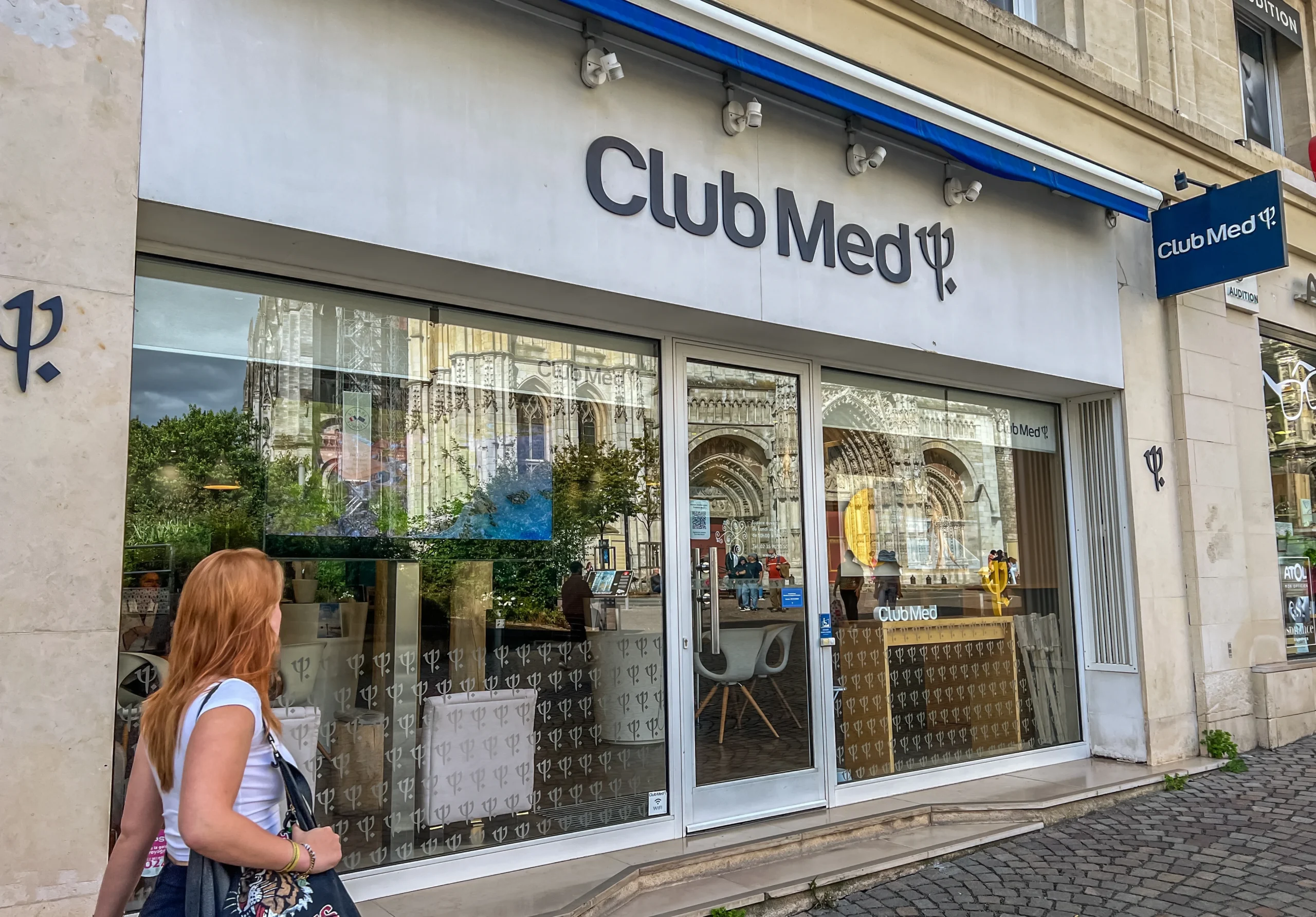
Club Med Lifestyle Group, the resort arm of Chinese conglomerate Fosun International, has formally applied to list on the Hong Kong Stock Exchange. The exchange confirmed this week that Fosun may proceed with the spin-off under Practice Note 15, which governs the listing of overseas issuers. Reuters has reported that the IPO could raise more than USD 500 million, with a potential listing window in late 2026 or early 2027.
Market reaction, however, has been notably subdued. Fosun International's shares edged up just 0.6% following the announcement, a sign that investors remain cautious about the group's ability to deliver value. The tepid response is understandable given the recent history of Fosun's travel assets in Hong Kong's capital markets.
Lessons from Fosun Tourism's troubled tenure
Fosun Tourism Group, which previously housed Club Med alongside Atlantis Sanya and various cultural tourism and property projects, was privatized and delisted from the Hong Kong exchange in March 2025. The company had gone public in 2018 at HKD 15.60 per share, but by the time the privatization proposal was announced in 2024, its shares had slumped to around HKD 4. Fosun's buyout offer of HKD 7.80 per share represented a 95% premium over the pre-suspension price, yet many long-term shareholders still walked away with significant losses.
The core problem, according to analysts, was the conglomerate discount. Fosun Tourism bundled resort operations with property development, making it difficult for investors to assign a clear valuation. Was it a hotel operator, a consumer brand, or a real estate developer? The market never settled on an answer, and the share price suffered accordingly.
Now, Fosun is attempting a different approach. The new Club Med Lifestyle Group will focus primarily on operating Club Med resorts, with ancillary services such as brand management, design, and marketing. By stripping out the property-heavy projects in Taicang and Lijiang, the company aims to present a cleaner, more comparable business model to investors.
"The separation is a strategic move to unlock value," said a Hong Kong-based travel analyst who asked not to be named. "Club Med is a globally recognized brand with strong cash flow. The question is whether the market will now value it on its own merits, rather than as part of a sprawling conglomerate."
Club Med operates over 70 resorts worldwide, with a strong presence in Europe, Asia, and the Americas. The brand has been a staple in the premium all-inclusive segment, competing with the likes of Sandals and Iberostar. Its focus on family-friendly luxury and cultural immersion has helped it maintain a loyal customer base, particularly among affluent Chinese travelers.
The IPO comes at a time when the global travel industry is rebounding strongly. International tourist arrivals are projected to exceed pre-pandemic levels by 2025, and resort operators are seeing robust demand. However, the competitive landscape is intensifying, with new entrants and shifting consumer preferences toward experiential travel.
For Fosun, the success of the IPO will hinge on convincing investors that Club Med can sustain growth and profitability without the drag of property development. The company will also need to address governance concerns and demonstrate transparency in its financial reporting.
Some industry observers draw parallels to other recent travel-related listings. For instance, Preferred Hotels' expansion in Southeast Asia highlights the growing investor interest in hospitality assets. Yet, the mixed performance of travel IPOs in Hong Kong suggests that Club Med will need to differentiate itself clearly.
The muted market response also reflects broader geopolitical and economic uncertainties. Chinese outbound travel has recovered, but not to pre-2020 levels, and the property sector's woes continue to weigh on consumer confidence. Fosun itself has been deleveraging, selling non-core assets to reduce debt.
Club Med's management, led by CEO Henri Giscard d'Estaing, has emphasized the brand's resilience and its ability to adapt to changing travel trends. The company has invested in digital transformation and sustainability initiatives, which could appeal to ESG-conscious investors.
Whether the IPO will finally fix Club Med's valuation problem remains an open question. The market will be watching closely as the listing process unfolds. For travel professionals, the outcome will offer insights into how investors perceive resort operators in the post-pandemic era.
As the industry continues to evolve, the success of Club Med's listing could set a precedent for other travel companies considering public offerings. The stakes are high, not just for Fosun, but for the broader travel investment landscape.