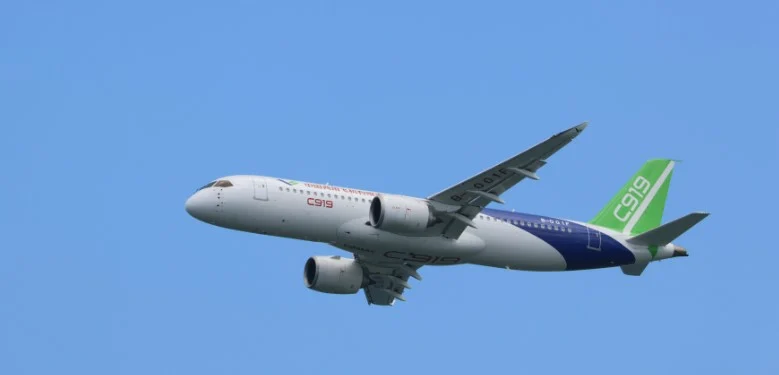
Chinese aircraft manufacturer COMAC is making notable strides in its international expansion, with two key developments in July 2026. The C919 narrow-body jet is scheduled to launch its first international route on August 12, connecting Beijing Capital International Airport (PEK) with Ulaanbaatar's Chinggis Khaan International Airport (UBN). Meanwhile, Cambodia's national carrier, Cambodia Angkor Air, has placed a firm order for 20 C909 regional jets, marking the largest single order for the type outside China.
Expanding Footprint Across Asia
COMAC's overseas presence is growing beyond initial deployments. The C909, previously known as the ARJ21, is already operating in Indonesia, Laos, and Vietnam. To date, C909 aircraft have served 25 international routes, connected 28 cities, and carried over 1 million passengers. The new Cambodia order will further deepen the type's penetration in Southeast Asia, a region where demand for regional connectivity is rising.
The C919's entry into Mongolia follows a pattern of cautious international route launches. Air China will operate the Beijing–Ulaanbaatar service, a relatively short 2-hour flight that allows COMAC to gather operational data in a cross-border environment. This route is seen as a stepping stone for potential longer-haul international services to destinations such as Bangkok, Singapore, or Kuala Lumpur.
Production Ramp-Up and Supply Chain Development
COMAC is scaling production aggressively. Approximately 15 C919s were delivered in 2025, and the company expects at least 28 deliveries in 2026. The second-phase expansion of the C919 final assembly line at Shanghai Pudong is underway; once operational, annual capacity is projected to exceed 100 aircraft. COMAC's long-term target is 200 aircraft per year by 2029.
This production surge is not just about aircraft numbers. It is driving development across China's aviation supply chain. Under the OEM-supplier model standard in commercial aviation, companies are increasingly involved in airframe structures, aviation materials, and onboard systems. The ramp-up is also creating opportunities for global suppliers and MRO providers to partner with COMAC.
For travel industry professionals, these developments signal a shift in the competitive landscape. Airlines considering fleet renewal or expansion now have a new OEM option, particularly for regional and short-haul narrow-body operations. The C909's growing track record in Southeast Asia may encourage other carriers in the region to evaluate the type for routes like Ho Chi Minh City–Colombo, recently launched by Vietjet with promotional zero-fare tickets.
Meanwhile, the broader aviation market continues to evolve. Boeing's 2026 market outlook projects a global fleet exceeding 50,000 aircraft by 2045, underscoring the scale of demand that COMAC aims to capture. As production stabilizes, COMAC's ability to deliver reliable, cost-effective aircraft will be closely watched by airline executives and lessors worldwide.
For now, the Beijing–Ulaanbaatar route and the Cambodia order represent tangible milestones. They demonstrate that Chinese-made aircraft are moving beyond domestic trials and into commercial international service, a development with long-term implications for route planning, fleet strategy, and aviation supply chains across Asia and beyond.