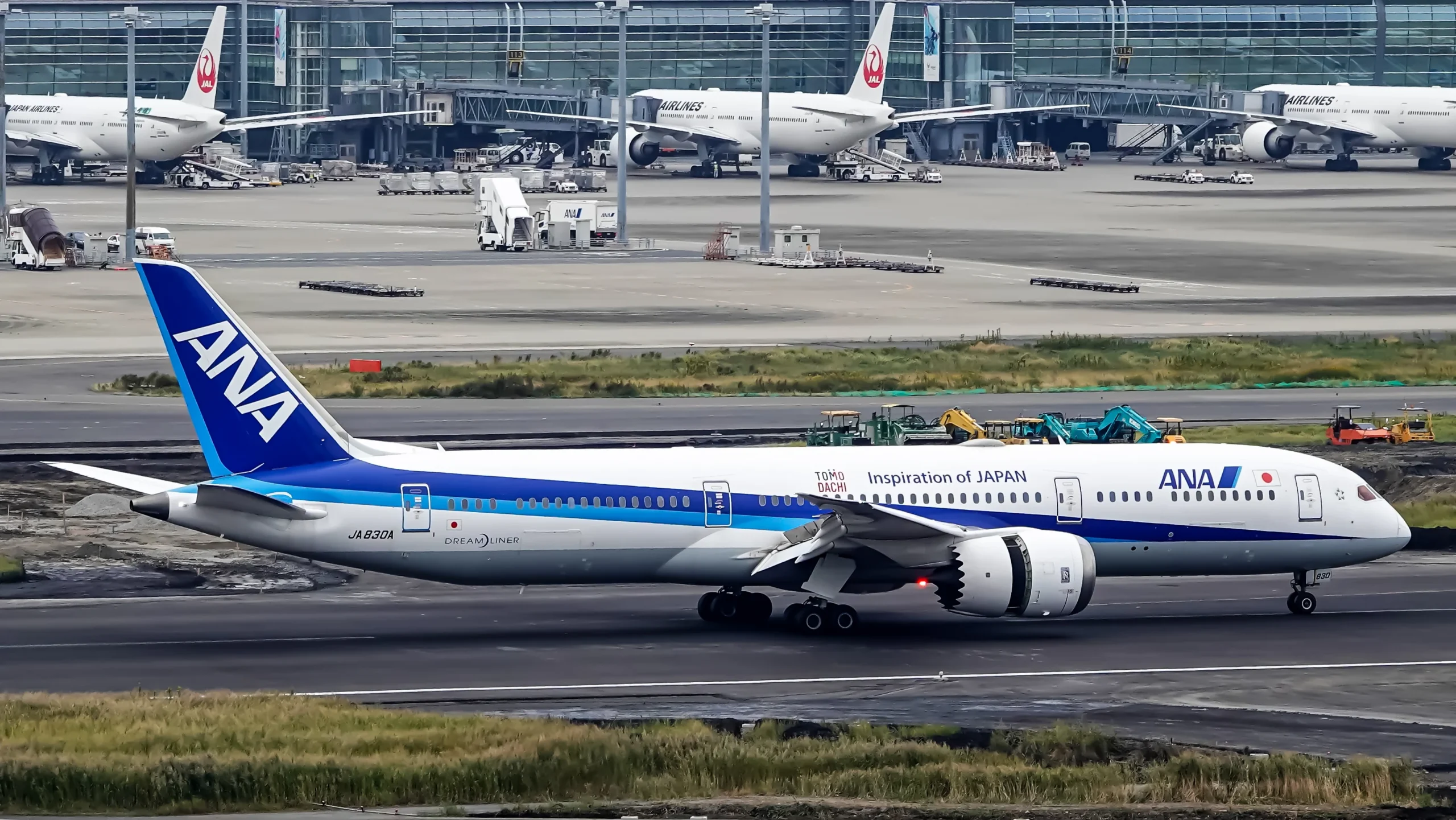
Japan Airlines (JAL) and All Nippon Airways (ANA) have submitted proposals to Japan's Ministry of Land, Infrastructure, Transport and Tourism (MLIT) to increase international fuel surcharges for tickets issued in November and December. The move comes as Middle East tensions continue to pressure jet fuel prices, adding to the cost of long-haul travel from Japan.
The two carriers announced their proposed revisions on 15 October. Under the plans, one-way fuel surcharges for flights from Japan to Europe and North America (excluding Hawaii) would rise to ¥62,000 per passenger. JAL intends to increase the charge by ¥12,000, while ANA will raise it by ¥7,000 compared with the September–October period. The revised charges would apply to tickets issued in Japan between 1 November and 31 December 2026, subject to government approval.
Regional routes also see increases
Regional routes are not spared. ANA's proposed schedule shows the surcharge for flights from Japan to Thailand, Singapore, Malaysia, Myanmar and Cambodia rising to ¥32,000 per passenger per flight sector, up from ¥27,300 in September and October. Charges for other Asian destinations vary, so travel sellers should check the specific route before quoting fares.
Both airlines base their calculations on the two-month average price of Singapore kerosene-type jet fuel, with ANA also reviewing charges in response to market movements. The carriers have incorporated Japanese government measures designed to mitigate the impact of higher fuel costs linked to the Middle East situation. Without those measures, the applicable surcharges would have been higher under their standard pricing formulas.
The adjustments do not mean every international ticket will increase by the same amount. Actual costs depend on the route, ticketing market, applicable fare conditions, and other charges. For return journeys, passengers should note that fuel surcharges apply per flight sector and are separate from base fares, taxes, and other fees.
Middle East conflict adds pressure to airline economics
The surcharge announcements come as airlines continue to manage the financial consequences of the wider Middle East conflict. In an earlier report on 30 April, Reuters noted that JAL and ANA were facing higher fuel costs amid the conflict. ANA estimated at the time that higher fuel prices could add approximately ¥140 billion to its costs for the financial year, although hedging, fare adjustments, and cost-cutting measures were expected to mitigate the impact.
The latest proposed increases follow renewed disruption to Saudi Arabia's aviation network after attacks on King Khalid International Airport in Riyadh. While the surcharge calculations are based on fuel prices recorded during August and September, the security incidents add to uncertainty in the industry's operating environment.
For airlines, the challenge is to balance higher fuel expenses against passenger demand and competitive pricing. For travellers, the proposed increases make the total cost of long-haul journeys an increasingly important consideration.
Implications for travel sellers
Travel agents, tour operators, and corporate travel managers should monitor the approval process and check the applicable surcharge schedules before confirming bookings for travel originating in Japan. If approved, the revised charges could encourage travellers to compare departure dates, routes, and carriers more closely, particularly when planning family holidays or multi-destination itineraries. However, the effect on demand will depend on travel budgets, exchange rates, available alternatives, and the perceived value of each trip.
The announcements highlight how geopolitical tensions can translate into additional costs for consumers, even when their journeys do not involve the affected region. As the industry enters the final quarter of 2026, the proposed increases underscore the challenge facing airlines and travel businesses as they seek to maintain demand while managing higher operating costs.
For more on how carriers are adapting to shifting demand, see our coverage of Lufthansa's Japan expansion and Qatar Airways' leasing moves.