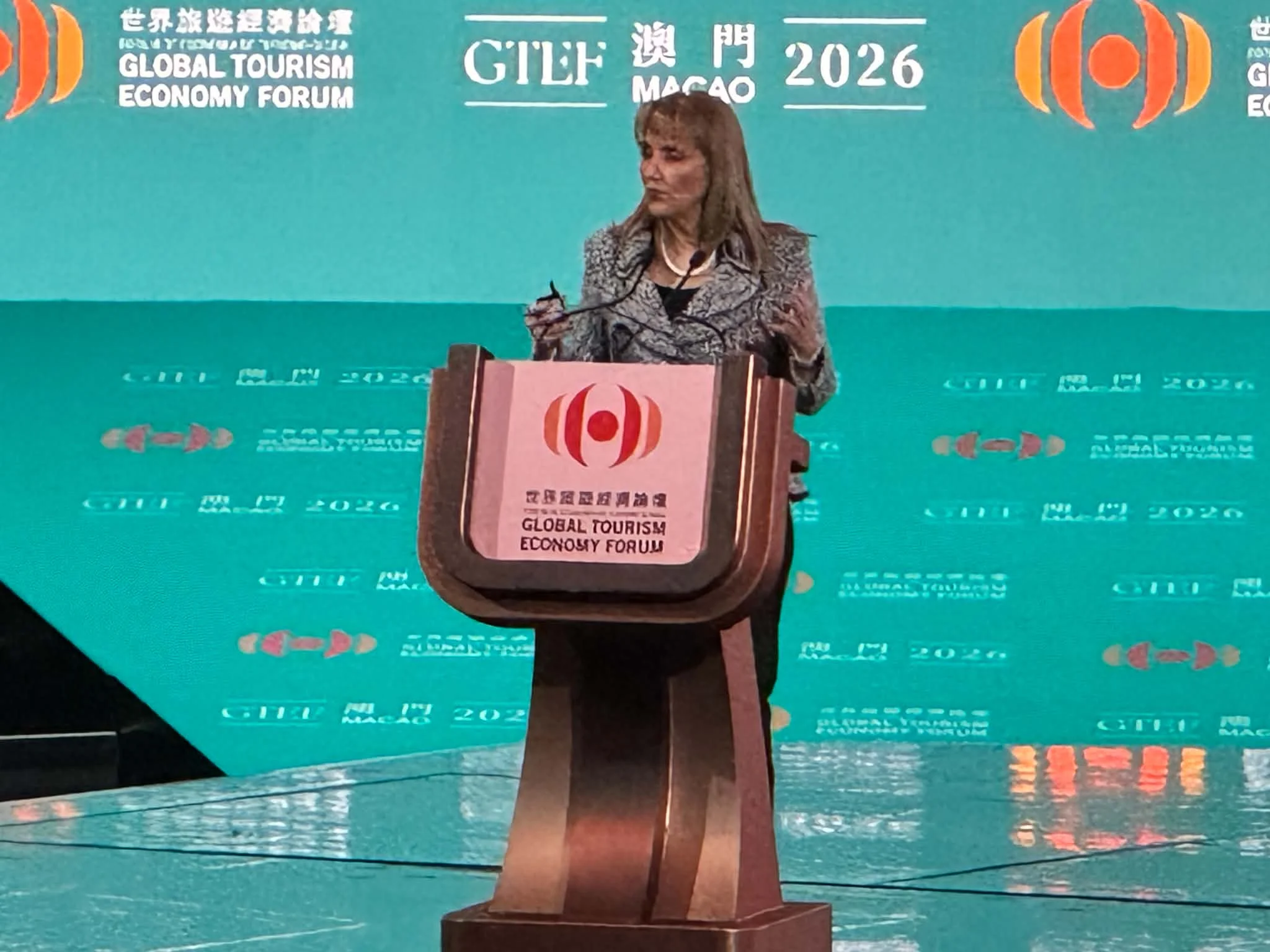
Asia-Pacific is no longer just riding the wave of global tourism recovery—it is now setting the pace. That was the central message from Gloria Guevara, president and CEO of the World Travel & Tourism Council (WTTC), as she opened the 12th Global Tourism Economy Forum (GTEF) in Macau on Friday, 16th October.
Addressing a room of international ministers, industry leaders, and executives, Guevara laid out a clear picture: while global GDP expanded by 2.8% over the past year, travel and tourism grew by 4%. The Asia-Pacific region, however, surged ahead at 8%—essentially double the global average for sector growth.
A $2 trillion milestone
Guevara noted that travel and tourism now accounts for roughly 10% of global GDP, contributing $11.6 trillion. Within that, international traveller spending reached $2 trillion, a 3% increase year-over-year. Once again, Asia-Pacific outperformed, with international spend growing at more than twice the global rate.
The numbers underscore a structural shift. As geopolitical turmoil trims global tourism growth in other regions, Asia-Pacific is consolidating its position as the industry's primary engine.
China's policy push
Central to this acceleration is China's aggressive policy execution, particularly around entry accessibility, digital infrastructure, and air connectivity. Guevara highlighted progressive visa facilitation as a standout catalyst, citing visa-waiver programmes and simplified entry protocols as global benchmarks.
“This single policy initiative brought over 14 million travellers to the region,” she said, reinforcing how targeted reform translates directly into economic performance.
China's technological leadership also featured prominently. Guevara pointed to advanced biometric deployment and real-time AI tools—such as AI translation glasses used at events in Beijing—as concrete examples of the region's edge. These innovations are not just conveniences; they are reshaping the traveller experience and setting new standards for destination management.
Macau's pivotal role
Zooming in on the host territory, Guevara delivered high praise for Macau's economic growth and destination positioning, specifically paying tribute to GTEF vice-chair Pansy Ho, calling her “the best champion the destination could ask for.”
Travel and tourism accounts for nearly 83% of Macau's GDP, making the sector vital to local employment and stability. Across China and Macau, major operational metrics have now comfortably eclipsed 2019 pre-pandemic benchmarks, a recovery that many other markets are still chasing.
Risks and resilience
Looking ahead, Guevara acknowledged supply-chain and geopolitical risks, including flight capacity disruptions in the Middle East that have affected global air connectivity by roughly 14%. Yet she maintained an overwhelmingly bullish stance on year-to-date numbers.
To sustain this growth curve, the WTTC chief reaffirmed the council's commitment to eight core priorities: seamless travel, AI integration, destination stewardship, crisis management, climate resilience, capital investment, infrastructure development, and workforce expansion.
Guevara stressed that long-term resilience hinges on tight alignment between commercial leaders and state authorities. “The only path forward is public-private collaboration,” she declared. “WTTC firmly believes that public-private alignment is the single most effective way to address challenges, implement progressive policies, and unlock future growth.”
For travel professionals, the takeaway is clear: Asia-Pacific is not just a recovery story—it is the new growth frontier. As China solidifies its position in business travel and its MICE sector expands, the region's influence will only deepen. Those who align with this shift stand to benefit most.