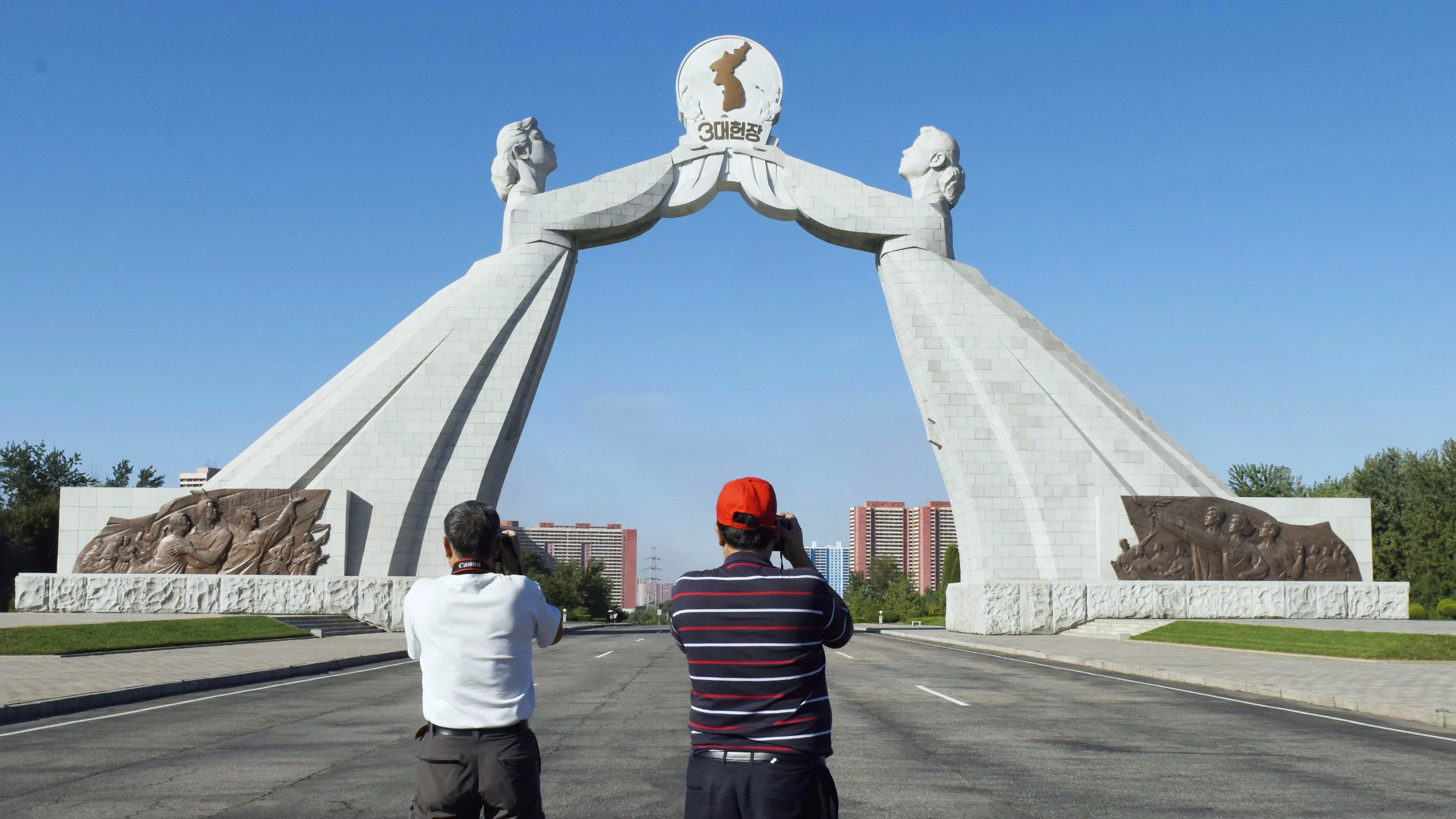
North Korea's constitutional amendments in early 2026, which formally designate South Korea as a permanent adversary and erase peaceful reunification as a state goal, have delivered a decisive blow to long-held visions of a unified Korean tourism market. The shift codifies absolute separation, contrasting sharply with the persistent optimism that has historically guided policymakers in Seoul.
Cross-border rail and resort plans stalled
Despite the frozen diplomatic landscape, South Korea's Ministry of Unification announced in August plans to resume construction on a critical border segment of the Gyeongwon Line near the Demilitarized Zone (DMZ). The strategic objective remains clear: establishing a direct transport corridor connecting Seoul to Wonsan, North Korea's eastern coastal hub. In tandem, Seoul endorsed proposals to link the suspended Mount Kumgang resort with North Korea's newly completed Wonsan-Kalma Coastal Tourist Area, a mega-complex designed to accommodate 20,000 visitors.
To navigate stringent United Nations Security Council restrictions, Seoul floated the concept of individual, non-group itineraries. Because tourism remains outside explicit international sanctions, proponents argue that individual travel avoids the direct, high-volume cash transfers prohibited under international law. However, the commercial reality remains unyielding: Pyongyang has spent recent years systematically dismantling South Korean-owned assets at Mount Kumgang while repeatedly rejecting engagement, rendering Seoul's infrastructure overtures entirely unilateral.
Pivot to domestic security tourism
With cross-border access effectively blocked, South Korea's travel sector has pivoted decisively toward domestic border security tourism. Designated border zones along the DMZ are now positioned as key educational hubs for international arrivals and younger domestic travelers. This shift acts as a crucial secondary economic driver for regional border communities, sustaining cultural awareness of the divide even as structural unification grows increasingly improbable.
Domestic consumer sentiment within South Korea reflects this geopolitical detachment. Among younger demographics, specifically the MZ generation, reunification is widely viewed as an expensive, impractical concept amid pressing economic realities such as rising housing costs and employment competition. Consequently, domestic travel patterns are shifting toward premium leisure, wellness, and authentic regional heritage, including luxury hanok stays, rather than nostalgic historical tourism.
While South Korea continues laying the physical tracks, Pyongyang's constitutional boundary ensures the grand vision of a seamless cross-border market remains permanently frozen. For travel professionals, the focus now shifts to the resilience of domestic tourism and the growing appeal of DMZ security experiences, which offer a tangible connection to the region's complex history.
Related developments in the region include the debut of Series by Marriott in South Korea, signaling continued hospitality investment despite geopolitical tensions. Additionally, Korea's medical tourism push targets the US market, diversifying inbound travel beyond traditional leisure. For outbound operators, Captain's Choice adds 2027 South Pacific private-jet tours, reflecting broader shifts in luxury travel demand.