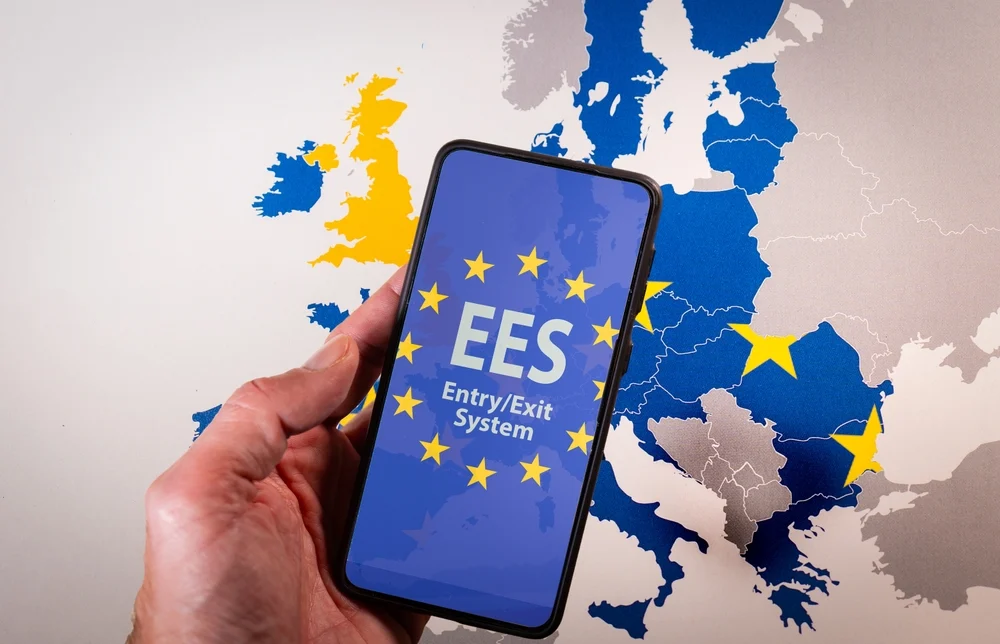
Europe's long-anticipated Entry/Exit System (EES) went fully live across the Schengen Area on April 10, 2026, replacing manual passport stamps with biometric fingerprint and facial scans for non-EU travellers. While designed to tighten security and track overstayers, the system has triggered severe bottlenecks at major gateways, with waiting times stretching to three and a half hours during peak periods and up to six hours forecast for the summer season, according to Airports Council International (ACI Europe) and the International Air Transport Association (IATA).
Congestion Spreads Across Key Hubs
Since May 2026, airports in France, Germany, Spain, Portugal, Italy, and the Netherlands have reported significant delays linked to EES processing. At Amsterdam Schiphol, queues formed immediately after full deployment, with travellers facing slower throughput. Similar scenes unfolded at Paris Charles de Gaulle, Lisbon, Frankfurt, and several Spanish airports. The disruption is not confined to air travel: at the Port of Dover in the UK, French border authorities temporarily suspended some biometric checks under Article 9 of EES regulations after delays exceeded two hours during the May half-term holiday. In some cases, border processing times improved only after reverting to conventional checks.
Airlines have been vocal about the operational fallout. Ryanair, easyJet, and Jet2 have all warned that prolonged border procedures are causing missed flights and schedule disruptions. In one widely reported incident, more than 100 passengers missed a flight from Milan to Manchester after being stuck in passport control queues. Industry leaders fear that if the situation persists, travellers may alter plans, choose alternative destinations, or reduce short-break travel to Europe. The impact extends beyond aviation: longer arrival and departure procedures affect hotel check-in patterns, airport transfer schedules, cruise embarkations, and onward transport connections. Corporate travellers, who rely on efficient airport processing for short-duration trips, may reconsider routing choices if delays become routine. Tourism businesses worry that negative experiences could damage destination perception during one of Europe's busiest travel seasons.
The challenge is particularly acute as Europe prepares for another strong summer travel season. Any sustained congestion at key entry points could create ripple effects throughout the visitor economy, from airlines and airports to hotels, attractions, and destination management organisations. The Global Travel Demand Holds Firm in 2026 Despite Geopolitical and Economic Fault Lines report underscores the resilience of travel demand, but such operational hurdles could test that resilience.
Industry Calls for Practical Solutions
Despite the difficulties, most stakeholders support the long-term objectives of EES. The World Travel & Tourism Council (WTTC) recently warned that visitor arrivals could be affected if border delays are not addressed, while stressing the focus should be on improving implementation rather than abandoning the system. Gloria Guevara, President & CEO of WTTC, said: “The introduction of EES is an important step forward in modernising Europe’s borders and strengthening security. Our research clearly shows that travellers support digital and biometric border systems and understand the long-term benefits they can deliver. As with any major transformation, there will inevitably be teething problems. The challenge now is not whether EES should proceed, but how governments, border authorities and the Travel & Tourism sector work together to ensure implementation is as smooth as possible. The good news is that solutions already exist. By making greater use of digital pre-registration tools, improving traveller communications and ensuring operational readiness at border crossing points, Europe can reduce friction and deliver the seamless experience travellers expect.”
Industry groups are advocating greater use of pre-registration technology, expanded staffing levels, additional biometric kiosks, and more flexible contingency measures during peak traffic periods. Some airports and border authorities have already invoked temporary exemptions to prevent severe congestion. The EES remains a cornerstone of the European Union's border modernisation strategy and is expected to form the foundation for the future rollout of the European Travel Information and Authorisation System (ETIAS). While the security and migration management benefits are widely acknowledged, the first weeks of full operation have highlighted the importance of balancing security objectives with traveller experience. For travel suppliers, destination marketers, and hospitality operators, the coming summer will be a critical test. If border bottlenecks can be resolved, Europe's travel industry can maintain its momentum; if not, the ripple effects could be felt across the entire ecosystem.