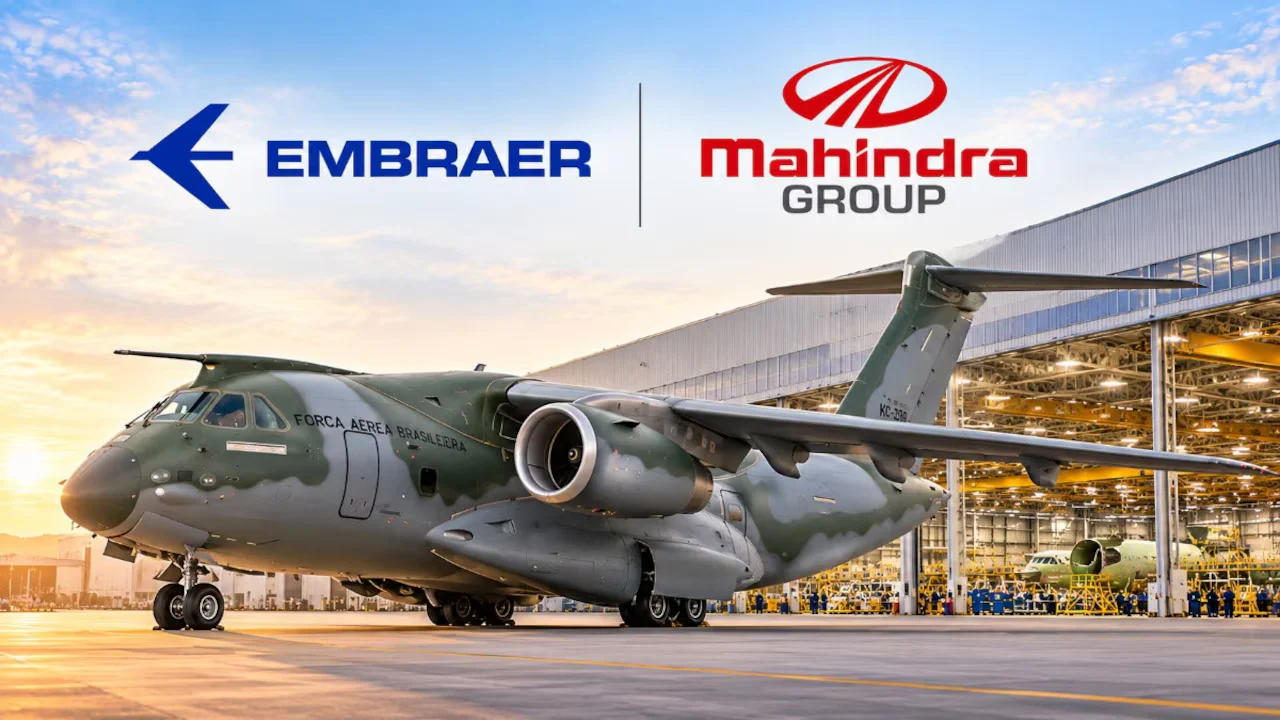
Embraer and Mahindra Group are moving forward with plans to establish a C-390 Millennium assembly facility in Nagpur, India, a project that hinges on the aircraft's selection for the Indian Air Force's Medium Transport Aircraft (MTA) programme. The two companies are working with the Government of Maharashtra to accelerate the necessary approvals and groundwork for the proposed site.
The partnership is designed to deepen India's aerospace ecosystem by bringing local suppliers and manufacturers into the C-390 Millennium supply chain. This aligns with New Delhi's Make in India and Atmanirbhar Bharat (self-reliant India) policies, which prioritize domestic manufacturing and technology development. The Nagpur facility would introduce advanced capabilities in aircraft assembly, systems integration, and supply chain management to the country.
A strategic move for India's defence and aviation sector
Bosco da Costa Junior, President & CEO of Embraer Defence & Security, expressed optimism about the collaboration, stating: "Identifying Nagpur as a potential location for an assembly facility is an important step in building a robust, long-term aerospace ecosystem in the country." His remarks underscore Embraer's commitment to expanding its footprint in Asia-Pacific, a region that is expected to drive a significant share of global aircraft demand over the next two decades. According to industry forecasts, Asia-Pacific will account for 45% of global aircraft demand through 2045, making India a critical market for both commercial and defence platforms.
Vinod Sahay, a senior executive at Mahindra Group, highlighted the group's commitment to building a globally competitive aerospace ecosystem in India. "Nagpur offers a compelling opportunity for such a capability," he noted, pointing to the city's central location, existing logistics infrastructure, and growing industrial base as key advantages.
The C-390 Millennium is a versatile military transport aircraft designed for a range of missions, including troop transport, cargo delivery, medical evacuation, and aerial refuelling. Embraer has already secured orders from several air forces, including Portugal, Hungary, and the Netherlands, and the aircraft has been praised for its performance and reliability. The proposed industrialisation programme would leverage Embraer's engineering expertise and Mahindra's manufacturing scale to produce the aircraft locally, potentially opening doors for export to other regional markets.
For Indian airlines and the broader travel industry, the development signals a growing aerospace manufacturing base that could eventually support commercial aviation maintenance, repair, and overhaul (MRO) activities. Embraer's existing presence in India includes a pool programme for E-Jet fleets, which has been extended by Japan Airlines, and the company recently marked the delivery of its 2,000th E-Jet to Azul, underscoring its global reach. A Nagpur assembly line would complement these activities and could attract related investments in training, logistics, and component manufacturing.
The companies continue to engage with the Indian government and local stakeholders as they prepare for the potential award of the MTA programme. If selected, the facility would represent one of the largest foreign direct investments in India's defence aviation sector, creating thousands of skilled jobs and positioning Nagpur as a hub for aerospace excellence.
Industry observers note that the move also aligns with broader trends in the region, where governments are increasingly seeking technology transfer and local production agreements as part of defence procurement. Embraer's willingness to localize production is seen as a competitive advantage against rivals such as Lockheed Martin and Airbus, which are also vying for the Indian Air Force's transport aircraft contract.
For travel professionals, the development is a reminder of the interconnected nature of aviation and defence. A robust aerospace manufacturing sector can lead to improved supply chains, lower maintenance costs, and greater operational resilience for airlines operating in the region. As India continues to expand its aviation network, investments in local production and support infrastructure will be crucial to sustaining growth.